ADVERTISEMENT

NASA’s SpaceX Crew-5 Launches to International Space Station

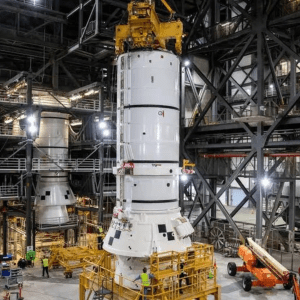
The crew members assigned to NASA’s SpaceX Crew-5 mission went into orbit following their launch to the International Space Station on Wednesday, October 5, from Launch Complex 39A at NASA’s Kennedy Space Center in Florida. The international crew will serve as the agency’s fifth commercial crew rotation mission with SpaceX...


Cryogenic Blast Freezing in Minutes Increases Throughput

The biotech and biopharma industries utilize freezers to rapidly freeze and store thermally sensitive products such as vaccines and biopharmaceuticals as well as biological materials such as blood plasma. However, conventional compressor-based systems can take hours to reach an ultra-low target temperature, which slows production throughput.  For these industries, the...

Element Strengthens Cryogenic and Hydrogen Testing Capacity

UK-based testing, inspection and certification services provider the Element Materials Technology Group (Element) has announced that it will expand its cryogenic testing capacities at its Milan laboratory. By investing in new fatigue testing frames, Element will strengthen its position in both aerospace and the energy sector by offering testing for hydrogen...

The Magneto-Optic Modulator

Many state-of-the-art technologies work at incredibly low temperatures. Superconducting microprocessors and quantum computers promise to revolutionize computation, but scientists need to keep them just above absolute zero (-459.67° Fahrenheit) to protect their delicate states. Still, ultra-cold components have to interface with room temperature systems, providing both a challenge and an...

ADVERTISEMENT

Stability

Stability refers to the ability of a device employing superconductors to remain in its superconducting state after part of the superconductor transitions back to its normal conducting state due to a disturbance. While the concept can apply to many superconducting devices—transmission lines, generators, motors, etc.—it is most commonly considered in...

Cable-in-Conduit Conductors

Cable-in-Conduit Conductors (CICC) are a common form of superconducting cable used in large-scale applications. There are several varieties of CICCs, but they all consist of many small, stabilized superconducting wires contained within a conduit through which a coolant (typically supercritical He II) flows. Figure 1 shows the cross section of...

Bayonet Coupling

A bayonet coupling is a demountable joint that allows for quick and easy connection and disconnection of cryogenic components, including transfer lines, cryostats, liquefiers and refrigerators. Bayonets provide a number of advantages, chief among them the ability to connect and disconnect the bayonets while components they connect are still at...

Air Separation and Liquefaction

by Nils Tellier, PE, President, EPSIM Corporation (CSA CSM) nils@epsim.us All illustrations courtesy EPSIM Corporation Background History of Air Separation and Liquefaction This section builds on a rich history of methods to develop deep refrigeration and cryogenic liquefaction during the 19th Century. You are encouraged to read Cryo Central’s History...

Bose-Einstein Condensate

A Bose-Einstein condensate, first proposed in 1925 by Albert Einstein based on work done by Satyendra Nath Bose (the same Bose from whom the term boson is derived), is a super-cold state of matter in which almost all of the individual atoms have “condensed” down to the lowest possible quantum...

Cold Technology for Pest Control

While it does not reach temperatures cold enough to be called cryogenic, carbon dioxide snow is at the heart of a new way of dealing with unwanted pests. It utilizes a quick freezing process that takes advantage of the properties of carbon dioxide snow and has a number of benefits...

Cryogenic Finishing

The following 3 articles discuss the uses and procedures of various type of cryogenic finishing. 1) By Robin A. Rhodes, Cryogenic Institute of New England, Inc. rrhodes@nitrofreeze.com Cryogenic Deflashing is employed to remove undesired residual mold flash that remains on molded parts after they are removed or ejected from the...

What is the temperature range of cryogenics?

Could you please tell me what is the temperature range of cryogenics? In other words, is -100°F considered cryogenic, or does it start lower? Could I expect to see some extended life in D2 stamping dies? What would the recipe be to achieve the desired results using cryogenics?