ADVERTISEMENT

How to Avoid a Tank Collapse

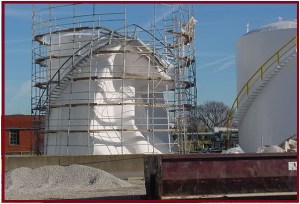
The industrial gas industry produces the elemental components of “air” (nitrogen, oxygen, and argon) that are used in other industries as part of their processes. Once separated from air, each element exists as an extremely cold cryogenic temperature liquid. Typical liquid temperatures are −185° C. Large, field-erected tanks are used...
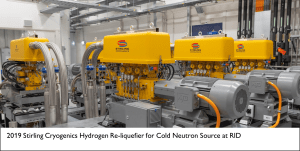

Hydrogen Liquefaction System Developed from Stirling Cryogenerators

Stirling cryogenerators have been widely used since the 1960s and 1970s for the production of LH2 at various institutes and research laboratories all over the world. In materials sciences, small-scale production was used to study the properties and behavior of LH2 and its effect on materials. In scientific devices, Stirling...

Liftoff! NASA’s Artemis I Mega Rocket Launches Orion to Moon

Following a successful launch of NASA’s Space Launch System (SLS), the most powerful rocket in the world, the agency’s Orion spacecraft is on its way to the Moon as part of the Artemis program. Carrying an uncrewed Orion, SLS lifted off for its flight test debut at 1:47 a.m. EST...

FRIB Experiment Pushes Elements to the Limit

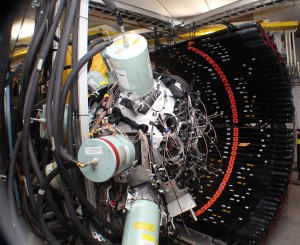
A new study led by the Department of Energy’s Lawrence Berkeley National Laboratory (Berkeley Lab) has measured how long it takes for several kinds of exotic nuclei to decay. The paper, published today in Physical Review Letters, marks the first experimental result from the Facility for Rare Isotope Beams (FRIB), a...

NASA Inflatable Heat Shield Finds Strength in Flexibility

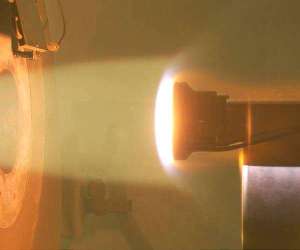
How does something that looks like a stack of orange inner tubes covered in a black tarp survive temperatures reaching 3,000 degrees Fahrenheit as it plunges through the atmosphere? An upcoming technology demonstration uses advanced materials to make a heat shield that’s tougher than it looks. Hypersonic Inflatable Aerodynamic Decelerator...

Pilot Project Tests New High-Capacity Transmission Lines

VEIR, an early-stage technology company based in Woburn, Mass., is pioneering the first application of superconducting transmission over long distances, a key component to deliver renewable sources of energy safely and reliably from where it is generated to where it is needed, often cross-country. VEIR is teaming up with National...

ADVERTISEMENT

Mixed Refrigerant Cycles

Most cryogenic refrigeration systems, both large scale systems and cryocoolers, use helium as a working fluid. There are a number of advantages to helium, not the least of which is that helium remains a fluid down to the lowest achievable temperatures. In order to freeze helium, pressures of over 20...

Fountain Pumps and He II Phase Separators

Helium II (He II), the second liquid phase of the 4He isotope described in this column in Cold Facts Spring 2010 (http://2csa.us/he2), can be modeled as consisting of two interpenetrating fluids. One, the superfluid component, has zero viscosity and entropy and the other, the normal fluid component, has nonzero viscosity...

Turboexpanders

A vital technology in the refrigerators and liquefiers described in Cold Facts Volume 31 Number 3 is that of turboexpanders. These devices are rotating machines in which the process fluid (e.g., helium) does work against the turboexpander while moving from high pressure to a lower pressure and thus is cooled....

Air Separation and Liquefaction

by Nils Tellier, PE, President, EPSIM Corporation (CSA CSM) nils@epsim.us All illustrations courtesy EPSIM Corporation Background History of Air Separation and Liquefaction This section builds on a rich history of methods to develop deep refrigeration and cryogenic liquefaction during the 19th Century. You are encouraged to read Cryo Central’s History...

Bose-Einstein Condensate

A Bose-Einstein condensate, first proposed in 1925 by Albert Einstein based on work done by Satyendra Nath Bose (the same Bose from whom the term boson is derived), is a super-cold state of matter in which almost all of the individual atoms have “condensed” down to the lowest possible quantum...

Cold Technology for Pest Control

While it does not reach temperatures cold enough to be called cryogenic, carbon dioxide snow is at the heart of a new way of dealing with unwanted pests. It utilizes a quick freezing process that takes advantage of the properties of carbon dioxide snow and has a number of benefits...

Cryogenic Finishing

The following 3 articles discuss the uses and procedures of various type of cryogenic finishing. 1) By Robin A. Rhodes, Cryogenic Institute of New England, Inc. rrhodes@nitrofreeze.com Cryogenic Deflashing is employed to remove undesired residual mold flash that remains on molded parts after they are removed or ejected from the...

Designing a liquid oxygen bath

I’m designing a Liquid Oxygen Bath to place composite coupons in the bath and soak 96 samples for intervals of 8 hours, 24 hours, 7 days, 21 days, 42 days, 62 days and 90 days.

Metallic Salts Normally Used to Produce Ultra-Low Temperatures?

Regarding the method known as the Adiabatic Demagnetization of Paramagnetic Salts: What metallic salts are normally used to produce the ultra-low temperatures used for near-absolute-zero cryogenic research? Which salts are the most efficient? Which make the best cooling agents? And which are used most commonly by physicists? I am looking...