ADVERTISEMENT

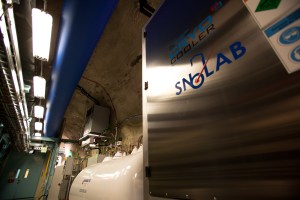
Extreme Cool – Making Liquid Nitrogen in a Deep Underground Clean Lab

SNOLAB is Canada’s deep underground research laboratory, located two kilometers underground in Vale’s Creighton mine near Sudbury, Ontario, Canada. SNOLAB is a unique facility, providing a low background environment designed for scientific research and operates a 5,000m2 underground campus as a class-2000 clean lab. While the science program is focused...

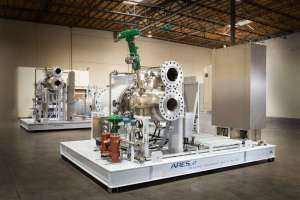
Turboexpanders Are Key Components to the Energy Transition

With the energy sector looking to decarbonize, the transition away from hydrocarbons is underway, with hydrogen taking center stage in many of the industry’s roadmaps. Georgia-based Chart Industries (NYSE: GTLS) has responded to this interest by bolstering its offering of products and technologies that enable the industry to move away...

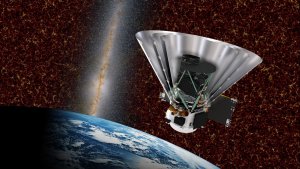
Test Chamber for NASA’s New Cosmic Mapmaker Makes Dramatic Entrance

After three years of design and construction, a monthlong boat ride across the Pacific Ocean, and a lift from a 30-ton crane, the customized test chamber for NASA’s upcoming SPHEREx mission has finally reached its destination at Caltech’s Cahill Center for Astronomy and Astrophysics in Pasadena. Set to launch no...

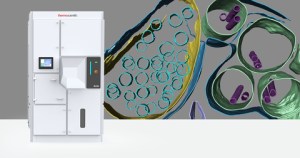
New Microscope Advances Cryo-ET Research

Thermo Fisher Scientific Inc. unveiled the Thermo Scientific Arctis Cryo-Plasma Focused Ion Beam (Cryo-PFIB), a new connected and automated microscope designed to advance the pace of cryo-electron tomography (cryo-ET) research. Cryo-ET makes it possible to study how proteins and other molecules operate together in a cellular context, at resolutions unsurpassed by...

ADVERTISEMENT

Space Cryogenics

Space cryogenics is, somewhat obviously, the application of cryogenics to space exploration and science. The use of cryogenics in space optimizes the launching of vehicles, provides power and life support to spacecraft and is critical for many scientific observations.Space cryogenics has a number of challenges and has driven both pure...

Exergy

The science of thermodynamics plays a major role in cryogenics. It underlies the various refrigeration cycles, from Carnot to Brayton (Cold Facts Vol. 32 No. 2) and Joule-Thomson, is a fundamental part of the definition of terms such as coefficient of performance (Cold Facts Vol. 31 No. 1) and even...

Cryogenic Treatment

Cryogenic treatment is the process of cooling materials to cryogenic temperatures temporarily to improve their material properties at room temperature. This is distinct from cooling materials down to cryogenic temperatures to take advantage of phenomena such as superconductivity that only occur at cryogenic temperatures. Cryogenic treatment, sometimes also referred to...

Air Separation and Liquefaction

by Nils Tellier, PE, President, EPSIM Corporation (CSA CSM) nils@epsim.us All illustrations courtesy EPSIM Corporation Background History of Air Separation and Liquefaction This section builds on a rich history of methods to develop deep refrigeration and cryogenic liquefaction during the 19th Century. You are encouraged to read Cryo Central’s History...

Bose-Einstein Condensate

A Bose-Einstein condensate, first proposed in 1925 by Albert Einstein based on work done by Satyendra Nath Bose (the same Bose from whom the term boson is derived), is a super-cold state of matter in which almost all of the individual atoms have “condensed” down to the lowest possible quantum...

Cold Technology for Pest Control

While it does not reach temperatures cold enough to be called cryogenic, carbon dioxide snow is at the heart of a new way of dealing with unwanted pests. It utilizes a quick freezing process that takes advantage of the properties of carbon dioxide snow and has a number of benefits...

Cryogenic Finishing

The following 3 articles discuss the uses and procedures of various type of cryogenic finishing. 1) By Robin A. Rhodes, Cryogenic Institute of New England, Inc. rrhodes@nitrofreeze.com Cryogenic Deflashing is employed to remove undesired residual mold flash that remains on molded parts after they are removed or ejected from the...

Data on thermal expansion down to 40K

For our cold mechanics, we use ball bearings from ADR from stainless steel which is AISI 440C, DIN X105CrMo17, W.Nr. 1.4125. Does anyone know the data of thermal expansion of this material down to 40 K?

Materials for "cryogenics in spacetech"?

I had to take a seminar in a national competition that is to be held in our country on the topic “cryogenics in spacetech.” For this, I need some materials related to it, and I thought to approach you for help. Can you suggest some relevant materials?