ADVERTISEMENT

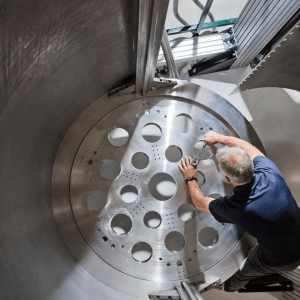
Excavation of Huge Caverns for DUNE Particle Detector Underway

Around a mile below the surface in South Dakota, construction crews are hard at work excavating around 1,000 tons of rock per day. Their goal is to make room for a large underground facility that will house an international effort aimed at studying neutrinos—highly elusive subatomic particles that may hold...

In DNA–Scientists find solution to building superconductor that could transform technology

Scientists at the University of Virginia School of Medicine and their collaborators have used DNA to overcome a nearly insurmountable obstacle to engineer materials that would revolutionize electronics.  One possible outcome of such engineered materials could be superconductors, which have zero electrical resistance, allowing electrons to flow unimpeded. That means...

Researchers Take First-Ever Cryo-EM Images of Nitrogenase in Action

Previously, it has been impossible to capture the high-resolution images of nitrogenase, the only enzyme capable of reducing nitrogen into ammonia, during catalytic action. Now, for the first time, researchers at the University of California San Diego report near-atomic-resolution snapshots of nitrogenase during catalysis using cryogenic electron microscopy (cryoEM). The...

“Gas stations” in Zero Gravity

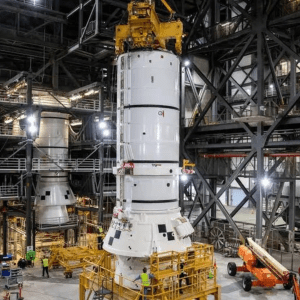
To journey and return from other planets, future spacecraft may have to do something they’ve never done before: refuel in space. Thanks to a Purdue University experiment, scientists are now beginning to understand how cryogenic liquids behave in zero-gravity, and how this affects the future operation of propellant depots in...

ADVERTISEMENT

Helium-3

Helium-3 (3He) is one of the two stable isotopes of helium. The other is the much more common Helium-4 (4He). Neither of these isotopes should be confused with He II, which is the second liquid phase of 4He. He II was discussed in this column in the Spring 2010 edition...

Cryopumping

Cryopumping refers to the use of cryogenic temperatures to produce vacuum in enclosed spaces. More broadly, it can also refer to the removal of gases via cryogenic temperatures from a flow stream or enclosure without necessarily resulting in vacuum pressures. This is an important application of cryogenics and is used...

Thermal Acoustic Oscillations

Thermal Acoustic Oscillations (TAO) are a common event in cryogenic systems that can have significant adverse effects on the performance of the system. TAOs are sustained pressure oscillations that can occur in tubes containing gas, closed at one end (the warm end) that have a very large temperature gradient along...

Air Separation and Liquefaction

by Nils Tellier, PE, President, EPSIM Corporation (CSA CSM) nils@epsim.us All illustrations courtesy EPSIM Corporation Background History of Air Separation and Liquefaction This section builds on a rich history of methods to develop deep refrigeration and cryogenic liquefaction during the 19th Century. You are encouraged to read Cryo Central’s History...

Bose-Einstein Condensate

A Bose-Einstein condensate, first proposed in 1925 by Albert Einstein based on work done by Satyendra Nath Bose (the same Bose from whom the term boson is derived), is a super-cold state of matter in which almost all of the individual atoms have “condensed” down to the lowest possible quantum...

Cold Technology for Pest Control

While it does not reach temperatures cold enough to be called cryogenic, carbon dioxide snow is at the heart of a new way of dealing with unwanted pests. It utilizes a quick freezing process that takes advantage of the properties of carbon dioxide snow and has a number of benefits...

Cryogenic Finishing

The following 3 articles discuss the uses and procedures of various type of cryogenic finishing. 1) By Robin A. Rhodes, Cryogenic Institute of New England, Inc. rrhodes@nitrofreeze.com Cryogenic Deflashing is employed to remove undesired residual mold flash that remains on molded parts after they are removed or ejected from the...