ADVERTISEMENT

QED-C® Announces Four Projects Designed to Advance Cryogenics for Quantum Information Science and Technology

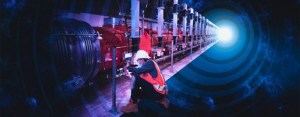
The Quantum Economic Development Consortium (QED-C), managed by SRI International, in strategic partnership with the U.S. Department of Commerce’s National Institute of Standards and Technology (NIST), today announced a $2.3 million research program to advance cryogenic technologies that will enable innovation in quantum information science and technology (QIST). The program aims to...
Realizing the STEP Fusion Dream

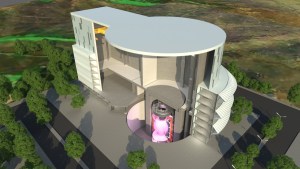
Deliver a UK prototype fusion energy plant, targeting 2040, and thereafter a sustainable, long-term pathway to the commercial viability of nuclear fusion. That’s the ambitious objective – and even more ambitious timeline – confronting the scientists, engineers and project managers currently sweating the details for the conceptual design of the...

Graphene Quantum Magic Delivers a New Class of Superconducting Material

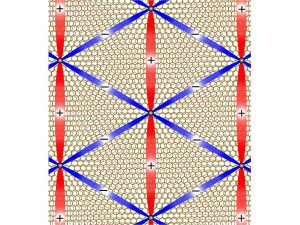
Superconductors are materials that conduct electrical current with almost no electrical resistance at all. This property makes them particularly appealing for a variety of applications, including loss-less power cables, electric motors and generators, and powerful electromagnets that can be utilized for MRI imaging and magnetic levitating trains. Nagoya University researchers...

ADVERTISEMENT

Dewar

A dewar is a type of cryostat named after Sir James Dewar, the researcher who first developed the concept of a vacuum insulated container with silvered walls to reflect thermal radiation. Dewar was the first to liquefy hydrogen, and he created the device to store his discovery. The thermos bottle...

Stirling and Gifford-McMahon Cryocoolers

Stirling and Gifford-McMahon (GM) cryocoolers are two of the most commonly used cryocoolers in cryogenics. Both devices have a significant industrial base and operate at a wide range of temperatures and capacities. The thermodynamic cycles for both of these cryocoolers are quite similar. The Stirling cycle consists of a compressor,...

Liquefied Natural Gas (LNG)

A significant commercial application of cryogenics is the liquefaction, transport and storage of natural gas. Liquefied Natural Gas (LNG) is generally 95 percent methane with a few percent ethane and much lower concentrations of propane and butane. LNG liquefies at 111.6 K. Unlike many applications of cryogenics, the motivation for...

Cryogenics in Space

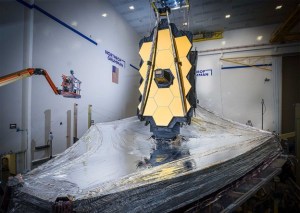
Peter Kittel University of California-Berkeley pkittel@cal.berkeley.edu Space Cryogenics is the application of cryogenics to space missions. These applications fall into two broad areas, supporting space science missions and supporting the space transportation infrastructure. Science applications: The atmosphere is opaque to much of the electro-magnetic spectrum. In space, the absence of...

Cryosurgery

Review of Cryosurgery Boris Rubinsky, PhD Hebrew University School of Science and Engineering Research Center for Biomedical Engineering 78b Ross Building Givat Ram, Jerusalem 91904 Israel rubinsky@cs.huji.ac.il as published in Annual Review of Biomedical Engineering, August 2000, Vol. 2, pp. 157-187. Abstract: Cryosurgery is a surgical technique that employs freezing...

Liquefied Natural Gas

Liquefied Natural Gas as it relates to the Field of Cryogenics John W. Bonn VJ Systems, LLC johnbonn@vjsystems-lic.com Today the world is looking for a cleaner fuel and Liquefied Natural Gas (LNG) plays a large part in achieving this goal. LNG in a liquid form is at -162°C (-259°F) and...

Food Processing

Cryogenics and Food The industrial gas industry provides a host of products and services related to food. The various gases have useful and sometimes fascinating applications in food industry. “The food industry is not a homogenous industry. The needs of customers processing hamburger vs. poultry vs. strawberries vs. seafood, for...

Cryogenic thermophysical property data

I am in search of information regarding cryogenic thermophysical property data, specifically, Thermal Conductivity, Thermal Expansion, Stiffness and Modulus, in the 20K range. My list of materials include: Ti-6AL-4V (ELI), Al 6061-T651, and Invar (36%, plus any other composition which might have data available). Other materials which would be helpful...