Other researchers had previously managed to get a superconducting current to flow in one direction by applying powerful magnetic fields. But these are difficult to apply precisely and are impractical for use inside miniaturized electronic circuits. The new device, on the other hand, could open the door to all kinds of use cases. “You could imagine very cool device applications at low temperatures,” Anand Bhattacharya, a physicist at Argonne National Laboratory, told Popular Science.
In theory, the device could make it possible to create computers out of superconducting circuits, which would use a lot less energy than conventional ones due to the lack of resistance. Moreover, Ali says it would be possible to create processors that run at terahertz speeds, 300 to 400 times faster than today’s chips.
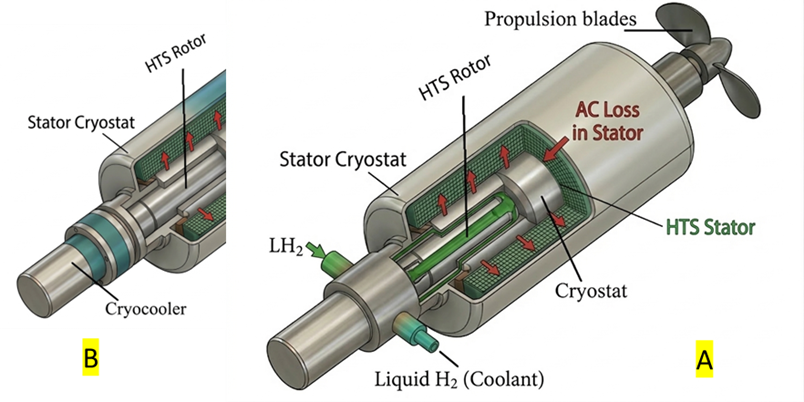
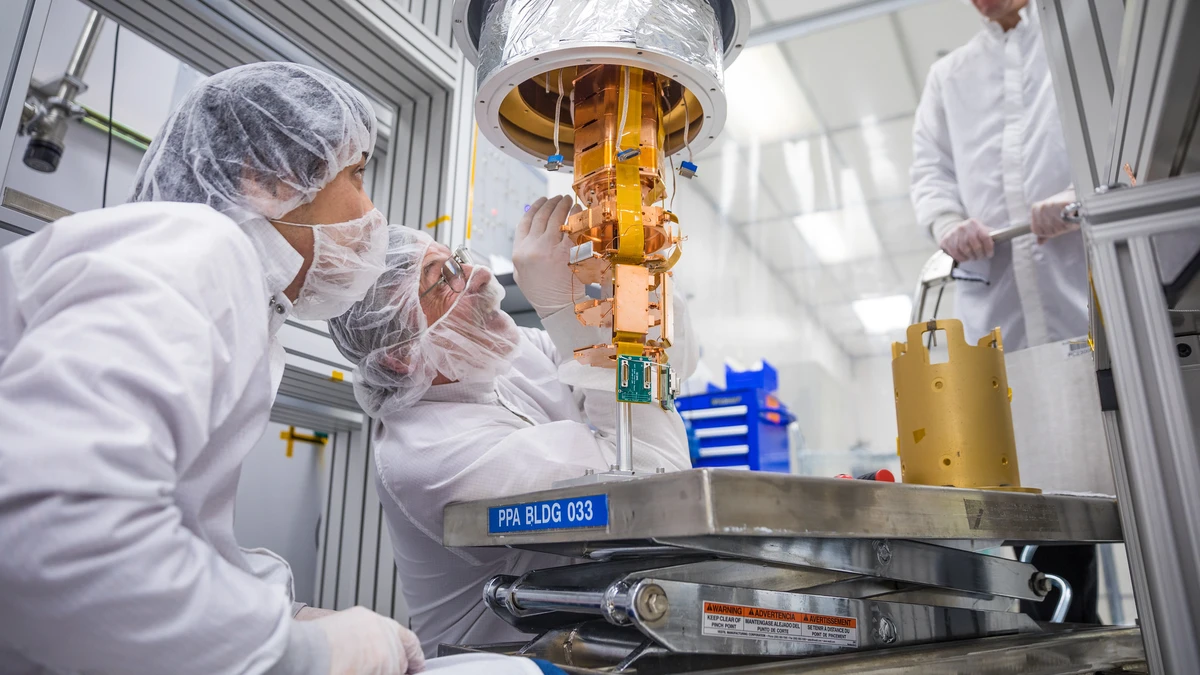
The main limitation of most superconductors, including the ones used in this study, is that they need to be chilled to close to absolute zero, which is a difficult and costly process. So the next step for the team will be to see if they can achieve the same behavior with newer high-temperature superconductors. These only need to be cooled to a comparatively balmy -321 fahrenheit, which can be achieved using liquid nitrogen rather than more complex cryogenic equipment.
These are also experimental devices, so it’s unclear how easy it would be to mass produce them on the scale required for a computer chip. But it is nonetheless an impressive breakthrough that brings the prospect of superconducting within reach for the first time.
Image Credit: TU Delft
Source: Edd Gent, Singularity Hub