ADVERTISEMENT

Scientists Produce First In-Vitro Lion Embryos

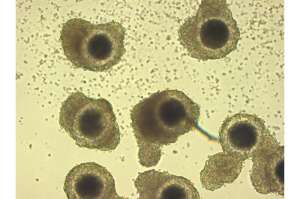
A team of scientists have succeeded in producing the very first African lion in-vitro embryos after the vitrification of immature oocytes. For this specific method of cryopreservation, the scientists, who hail from the Leibniz Institute for Zoo and Wildlife Research (Leibniz-IZW) in Germany, Givskud Zoo–Zootopia in Denmark, and the University of Milan,...
Cryoport and Cell Matters Enter Into Strategic Partnership

Cell Matters, a Belgian based company, enhances cell therapy productivity by turning cryopreservation into a competitive advantage, offering an integrated set of GMP services, in line with regulatory, quality, and GMP requirements of the cell therapy industry. Cryoport combines expertise in cryobiology, cell therapy production, and bio-logistics. Further, Cell Matters...

Demaco Releases New Range of Cryogenic Valves

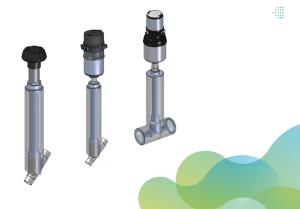
Valve manufacturer Demaco Netherlands BV (Demaco) has announced the release of its new range of Demaco Cryogenic Valves. Having redesigned and improved its current valve range, which includes manual on/off, pneumatic on/off, and control valves, the company has overhauled its technology to help increase the area of usage.  The new valves...

Boeing Achieves Major Advance in Using Composites for Cryogenic Fuel Tanks

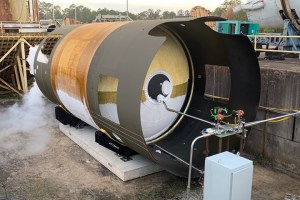
Boeing has announced a technology breakthrough for cryogenic fuel tanks. These tanks are essential components of liquid-fueled rockets because they hold the liquid hydrogen and the liquid oxygen that act as the fuel. They could also play a very important role in the development of long-haul, zero-emission flight, carrying liquid hydrogen as jet engine...

#BlackInQuantum

Black scientists have played important roles in the history of quantum physics. In this growing area of specialization, there’s an opportunity to continue that legacy. The sixth person to earn a doctoral degree in physics from an American institution was African American scientist Edward Alexander Bouchet; it was 1876, just 11...

ADVERTISEMENT

Dewar

A dewar is a type of cryostat named after Sir James Dewar, the researcher who first developed the concept of a vacuum insulated container with silvered walls to reflect thermal radiation. Dewar was the first to liquefy hydrogen, and he created the device to store his discovery. The thermos bottle...

Stirling and Gifford-McMahon Cryocoolers

Stirling and Gifford-McMahon (GM) cryocoolers are two of the most commonly used cryocoolers in cryogenics. Both devices have a significant industrial base and operate at a wide range of temperatures and capacities. The thermodynamic cycles for both of these cryocoolers are quite similar. The Stirling cycle consists of a compressor,...

Liquefied Natural Gas (LNG)

A significant commercial application of cryogenics is the liquefaction, transport and storage of natural gas. Liquefied Natural Gas (LNG) is generally 95 percent methane with a few percent ethane and much lower concentrations of propane and butane. LNG liquefies at 111.6 K. Unlike many applications of cryogenics, the motivation for...

Cryogenic Electronics

Randall Kirschman, consulting physicist, Mountain View, California ExtElect@gmail.com Cryogenic electronics—the operation of electronic devices, circuits, and systems at cryogenic temperatures—has been a valuable technology for decades. Cryogenic electronics (also referred to as low-temperature electronics, or cold electronics) can be based on semiconductive devices, on superconductive devices, or on a combination...

Particle Physics: High Energy Physics

Cryogenics and High-Energy Physics 1. From symmetry magazine: http://www.symmetrymagazine.org/cms/?pid=1000627: Cryogenics is the study of how materials behave at temperatures near absolute zero. In high-energy particle accelerators, such frigid temperatures reduce the electrical resistance of wires in superconducting magnets, increasing the magnet strength and allowing faster particle acceleration. The same holds...

HTS Degaussing Systems

From the Spring 2009 issue of Cold Facts (Volume 25, Number 2): Thanks to a joint project by the US Navy and a number of industry partners, high temperature superconducting (HTS) technology is now at the heart of an advanced degaussing system aboard the USS Higgins at the naval station...

Magnetic Resonance Imaging

From http://www.superconductors.org: An area where superconductors can perform a life-saving function is in the field of biomagnetism. Doctors need a non-invasive means of determining what’s going on inside the human body. By impinging a strong superconductor-derived magnetic field into the body, hydrogen atoms that exist in the body’s water and...

Power usage: cryogenic systems vs. regular refrigerators

A recent project highlighted to me that closed cycle cryogenic cooling systems use far more electrical power to reduce temperatures by a few watts than regular refrigerators. I am sure it must be something to do with the extra difficulty of removing the heat from the liquid nitrogen or similar...

Redundancy strategies for mechanical -80C freezers

I was wondering what kind of redundancy strategies are people using for their mechanical -80C freezers? I am aware of the following. Please add if you are doing something different. 1) 1 Backup freezer for every 10 freezers – Empty and maintained at -80C at all times 2) Backup C02...

Method to move components in a cryogenic environment

Does anyone know of a method with which to reliably move components in a cryogenic environment? We are interested in moving detectors in a cryogenically cooled (2K) vacuum chamber, which is contained within a larger cryostat/isolation vacuum with thermal shields. As the desired horizontal or vertical displacement is between 10...