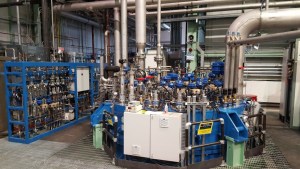
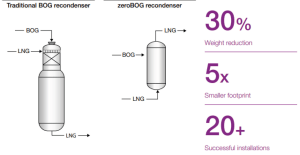
by Lennis Perez and Edward Tay, Sulzer The need for efficient and sustainable management of cryogenic gases extends far beyond traditional LNG applications. Enabling the recovery and reuse of boiloff gases, or BOG, across sectors such as hydrogen, e-methane and ammonia, supports the transition to low-carbon fuels and helps operators...
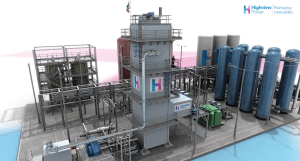
by Mark Vyvyan Robinson, Business Development Director, Highview Power As electricity systems integrate increasing volumes of renewable generation, the requirement for long-duration energy storage has become a defining challenge of the global energy transition. In northwest England, the city of Manchester and the surrounding Greater Manchester region are now home...
by Charlie Danaher, Danaher Cryogenics Bridging Interplanetary Distances Having a conversation between someone on Earth and Mars is not as science fiction as it used to be. That is thanks to scientists at NASA’s Jet Propulsion Laboratory (JPL) in Southern California and their successful demonstration of the Deep Space Optical...
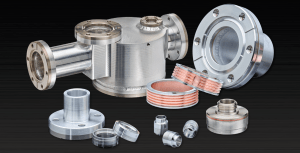
by Mel Janecka, Atlas Technologies Quantum computing companies and research facilities often find aluminum and titanium vacuum chambers to be better equipped to maintain purity and ultrahigh-vacuum (UHV) status. Plus, the chambers are non-magnetic and perform effectively within cryogenic conditions, critical for keeping qubits stable. Qubits, the basic units of...
When Kathleen Amm describes how she entered cryogenics, she does not point to a single defining moment. Instead, her path began with movement. In the early 1990s, she followed her thesis advisor Justin Schwartz from the University of Illinois to Tallahassee as the National High Magnetic Field Laboratory was opening....
A common way to provide cooling below the normal boiling point of helium (4.2K) is to reduce the pressure above the bath of liquid helium, thus also reducing the bath’s equilibrium saturation temperature. For example, to produce a 1.8K bath of liquid helium, the saturation pressure has to be reduced...
Kapitza conductance refers to the heat transfer between a solid surface and a fluid that covers that surface. Fundamentally, it describes the inherent difficulty in transferring energy from a solid to the fluid covering the solid surface. This phenomenon was first observed by P. L. Kapitza in 1941 while studying...
A thermosyphon (or thermosiphon) is a device that transfers heat via natural convection in a fluid. The natural convection is driven by gravity with the colder, denser fluid flowing downhill and the warmer, less dense fluid flowing back up. Thus, thermosyphons connect an object to be cooled with a reservoir...
Peter Kittel University of California-Berkeley pkittel@cal.berkeley.edu Space Cryogenics is the application of cryogenics to space missions. These applications fall into two broad areas, supporting space science missions and supporting the space transportation infrastructure. Science applications: The atmosphere is opaque to much of the electro-magnetic spectrum. In space, the absence of...
Review of Cryosurgery Boris Rubinsky, PhD Hebrew University School of Science and Engineering Research Center for Biomedical Engineering 78b Ross Building Givat Ram, Jerusalem 91904 Israel rubinsky@cs.huji.ac.il as published in Annual Review of Biomedical Engineering, August 2000, Vol. 2, pp. 157-187. Abstract: Cryosurgery is a surgical technique that employs freezing...
Liquefied Natural Gas as it relates to the Field of Cryogenics John W. Bonn VJ Systems, LLC johnbonn@vjsystems-lic.com Today the world is looking for a cleaner fuel and Liquefied Natural Gas (LNG) plays a large part in achieving this goal. LNG in a liquid form is at -162°C (-259°F) and...
Cryogenics and Food The industrial gas industry provides a host of products and services related to food. The various gases have useful and sometimes fascinating applications in food industry. “The food industry is not a homogenous industry. The needs of customers processing hamburger vs. poultry vs. strawberries vs. seafood, for...
I am trying to select a plastic to be used as a diffuser on the magnet end of a LHe fill siphon. Can you recommend anything that will hold up at LHe temps? I have seen some and they look like HDPE or Polypropylene but I am not sure.
I am looking for the thermal conductivity orthotropic properties from 300K up to 500K (or even higher, if available). “Cryocomp” provides orthotropic data on G-10 (Fill, Warp, Normal) only up to 300K.
I’m a student of physical engineering and I am looking for heat conductivity values of CuCrZr in the low temperature range of 4 to 300K. Jakub Voňka Brno University of Technology Faculty of Mechanical Engineering