ADVERTISEMENT

Solving a Mystery in Dark Matter Detectors Could Improve Quantum Computers

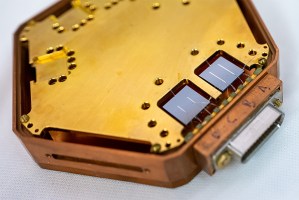
By Lauren Biron Although dark matter makes up most of the mass in our universe, it has never been directly observed. To hunt for lighter dark matter and other rare phenomena, researchers must solve a puzzle in their supersensitive detectors: an unexpected number of low-energy events, called the “low-energy excess”...

Hydrogen Aviation Advances With Airbus and RWTH Aachen’s GENtwoPRO Fuel Cell Project

By Erin Kilgore If you’ve been tracking the future of hydrogen aviation, you know it’s a path packed with big ideas and tricky engineering puzzles. Now, Airbus and RWTH Aachen University have kicked off an Airbus RWTH Aachen partnership laser-focused on a near-term, high-impact goal: using scalable fuel cell technology to power regional aircraft. Early in Airbus’s hydrogen journey,...

ADVERTISEMENT

Stability

Stability refers to the ability of a device employing superconductors to remain in its superconducting state after part of the superconductor transitions back to its normal conducting state due to a disturbance. While the concept can apply to many superconducting devices—transmission lines, generators, motors, etc.—it is most commonly considered in...

Cable-in-Conduit Conductors

Cable-in-Conduit Conductors (CICC) are a common form of superconducting cable used in large-scale applications. There are several varieties of CICCs, but they all consist of many small, stabilized superconducting wires contained within a conduit through which a coolant (typically supercritical He II) flows. Figure 1 shows the cross section of...

Bayonet Coupling

A bayonet coupling is a demountable joint that allows for quick and easy connection and disconnection of cryogenic components, including transfer lines, cryostats, liquefiers and refrigerators. Bayonets provide a number of advantages, chief among them the ability to connect and disconnect the bayonets while components they connect are still at...

Cryogenic Electronics

Randall Kirschman, consulting physicist, Mountain View, California ExtElect@gmail.com Cryogenic electronics—the operation of electronic devices, circuits, and systems at cryogenic temperatures—has been a valuable technology for decades. Cryogenic electronics (also referred to as low-temperature electronics, or cold electronics) can be based on semiconductive devices, on superconductive devices, or on a combination...

Particle Physics: High Energy Physics

Cryogenics and High-Energy Physics 1. From symmetry magazine: http://www.symmetrymagazine.org/cms/?pid=1000627: Cryogenics is the study of how materials behave at temperatures near absolute zero. In high-energy particle accelerators, such frigid temperatures reduce the electrical resistance of wires in superconducting magnets, increasing the magnet strength and allowing faster particle acceleration. The same holds...

HTS Degaussing Systems

From the Spring 2009 issue of Cold Facts (Volume 25, Number 2): Thanks to a joint project by the US Navy and a number of industry partners, high temperature superconducting (HTS) technology is now at the heart of an advanced degaussing system aboard the USS Higgins at the naval station...

Magnetic Resonance Imaging

From http://www.superconductors.org: An area where superconductors can perform a life-saving function is in the field of biomagnetism. Doctors need a non-invasive means of determining what’s going on inside the human body. By impinging a strong superconductor-derived magnetic field into the body, hydrogen atoms that exist in the body’s water and...