ADVERTISEMENT

Remembering our Friend, Ray Radebaugh (1939-2026)

The cryogenics community lost one of its most influential figures with the passing of Ray Radebaugh in February 2026. Over a career spanning more than five decades, Radebaugh helped shape modern cryogenic engineering through pioneering research, devoted mentorship and an unwavering willingness to share knowledge. His work on cryocoolers, dilution...
Cryogenics in Motion: Spaceline Delivers Advanced Nitrogen Trailer for NASA Armstrong

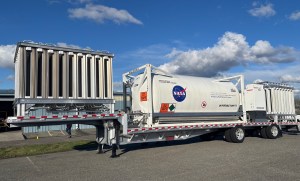
Spaceline Technologies, a fluid system engineering and manufacturing company, has completed a cryogenic nitrogen transport and supply trailer for NASA Armstrong Flight Research Center. This trailer is a mobile and standalone solution to provide pressure regulated nitrogen gas and liquid with flowrate and temperature control. Control of the trailer can...

Cryogenics and the Road to Superconducting Propulsion: Part I for Aircrafts

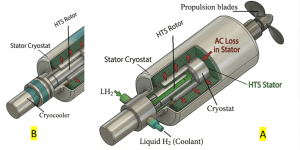
by Quan-Sheng Shu, cryospc.com and Jonathan Demko, Le Tourneau University Superconducting (SC) motors are pivotal for future transportation, offering power densities exceeding 20 kW/kg. Cooling philosophies diverge by architecture: partially superconducting aircraft designs (like NASA’s HEMM) utilize integrated mechanical cryocoolers for the rotor, whereas fully superconducting aircraft favor liquid hydrogen...

Pelican Wire Designs for Cryogenic and Extreme Energy Systems

As renewable energy, electrification and advanced research technologies continue to expand, the demands placed on wire and cable systems are evolving just as rapidly. Higher power densities, tighter system integration and increasingly extreme operating environments are pushing manufacturers beyond traditional commodity wire solutions. Caleb Lemmons, Business Development Manager at Pelican...

Meet the 2026 Young Professionals

This feature introduces outstanding young professionals (under 40 years of age) who are doing interesting things in cryogenics and superconductivity and who show promise of making a difference in their fields. Debuted in the 2006 issue, the feature has presented many young persons whom we are proud to see have...

Extraterrestrial Specifications for Cryogenic Fluid Production

by Wesley Johnson, NASA Glenn Research Center Here on our home planet, where we have been liquefying various “permanent gasses” since 1877 [1], most of us take it for granted that when we go out to buy a cryogenic liquid (or even a pure gas) we don’t have to write...

ADVERTISEMENT

Helium-3

Helium-3 (3He) is one of the two stable isotopes of helium. The other is the much more common Helium-4 (4He). Neither of these isotopes should be confused with He II, which is the second liquid phase of 4He. He II was discussed in this column in the Spring 2010 edition...

Cryopumping

Cryopumping refers to the use of cryogenic temperatures to produce vacuum in enclosed spaces. More broadly, it can also refer to the removal of gases via cryogenic temperatures from a flow stream or enclosure without necessarily resulting in vacuum pressures. This is an important application of cryogenics and is used...

Thermal Acoustic Oscillations

Thermal Acoustic Oscillations (TAO) are a common event in cryogenic systems that can have significant adverse effects on the performance of the system. TAOs are sustained pressure oscillations that can occur in tubes containing gas, closed at one end (the warm end) that have a very large temperature gradient along...

Magnetic Levitation

From http://www.superconductors.org. Magnetic-levitation is an application where superconductors perform extremely well. Transport vehicles such as trains can be made to “float” on strong superconducting magnets, virtually eliminating friction between the train and its tracks. Not only would conventional electromagnets waste much of the electrical energy as heat, they would have...

Superconductivity

From Superpower website. History of Superconductivity Superconductivity was discovered in 1911 by the Dutch physicist, Heike Kammerlingh Onnes when he was able to liquefy helium by cooling it to 4 Kelvin, or -452°F. This enabled him to cool other materials close to absolute zero and investigate their electrical properties. He...

Medical Applications of Cryogenics

Neutron Therapy Cryogenics is at the heart of nuclear accelerators. Accelerators such as Fermilab’s Tevatron make neutron therapy for cancer possible. From Fermilab Today 4/20/09: Fermilab currently offers neutron therapy. But staff at Fermilab designed and built the proton accelerator used by the nation’s first hospital-based treatment center to use...

Nuclear Physics

Al Zeller National Superconducting Cyclotron Lab (NSCL) at Michigan State University zeller@nscl.msu.edu Cryogenics has a long history in nuclear physics. The technology has its origins in the use of cold traps for maintaining a vacuum, which is required to prevent beam loss and for generating high voltages used in acceleration....

An Issue of Pressure and Flow Rate in a Supply Tank

Please help solve this problem: A supply tank requires a vaporizer to generate sufficient pressure to pump stored fluid up into a vehicle or tank. The available head is limited as the tank level falls and it is important to minimize the system pressure drop to maintain the desired flow...

Using MLI on VJ Line Joints or Cryo Storage Tanks

When installing Multi Layer Insulation (MLI) blankets on VJ line joints or cryo storage tanks should they be wrapped and tied down tight or loose? These are usually pre-cut to size. Also should they have an access hole at the point of where the molecular sieve is installed to help...