ADVERTISEMENT

Tiny Cryogenic Device Cuts Quantum Computer Heat Emissions By 10,000 Times

Researchers have developed a tiny device that extinguishes one of the biggest heat sources in quantum computers, cutting their running costs and potentially bringing these machines closer to commercial reality. Most quantum computers operate at temperatures close to absolute zero (459.67 degrees Fahrenheit, or minus 273.15 degrees Celsius) using specialized cooling equipment to...
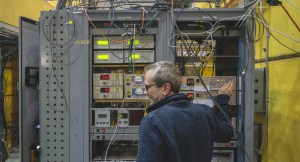
Dr. Jeff Martin U of Winnipeg

U of W Teams Sets Record for ‘Cool’ Science’

Over the summer, Dr. Jeff Martin, chair of the physics department at the University of Winnipeg (U of W), tripled his past record for ultracold neutron production at TRIUMF, Canada’s particle accelerator centre. With the help of Dr. Russell Mammei, Dr. Blair Jamieson and several graduate and undergraduate students, Martin...
Nikkiso Contracted for Bahamas LNG-to-Power Project

Nikkiso Contracted for Bahamas LNG-to-Power Project

Nikkiso Clean Energy & Industrial Gases Group has been contracted by NPG (a joint venture to be formed by Shell and a subsidiary of FOCOL Holdings Limited) to provide liquefied natural gas (LNG) regasification and cryogenic equipment for the New Providence Gas Project in Nassau, the Bahamas. The project involves...
Researchers Build Einstein Telescope Pathfinder with 10 km Arms and 10–15 K Cryogenic Mirrors

Researchers Build Einstein Telescope Pathfinder with 10 km Arms and 10–15 K Cryogenic Mirrors

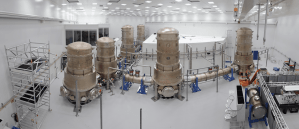
The search for gravitational waves continues to push the boundaries of precision measurement, and the next generation of detectors promises to reveal previously inaccessible cosmic events. Thomas Höhn, Adrian Schwenck, and Thomas Thümmler, from the Karlsruhe Institute of Technology, alongside the Einstein Telescope Pathfinder (ET-PF) collaboration, are developing crucial technologies...
© United Airlines/JetZero

JetZero Partners with SHZ to Explore Liquid Hydrogen-Powered All-Wing Aircraft

  US-based aircraft developer JetZero has partnered with French startup SHZ Advanced Technologies to explore a hydrogen-powered version of its Z4 all-wing design. Under the agreement, the clean aircraft venture will support SHZ in adapting its patented liquid hydrogen storage and distribution technologies for a Z4 variant, expected to deliver...
Image: Air Products

Air Products Successfully Completes First Liquid Hydrogen Fill of the World’s Largest Hydrogen Sphere at NASA’s Kennedy Space Center

Image: Air Products Air Products (NYSE:APD), the world’s leading supplier of hydrogen, today announced it has successfully completed the first fill of the world’s largest hydrogen sphere at the National Aeronautics and Space Administration’s (NASA) Kennedy Space Center located on Merritt Island, Florida. NASA uses liquid hydrogen combined with liquid...

ADVERTISEMENT

Joule-Thomson Effect

The Joule-Thomson (JT) effect is a thermodynamic process that occurs when a fluid expands from high pressure to low pressure at constant enthalpy (an isenthalpic process). Such a process can be approximated in the real world by expanding a fluid from high pressure to low pressure across a valve. Under...

Current Leads

One of the challenges of using superconducting magnets is the connection of the magnet to a room temperature power supply. This is accomplished via current leads. The trick is that current leads should ideally have a low heat leak, since they connect room temperature to cryogenic temperature, while at the...

Multilayer Insulation

Multilayer insulation (also referred to as superinsulation) is a key component in the reduction of heat leak to cryogenic systems due to thermal radiation. MLI consists of a series of uncooled reflective surfaces placed in the vacuum space between two surfaces, one warmer than the other. Generally speaking, for ideal...

Air Separation and Liquefaction

by Nils Tellier, PE, President, EPSIM Corporation (CSA CSM) nils@epsim.us All illustrations courtesy EPSIM Corporation Background History of Air Separation and Liquefaction This section builds on a rich history of methods to develop deep refrigeration and cryogenic liquefaction during the 19th Century. You are encouraged to read Cryo Central’s History...

Bose-Einstein Condensate

A Bose-Einstein condensate, first proposed in 1925 by Albert Einstein based on work done by Satyendra Nath Bose (the same Bose from whom the term boson is derived), is a super-cold state of matter in which almost all of the individual atoms have “condensed” down to the lowest possible quantum...

Cold Technology for Pest Control

While it does not reach temperatures cold enough to be called cryogenic, carbon dioxide snow is at the heart of a new way of dealing with unwanted pests. It utilizes a quick freezing process that takes advantage of the properties of carbon dioxide snow and has a number of benefits...

Cryogenic Finishing

The following 3 articles discuss the uses and procedures of various type of cryogenic finishing. 1) By Robin A. Rhodes, Cryogenic Institute of New England, Inc. rrhodes@nitrofreeze.com Cryogenic Deflashing is employed to remove undesired residual mold flash that remains on molded parts after they are removed or ejected from the...

Power usage: cryogenic systems vs. regular refrigerators

A recent project highlighted to me that closed cycle cryogenic cooling systems use far more electrical power to reduce temperatures by a few watts than regular refrigerators. I am sure it must be something to do with the extra difficulty of removing the heat from the liquid nitrogen or similar...

Redundancy strategies for mechanical -80C freezers

I was wondering what kind of redundancy strategies are people using for their mechanical -80C freezers? I am aware of the following. Please add if you are doing something different. 1) 1 Backup freezer for every 10 freezers – Empty and maintained at -80C at all times 2) Backup C02...

Method to move components in a cryogenic environment

Does anyone know of a method with which to reliably move components in a cryogenic environment? We are interested in moving detectors in a cryogenically cooled (2K) vacuum chamber, which is contained within a larger cryostat/isolation vacuum with thermal shields. As the desired horizontal or vertical displacement is between 10...