Over the summer, Dr. Jeff Martin, chair of the physics department at the University of Winnipeg (U of W), tripled his past record for ultracold neutron production at TRIUMF, Canada’s particle accelerator centre.
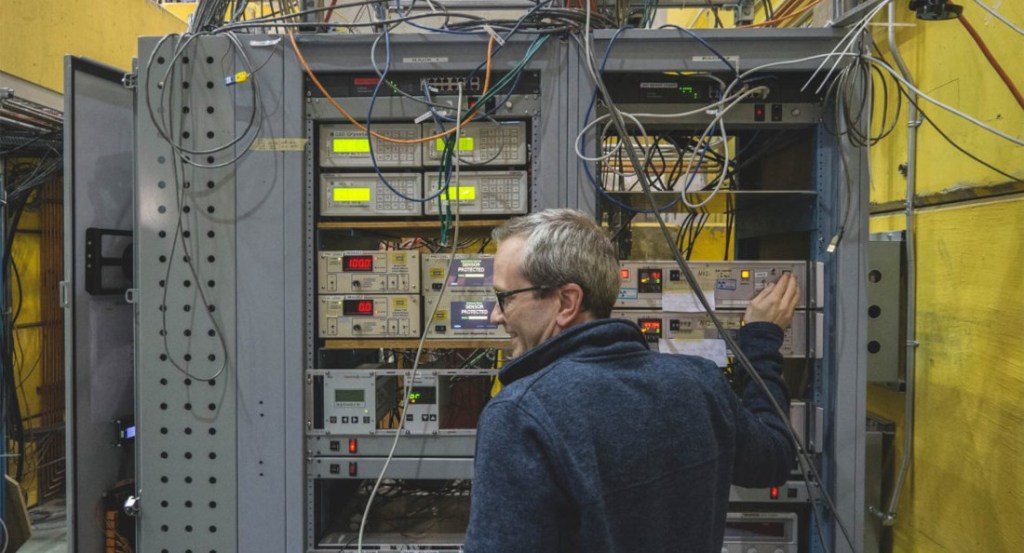
With the help of Dr. Russell Mammei, Dr. Blair Jamieson and several graduate and undergraduate students, Martin produced 900,000 ultracold neutrons – “free” neutrons that have been taken out of their nucleus and cooled down – per proton pulse.
Martin says his team is making great strides in nuclear physics research and paving the way to understanding matter and antimatter in the universe.
The project has been in the works since 2009, but Martin says incredible progress has been made over the last year alone.
“We turned on the proton beam, opened up the valve, and tons of ultracold neutrons came out. [It] was really gratifying to see,” he says.
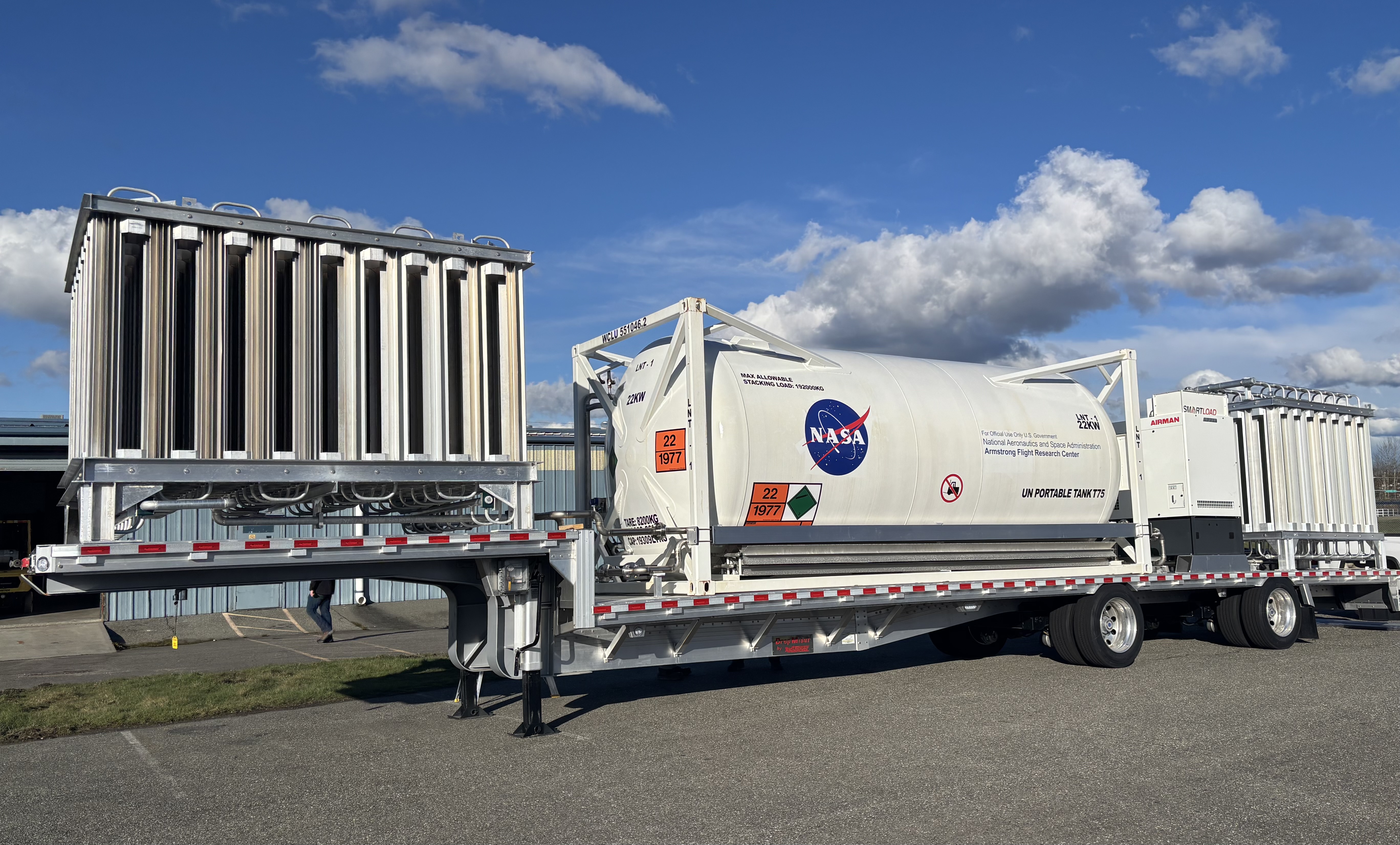
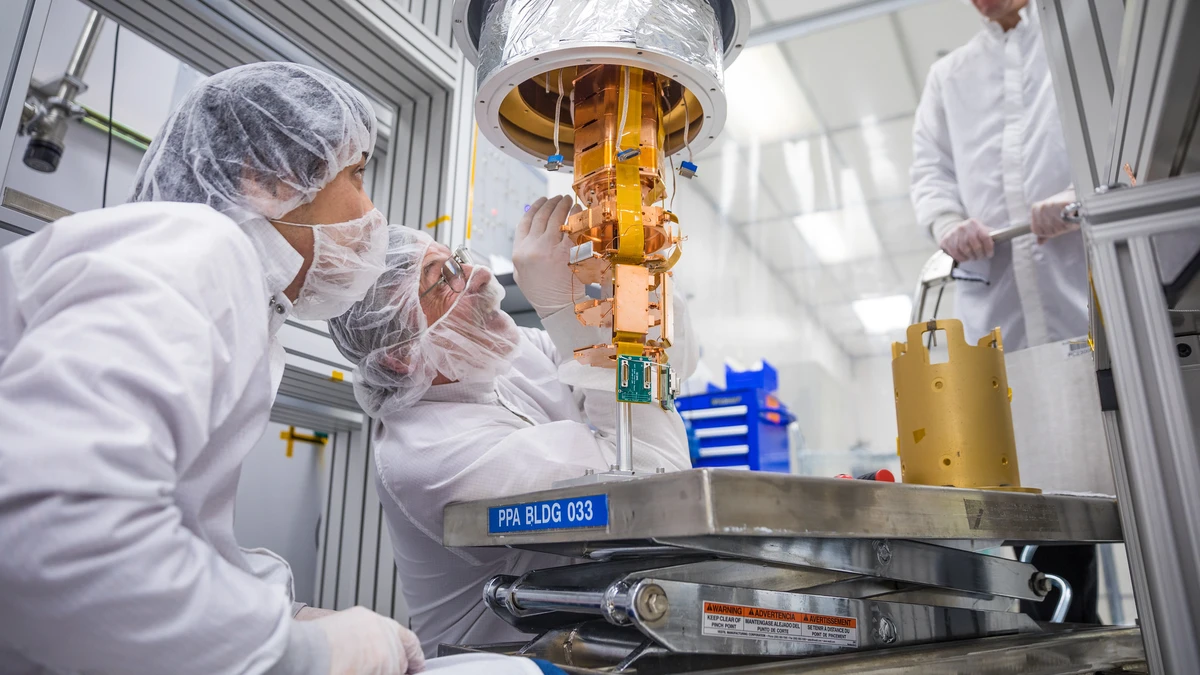
“It’s a cryogenic source … cooling down a refrigerator like that is a difficult task. It’s sort of like a refrigerator inside a refrigerator inside a refrigerator.”
Martin’s hard work should pay off, as the ultracold neutron source could help researchers in uncovering why they don’t see any antimatter in the universe. It may also reveal details about the early universe and explain why it exists at all.
“It’s world-leading science,” researcher Mammei says, “which shows that there’s really good science being done at the University of Winnipeg and that our students, the undergraduate students, have access and opportunities to participate.”
The undergraduate students in question include Modeste Katotoka, Simon Pankratz, Thomas Hepworth and Tyrone Reimer, who supervised shifts at the cryostat and helped around the labs at the U of W and the TRIUMF centre in Vancouver.
“It’s just amazing to be part of such a groundbreaking scientific discovery,” Reimer, now a second-year U of W student, says.
“I’m very grateful to be a part of such a crazy experience … as a first-year, being able to get involved in any sort of research is something that’s very uncommon [at] other universities.”
“It’s not just about the research,” Pankratz, a fourth-year student, says.
“It’s about making those connections with professors and with the scientific community so you have a support network … It’s easy to find at the U of W. It’s only one conversation away.”
Much of the students’ time is spent in Mammei’s ultracold neutron guide coating facility at the U of W, where he uses a high-energy UV laser and graphite to make a coating of diamond-like carbon, ideal for transporting ultracold neutrons.
“We have to get [the neutrons] from where they’re created to [where] the experiments [are] to actually do the science,” Mammei says. “The facility really showcases the diversity of nuclear physics research … the students that work in the lab get a lot of different exposure to skills.”
Martin and Mammei hope this project will lead to increased funding for their nuclear physics research, providing more opportunities for scientific advancement and student education.
“It’s really great that we can provide U of W students this experience to meet and interact with world-class scientists,” Mammei says.
Martin says the research means that, in the realm of nuclear physics, the U of W can now be regarded as a serious player on the world stage.
By: Bradi Beckman, Campus Reporter
Published in Volume 80, Number 01 of The Uniter (September 4, 2025)
Source: Uniter