ADVERTISEMENT

Ovarian Tissue Cryopreservation Offers Hope in Canada

A monumental program centered on ovarian tissue cryopreservation is offering hope to women and girls across Canada. Dr. James Benson, a world-renowned cryobiology expert, leads this transformative initiative. This medical procedure safeguards healthy ovarian tissue before cancer treatments can harm it, ultimately enabling female patients to have biological children in...
Pioneering High-Performance Valve Solutions

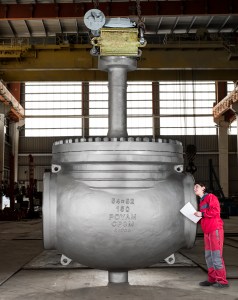
Ampo Poyam Valves (AMPO), with a history spanning nearly six decades, has established itself as a significant player in the realm of highly engineered valves and fluid handling solutions tailored for demanding applications and services. Drawing from its extensive experience, the company has earned a reputation for handling international projects...

Why Are Quantum Technologies So Cool?

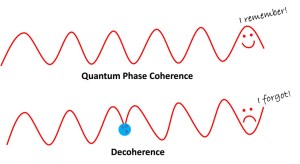
Efforts to build a useful quantum computer are underway, with startup companies competing alongside the big leaders in information technology. Other quantum technologies are already part of our everyday lives, from MRI scanners in hospitals to atomic clocks, which are used to keep precise track of time on GPS satellites...

New Thermometer Measures Cryogenic Temperatures at Submicron Scales

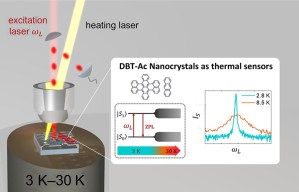
Taking the temperature of a sample can be tricky—especially in the regimes of the very small and the very cold. The smaller the sample, the greater the influence the thermometer itself may exert on the measurement. And in the ultracold regime, even tiny amounts of heat can significantly alter the...

ADVERTISEMENT

Dewar

A dewar is a type of cryostat named after Sir James Dewar, the researcher who first developed the concept of a vacuum insulated container with silvered walls to reflect thermal radiation. Dewar was the first to liquefy hydrogen, and he created the device to store his discovery. The thermos bottle...

Stirling and Gifford-McMahon Cryocoolers

Stirling and Gifford-McMahon (GM) cryocoolers are two of the most commonly used cryocoolers in cryogenics. Both devices have a significant industrial base and operate at a wide range of temperatures and capacities. The thermodynamic cycles for both of these cryocoolers are quite similar. The Stirling cycle consists of a compressor,...

Liquefied Natural Gas (LNG)

A significant commercial application of cryogenics is the liquefaction, transport and storage of natural gas. Liquefied Natural Gas (LNG) is generally 95 percent methane with a few percent ethane and much lower concentrations of propane and butane. LNG liquefies at 111.6 K. Unlike many applications of cryogenics, the motivation for...

Magnets

From “Superconductivity: Present and Future Applications” by the Coalition for the Commercial Application of Superconductors. Particle physics uses accelerators to recreate the conditions of the early universe in an attempt to piece together the complex puzzle of how we got to where we are today. These huge machines are used...

Energy Storage

From “Superconductivity: Present and Future Applications” by the Coalition for the Commercial Application of Superconductors. With power lines increasingly congested and prone to instability, strategic injection of brief bursts of real power can play a crucial role in maintaining grid reliability. Small-scale Superconducting Magnetic Energy Storage (SMES) systems, based on...

Astronomy

ASTRONOMY IN SPACE by Peter V. Mason, retired,  Jet Propulsion Laboratory, and Visiting Associate, California Institute of Technology. Pmason@alumni.caltech.edu In thinking about the reasons to perform astronomy in space, we first consider the effect of the earth’s atmosphere.  On a scale of decreasing energy, gamma rays, cosmic rays, X-rays and...

Cryocoolers

What is a Cryocooler? A mechanism that can extract heat from an object (cooler) and by doing so draw its temperature down below approximately 150 Kelvin (cryo). — (Courtesy Dr. Willy Gully) What is the difference between a Cryocooler and a Cryostat? A cryostat is any device designed to maintain...

Data on thermal expansion down to 40K

For our cold mechanics, we use ball bearings from ADR from stainless steel which is AISI 440C, DIN X105CrMo17, W.Nr. 1.4125. Does anyone know the data of thermal expansion of this material down to 40 K?

Materials for "cryogenics in spacetech"?

I had to take a seminar in a national competition that is to be held in our country on the topic “cryogenics in spacetech.” For this, I need some materials related to it, and I thought to approach you for help. Can you suggest some relevant materials?