ADVERTISEMENT

Cryogenics: A Short History and the Implications It Has on the QC Industry

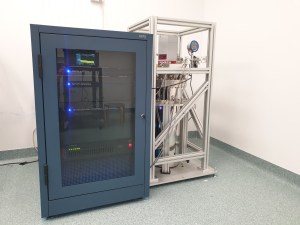
In the rapidly evolving landscape of quantum technology, cryogenics is an indispensable and fascinating domain that pushes the boundaries of low-temperature physics. Harnessing the power of extreme cold, this groundbreaking field plays a pivotal role in unlocking the true potential of quantum phenomena. This field of research has its origins in...

Cryotherapy for Kidney Cancer: A Chilling Innovation in Cancer Treatment

When it comes to battling cancer, innovation and evolution in medical technology play a vital role in improving treatment outcomes and patients’ quality of life. One such innovation that has been making strides in recent years is cryotherapy for kidney cancer. Cryotherapy, also known as freezing therapy, cryosurgery, or cryoablation,...

World’s First Crewed LH2 Flight Takes Off

At a somewhat small and unassuming airport in Maribor, Slovenia, German hydrogen propulsion startup H2FLY has quietly been building up to a major milestone in zero-emission aviation over the summer. And all the hard work has come to fruition, with the successful completion of the world’s first crewed liquid hydrogen-powered...

A Quantum Leap in Next-Gen Optical Atomic Clocks

QuantX Labs, an Australian deep technology company, has achieved a groundbreaking advancement with its cryogenic sapphire oscillator, the Cryoclock. Operating at microwave frequencies, it offers unparalleled signal purity and stability, attracting interest from defense and commercial markets while also spearheading the development of advanced quantum technology for space applications.  QuantX...

Strain Manipulates TaSe3 for Quantum Effects

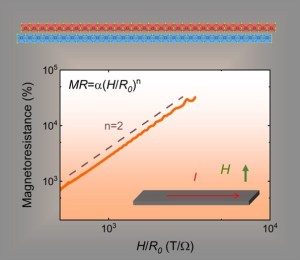
Topological effects are predicted to have many potential uses in future electronic devices. Therefore, finding ways to control these effects is desirable. As predicted by first-principles calculations, the one-dimensional (1D) transition-metal trichalcogenide TaSe3 is a strongly topological semimetal. It has a unique atomic arrangement of two inequivalent chains; the shorter...

Cryogenics at FAIR Unleashes the Power of Discovery

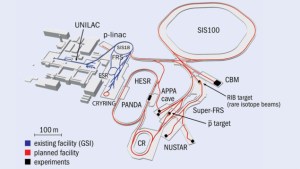
The Facility for Antiproton and Ion Research (FAIR) in Darmstadt, Germany, is embarking on a pioneering mission that will transform accelerator research and expand our understanding of the universe. With its ambitious vision to explore an extensive research canvas, FAIR is set to become a global hub for scientific exploration,...

ADVERTISEMENT

Stability

Stability refers to the ability of a device employing superconductors to remain in its superconducting state after part of the superconductor transitions back to its normal conducting state due to a disturbance. While the concept can apply to many superconducting devices—transmission lines, generators, motors, etc.—it is most commonly considered in...

Cable-in-Conduit Conductors

Cable-in-Conduit Conductors (CICC) are a common form of superconducting cable used in large-scale applications. There are several varieties of CICCs, but they all consist of many small, stabilized superconducting wires contained within a conduit through which a coolant (typically supercritical He II) flows. Figure 1 shows the cross section of...

Bayonet Coupling

A bayonet coupling is a demountable joint that allows for quick and easy connection and disconnection of cryogenic components, including transfer lines, cryostats, liquefiers and refrigerators. Bayonets provide a number of advantages, chief among them the ability to connect and disconnect the bayonets while components they connect are still at...

Cryogenic Electronics

Randall Kirschman, consulting physicist, Mountain View, California ExtElect@gmail.com Cryogenic electronics—the operation of electronic devices, circuits, and systems at cryogenic temperatures—has been a valuable technology for decades. Cryogenic electronics (also referred to as low-temperature electronics, or cold electronics) can be based on semiconductive devices, on superconductive devices, or on a combination...

Particle Physics: High Energy Physics

Cryogenics and High-Energy Physics 1. From symmetry magazine: http://www.symmetrymagazine.org/cms/?pid=1000627: Cryogenics is the study of how materials behave at temperatures near absolute zero. In high-energy particle accelerators, such frigid temperatures reduce the electrical resistance of wires in superconducting magnets, increasing the magnet strength and allowing faster particle acceleration. The same holds...

HTS Degaussing Systems

From the Spring 2009 issue of Cold Facts (Volume 25, Number 2): Thanks to a joint project by the US Navy and a number of industry partners, high temperature superconducting (HTS) technology is now at the heart of an advanced degaussing system aboard the USS Higgins at the naval station...

Magnetic Resonance Imaging

From http://www.superconductors.org: An area where superconductors can perform a life-saving function is in the field of biomagnetism. Doctors need a non-invasive means of determining what’s going on inside the human body. By impinging a strong superconductor-derived magnetic field into the body, hydrogen atoms that exist in the body’s water and...

An Issue of Pressure and Flow Rate in a Supply Tank

Please help solve this problem: A supply tank requires a vaporizer to generate sufficient pressure to pump stored fluid up into a vehicle or tank. The available head is limited as the tank level falls and it is important to minimize the system pressure drop to maintain the desired flow...

Using MLI on VJ Line Joints or Cryo Storage Tanks

When installing Multi Layer Insulation (MLI) blankets on VJ line joints or cryo storage tanks should they be wrapped and tied down tight or loose? These are usually pre-cut to size. Also should they have an access hole at the point of where the molecular sieve is installed to help...