ADVERTISEMENT

How the SpaceX Explosion Would Have Been Different in Florida

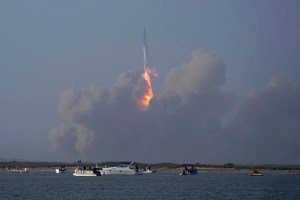
Shortly after SpaceX’s massive Starship launched from Texas on its first full test early Thursday, the 400-foot stack of hardware began to tumble until it broke apart in a fiery explosion over the Gulf of Mexico. The overall demonstration mission – a test of the new rocket’s ability to ignite and clear the pad’s 500-foot tower...

Svanehøj Acquires Complete Cryogenic Services

With its third company acquisition in just over two years, marine pump specialist, Svanehøj, continues to expand its service solution business, this time by taking over California-based Complete Cryogenic Services (CCS), a specialist in service and overhaul of submerged pumps on LNG tankers. The number of LNG tankers globally has grown...

Skyroot Aerospace and Dhawan-II’s More Powerful 3D-Printed Cryogenic Engine

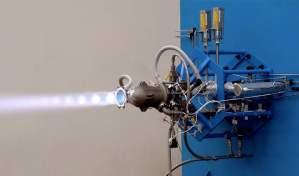
In 2020, the world was introduced to Dhawan-I, a 3D printed cryogenic engine made by Skyroot Aerospace. Three years later, the Indian company has been working on a more powerful model, unveiling to the public the new and improved Dhawan-II, which is said to have successfully completed testing. Like its predecessor,...

A Game Changer for CERN

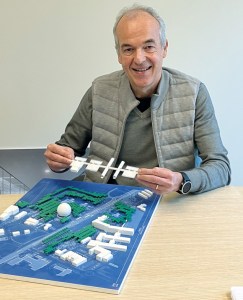
CERN’s new visitor and education center, Science Gateway, due to open this autumn, will welcome up to half a million people each year. Project leader Patrick Geeraert describes how this iconic project came about, how it will operate, and what it aims to achieve. How did the idea for Science...

New SLAC-Stanford Battery Center Targets Energy Transition

The Department of Energy’s SLAC National Accelerator Laboratory and Stanford University announced the launch of a new joint battery center at SLAC. It will bring together the resources and expertise of the national lab, the university and Silicon Valley to accelerate the deployment of batteries and other energy storage solutions...

New Study Could Help Pinpoint Hidden Helium Gas Fields

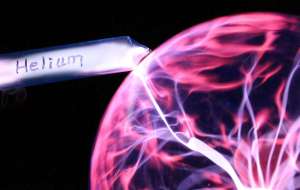
Research led by the University of Oxford could help overturn the current supply crisis of helium, a vital societal resource. The study proposes a new model to account for the existence of previously unexplained helium-rich reservoirs. The findings, published in Nature, could help locate untapped reservoirs of accessible helium. Dr. Anran...

ADVERTISEMENT

Dewar

A dewar is a type of cryostat named after Sir James Dewar, the researcher who first developed the concept of a vacuum insulated container with silvered walls to reflect thermal radiation. Dewar was the first to liquefy hydrogen, and he created the device to store his discovery. The thermos bottle...

Stirling and Gifford-McMahon Cryocoolers

Stirling and Gifford-McMahon (GM) cryocoolers are two of the most commonly used cryocoolers in cryogenics. Both devices have a significant industrial base and operate at a wide range of temperatures and capacities. The thermodynamic cycles for both of these cryocoolers are quite similar. The Stirling cycle consists of a compressor,...

Liquefied Natural Gas (LNG)

A significant commercial application of cryogenics is the liquefaction, transport and storage of natural gas. Liquefied Natural Gas (LNG) is generally 95 percent methane with a few percent ethane and much lower concentrations of propane and butane. LNG liquefies at 111.6 K. Unlike many applications of cryogenics, the motivation for...

Magnets

From “Superconductivity: Present and Future Applications” by the Coalition for the Commercial Application of Superconductors. Particle physics uses accelerators to recreate the conditions of the early universe in an attempt to piece together the complex puzzle of how we got to where we are today. These huge machines are used...

Energy Storage

From “Superconductivity: Present and Future Applications” by the Coalition for the Commercial Application of Superconductors. With power lines increasingly congested and prone to instability, strategic injection of brief bursts of real power can play a crucial role in maintaining grid reliability. Small-scale Superconducting Magnetic Energy Storage (SMES) systems, based on...

Astronomy

ASTRONOMY IN SPACE by Peter V. Mason, retired,  Jet Propulsion Laboratory, and Visiting Associate, California Institute of Technology. Pmason@alumni.caltech.edu In thinking about the reasons to perform astronomy in space, we first consider the effect of the earth’s atmosphere.  On a scale of decreasing energy, gamma rays, cosmic rays, X-rays and...

Cryocoolers

What is a Cryocooler? A mechanism that can extract heat from an object (cooler) and by doing so draw its temperature down below approximately 150 Kelvin (cryo). — (Courtesy Dr. Willy Gully) What is the difference between a Cryocooler and a Cryostat? A cryostat is any device designed to maintain...