ADVERTISEMENT

Berkeley Lab Scientists Develop a Cool New Method of Refrigeration

Adding salt to a road before a winter storm changes when ice will form. Researchers at the Department of Energy’s Lawrence Berkeley National Laboratory (Berkeley Lab) have applied this basic concept to develop a new method of heating and cooling. The technique, which they have named “ionocaloric cooling,” is described...
With Landmark Approval, Spotlight on Cryogenic Logistics Intensifies

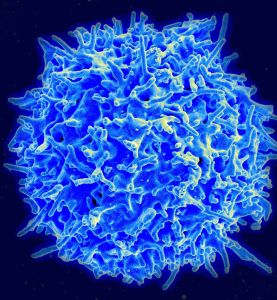
The cell and gene therapy (CGT) industry achieved a significant milestone at the end of 2022: the first approval of an allogeneic T-cell therapy in the world. Following a positive recommendation from Europe’s Committee for Medicinal Products for Human Use (CHMP), the European Commission on Monday 19th December formally approved Atara Biotherapeutics’ Ebvallo...

New Instrument Measures Supercurrent Flow with Quantum Benefits

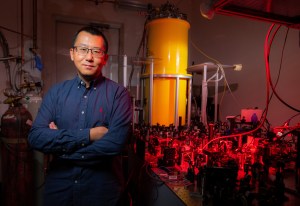
Jigang Wang offered a quick walk-around of a new sort of microscope that can help researchers understand, and ultimately develop, the inner workings of quantum computing. Wang, an Iowa State University professor of physics and astronomy who’s also affiliated with the U.S. Department of Energy’s Ames National Laboratory, described how the instrument works in extreme...

Cryomech Celebrates 60 Years of Cryo-Innovations

Cryomech was founded in 1963 by William E. “Bill” Gifford. Gifford was a professor at Syracuse University from 1961 to 1978 and (in collaboration with Dr. Howard O. McMahon) invented the Gifford-McMahon (GM) cycle cryo­cooler in 1957. This invention made research at very low temperatures much more accessible to the...

What’s the Matter? STAR Cryoelectronics Builds Superconducting Quantum Sensors for X-ray Analysis and Dark Matter Searches

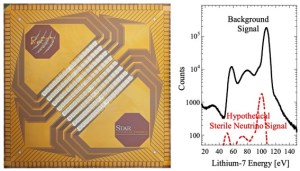
STAR Cryoelectronics, founded in 1999, is a leading worldwide supplier of advanced ultrasensitive quantum sensors and X-ray detectors based on superconductors and related control and readout electronics. The company also offers custom thin-film foundry services for superconductor electronics applications, cryogen-free, adiabatic demagnetization refrigerator (ADR) cryostats, and high-resolution spectrometers based on...

KEYCOM Celebrates 30 Years of Worldwide Industry Standards

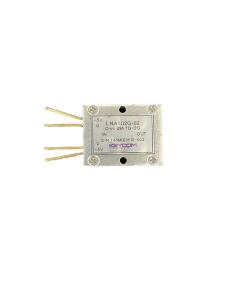
The computing elements of a quantum computer can only be operated properly when they are free of electronic noise. In order to achieve this state, it is necessary to realize an ultralow temperature environment in the millikelvins at a minimum. However, it is not enough to simply provide a dilution...

ADVERTISEMENT

Dewar

A dewar is a type of cryostat named after Sir James Dewar, the researcher who first developed the concept of a vacuum insulated container with silvered walls to reflect thermal radiation. Dewar was the first to liquefy hydrogen, and he created the device to store his discovery. The thermos bottle...

Stirling and Gifford-McMahon Cryocoolers

Stirling and Gifford-McMahon (GM) cryocoolers are two of the most commonly used cryocoolers in cryogenics. Both devices have a significant industrial base and operate at a wide range of temperatures and capacities. The thermodynamic cycles for both of these cryocoolers are quite similar. The Stirling cycle consists of a compressor,...

Liquefied Natural Gas (LNG)

A significant commercial application of cryogenics is the liquefaction, transport and storage of natural gas. Liquefied Natural Gas (LNG) is generally 95 percent methane with a few percent ethane and much lower concentrations of propane and butane. LNG liquefies at 111.6 K. Unlike many applications of cryogenics, the motivation for...

Cryogenic Electronics

Randall Kirschman, consulting physicist, Mountain View, California ExtElect@gmail.com Cryogenic electronics—the operation of electronic devices, circuits, and systems at cryogenic temperatures—has been a valuable technology for decades. Cryogenic electronics (also referred to as low-temperature electronics, or cold electronics) can be based on semiconductive devices, on superconductive devices, or on a combination...

Particle Physics: High Energy Physics

Cryogenics and High-Energy Physics 1. From symmetry magazine: http://www.symmetrymagazine.org/cms/?pid=1000627: Cryogenics is the study of how materials behave at temperatures near absolute zero. In high-energy particle accelerators, such frigid temperatures reduce the electrical resistance of wires in superconducting magnets, increasing the magnet strength and allowing faster particle acceleration. The same holds...

HTS Degaussing Systems

From the Spring 2009 issue of Cold Facts (Volume 25, Number 2): Thanks to a joint project by the US Navy and a number of industry partners, high temperature superconducting (HTS) technology is now at the heart of an advanced degaussing system aboard the USS Higgins at the naval station...

Magnetic Resonance Imaging

From http://www.superconductors.org: An area where superconductors can perform a life-saving function is in the field of biomagnetism. Doctors need a non-invasive means of determining what’s going on inside the human body. By impinging a strong superconductor-derived magnetic field into the body, hydrogen atoms that exist in the body’s water and...