ADVERTISEMENT

First Radio-Astronomy Cryogenic Receivers with All-Metal 3D-Printed RF Components

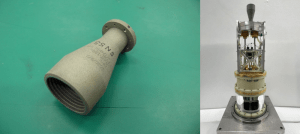
The NAOJ ALMA Project and Advanced Technology Center have successfully fabricated corrugated all-metal 3D-printed horns for the ALMA Band 1 receivers (Radio Frequency: 35-50 GHz). Since around 2015, the NAOJ ALMA Project and the Advanced Technology Center have been studying the applications of additive manufacturing (AM), which produces three-dimensional objects by...

Azenta Hosts First Cryogenic Considerations for Cell & Gene Therapy Symposium

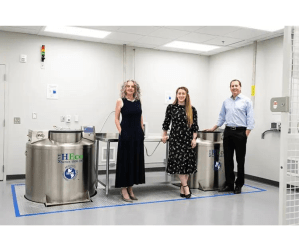
Azenta Life Sciences, a leading provider of life sciences solutions worldwide, hosted the Cryogenic Considerations for Cell and Gene Therapy Symposium in Boston, MA October 17-19th. The symposium brought together over 100 participants across over 60 organizations including top cryobiology experts to discuss the nuances of cryogenic supply chain, transient warming, and...

Almac Unveils New Cryogenic Service Solution for Advanced Therapy Trials

Almac Clinical Services, a member of The Almac Group, announced a new state-of-the-art cryogenic service solution within its Durham, N. C. campus to support cell and gene therapies. This latest investment from Almac adds to the company’s overall $4 million investment to date in innovative cold chain technology in North...

ADVERTISEMENT

Dewar

A dewar is a type of cryostat named after Sir James Dewar, the researcher who first developed the concept of a vacuum insulated container with silvered walls to reflect thermal radiation. Dewar was the first to liquefy hydrogen, and he created the device to store his discovery. The thermos bottle...

Stirling and Gifford-McMahon Cryocoolers

Stirling and Gifford-McMahon (GM) cryocoolers are two of the most commonly used cryocoolers in cryogenics. Both devices have a significant industrial base and operate at a wide range of temperatures and capacities. The thermodynamic cycles for both of these cryocoolers are quite similar. The Stirling cycle consists of a compressor,...

Liquefied Natural Gas (LNG)

A significant commercial application of cryogenics is the liquefaction, transport and storage of natural gas. Liquefied Natural Gas (LNG) is generally 95 percent methane with a few percent ethane and much lower concentrations of propane and butane. LNG liquefies at 111.6 K. Unlike many applications of cryogenics, the motivation for...

Primary Standards

Elie K. Track Hypres, Inc. elie@hypres.com http://www.hypres.com/ Primary standards involve the exact definition and realization of units of measurement for various quantities, time, length, mass, voltage, resistance, current, etc. International agreements based on the latest scientific knowledge define those units, and their realizations vary depending on the unit itself. For...

Shrink Fitting

Robin A. Rhodes Cryogenic Institute of New England, Inc. rrhodes@nitrofreeze.com Shrink fitting, (or “compression fitting” as it is sometimes called), is a method used to insert a pin or bushing into a housing or other assembly requiring an extremely tight tolerance fit. It can be used as an alternative to...

Telecommunications

From the Winter 2004 issue of Cold Facts magazine The recent M-Calc IV — 4th Industry Assessment workshop discussing military and commercial applications for low-cost cryocoolers, held in November in San Diego, highlighted progress being made in cryogenics as applied in telecommunications. The reliability and long lifetime of projects now...

Wind Tunnels

Dr. Robert Kilgore The development of the cryogenic wind tunnel is one of many significant breakthroughs in both cryogenics and wind-tunnel technology made during the past millennium. Interest in the development of high-speed commercial and military aircraft resulted in a review of problems of flow simulation in transonic wind tunnels...

What is the temperature range of cryogenics?

Could you please tell me what is the temperature range of cryogenics? In other words, is -100°F considered cryogenic, or does it start lower? Could I expect to see some extended life in D2 stamping dies? What would the recipe be to achieve the desired results using cryogenics?