ADVERTISEMENT

NASA’s Cold Atom Lab Experiments with Exotic State of Matter

Since the days of NASA’s Apollo program, astronauts have documented (and contended with) how liquids like water behave differently in microgravity than they do on Earth – coalescing into floating spheres instead of bottom-heavy droplets. Now, researchers have demonstrated this effect with a much more exotic material: gas cooled to...
Temperatures Colder Than Space, Achieved on Earth Through X-ray Laser

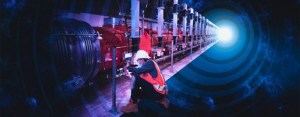
A half-mile-long tunnel under Menlo Park, Calif., has become colder than most of the universe because of a particle accelerator that slams electrons together here on Earth. Using the X-ray free-electron laser at the Department of Energy’s SLAC National Accelerator Laboratory – part of an upgrade project to the Linac Coherent...

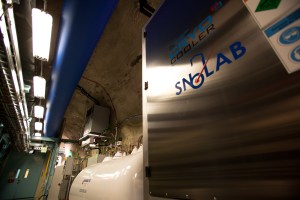
Extreme Cool – Making Liquid Nitrogen in a Deep Underground Clean Lab

SNOLAB is Canada’s deep underground research laboratory, located two kilometers underground in Vale’s Creighton mine near Sudbury, Ontario, Canada. SNOLAB is a unique facility, providing a low background environment designed for scientific research and operates a 5,000m2 underground campus as a class-2000 clean lab. While the science program is focused...

A Quarter-Century Industry Experience Brings About New Company

After 25 years in the high-tech cryogenics field, while employed at Cryogenic Technical Services (CTS) and High Precision Devices (HPD) and working with some of the best scientific minds in the world, Charlie Danaher started Danaher Cryogenics in early 2022 to respond to the ever-increasing demand for elegant, collaborative solutions...

Are We Alone in the Cosmos? Space Dynamics Lab to Help Answer the Question

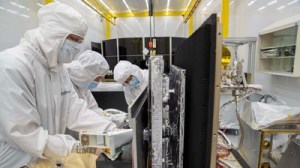
Utah State University’s Space Dynamics Laboratory (USU SDL) announced in May 2022 that it has delivered a critical subsystem to NASA’s Jet Propulsion Laboratory (JPL) for integration onto the Nancy Grace Roman Space Telescope. The Cryogenic Thermal Subsystem for the Roman Coronagraph Instrument was delivered to JPL at SDL’s facilities...

ADVERTISEMENT

Dewar

A dewar is a type of cryostat named after Sir James Dewar, the researcher who first developed the concept of a vacuum insulated container with silvered walls to reflect thermal radiation. Dewar was the first to liquefy hydrogen, and he created the device to store his discovery. The thermos bottle...

Stirling and Gifford-McMahon Cryocoolers

Stirling and Gifford-McMahon (GM) cryocoolers are two of the most commonly used cryocoolers in cryogenics. Both devices have a significant industrial base and operate at a wide range of temperatures and capacities. The thermodynamic cycles for both of these cryocoolers are quite similar. The Stirling cycle consists of a compressor,...

Liquefied Natural Gas (LNG)

A significant commercial application of cryogenics is the liquefaction, transport and storage of natural gas. Liquefied Natural Gas (LNG) is generally 95 percent methane with a few percent ethane and much lower concentrations of propane and butane. LNG liquefies at 111.6 K. Unlike many applications of cryogenics, the motivation for...

Food Processing

Cryogenics and Food The industrial gas industry provides a host of products and services related to food. The various gases have useful and sometimes fascinating applications in food industry. “The food industry is not a homogenous industry. The needs of customers processing hamburger vs. poultry vs. strawberries vs. seafood, for...

Primary Standards

Elie K. Track Hypres, Inc. elie@hypres.com http://www.hypres.com/ Primary standards involve the exact definition and realization of units of measurement for various quantities, time, length, mass, voltage, resistance, current, etc. International agreements based on the latest scientific knowledge define those units, and their realizations vary depending on the unit itself. For...

Shrink Fitting

Robin A. Rhodes Cryogenic Institute of New England, Inc. rrhodes@nitrofreeze.com Shrink fitting, (or “compression fitting” as it is sometimes called), is a method used to insert a pin or bushing into a housing or other assembly requiring an extremely tight tolerance fit. It can be used as an alternative to...

Telecommunications

From the Winter 2004 issue of Cold Facts magazine The recent M-Calc IV — 4th Industry Assessment workshop discussing military and commercial applications for low-cost cryocoolers, held in November in San Diego, highlighted progress being made in cryogenics as applied in telecommunications. The reliability and long lifetime of projects now...

Need help comparing chest freezers and upright freezers

Currently we use in our Biobank an upright -80 freezer to store all our samples. We are planning to buy a fully automated bio-repository storage that will do the picking of samples under restricted conditions. But in the meantime I foresee that we have to pick the samples manually. The...

Need recommendations for cryogenic vials

I am looking into standardizing our range of bio storage tubes (cryogenic vials). These will be for both blood and tissue samples and their derivatives. Any recommendations, comments on Micronics, Nalgene, Nunc and or others that are suitable for long term -80 C and -196 C storage, DNA/RNA suitable, would...

We need a custom machine for flash freezing of water

We are an ice making company and have started a new project, which is related to flash freezing of water. It is based on cryogenics technology and we need a custom made machine. I would kindly ask you to pass me a few companies who would be interested in such...

Looking for a pump suitable for cold liquids

I would like to construct a small cooling circuit (appr. 50 x 50 cm) pumping liquid at a temperature down to -120°C from a cold reservoir to the specimen to be cooled. The tubes and connections are not a problem, but does somebody know a pump (suction/compression for circulation) suitable...