ADVERTISEMENT

Could Zero-Boiloff Storage Be Easier Than We Think?

CSA April Newsletter SponsorHigh-performance, highly reliable, long-lasting storage tanks for transporting hydrogen & helium molecules around the globe.​https://www.gardnercryo.com [Contact Jamie Luedtke for Newsletter Sponsorship] Home About Membership Login Calendar Cold Facts Buyer’s Guide News Publications Cryo Careers Resources Donate Join now Log in Cryogenic Society of America, Inc. Twitter Facebook...

2022 Women in Cryogenics

Each year, CSA celebrates women in the fields of cryogenics, superconductivity, and quantum in our annual Women in Cryogenics feature. This year, we meet eight women across various sub-industries of cryogenics who are not only making great accomplishments and impacts in their fields of work, but also who provide powerful advice for how...

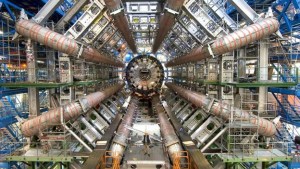
Large Hadron Collider Comes Back to Life After Three-year Hiatus

The world’s most powerful particle accelerator—the Large Hadron Collider (LHC)—has sprung back to life after a three-year shutdown. After planned maintenance and upgrades, the Large Hadron Collider has been turned back on and will shortly start another run of cutting-edge experiments. The LHC, in Switzerland, was switched off in December 2018...

USC’s New Cryogenic Electron Microscopy Facility Officially Opens for Business

USC’s new cryogenic electron microscopy (cryo-EM) facility, featuring state-of-the-art instrumentation capable of imaging molecules, garnered the spotlight during a recent symposium celebrating the facility’s official grand opening. Scientists and officials from USC, biotechnology giant Amgen, Thermo Fisher Scientific, and noted academic research institutions gathered for the event, held in March at...

Ultra-lightweight Cryogenic Tank Aids Aircraft Industry Endeavors

California-based firm HyPoint is developing an innovative cryogenic tank design that could massively boost the range of hydrogen-powered aircraft, a press statement reveals. HyPoint’s technology is extremely lightweight compared with traditional fuel cells and it could allow airliners to fly up to four times farther than traditional passenger aircraft. A 50-56 passenger...

Webb Telescope’s Coldest Instrument Reaches Operating Temperature

NASA’s James Webb Space Telescope will see the first galaxies to form after the big bang, but to do that its instruments first need to get cold – really cold. On April 7, Webb’s Mid-Infrared Instrument (MIRI) – a joint development by NASA and ESA (European Space Agency) – reached its...

ADVERTISEMENT

Adiabatic Demagnetization Refrigeration

Reaching temperatures below 1K requires different techniques than the various helium gas cycles found in large scale refrigeration plants and small cryocoolers. One of these techniques is Adiabatic Demagnetization Refrigeration (ADR). This technique takes advantage of the fact that the entropy of paramagnetic materials in a magnetic field is lower than...

Cryogen-Free

A cryogen is any fluid that operates at cryogenic temperatures (below roughly 150K – 120K). Using this definition, helium gas at 40K is a cryogen. Another more restrictive definition is to use cryogen to refer specifically to liquids at cryogenic temperatures. This is generally how it is used in the...

Cryostats and Cryocoolers

A cryostat is any device designed to maintain things (including fluids) at cryogenic temperatures. In general usage, cryostats tend to be passive devices rather than providing active cooling. In this usage, cryostats keep things cold by thermally isolating them from room temperature. This generally is accomplished by a combination of...

Magnetic Levitation

From http://www.superconductors.org. Magnetic-levitation is an application where superconductors perform extremely well. Transport vehicles such as trains can be made to “float” on strong superconducting magnets, virtually eliminating friction between the train and its tracks. Not only would conventional electromagnets waste much of the electrical energy as heat, they would have...

Superconductivity

From Superpower website. History of Superconductivity Superconductivity was discovered in 1911 by the Dutch physicist, Heike Kammerlingh Onnes when he was able to liquefy helium by cooling it to 4 Kelvin, or -452°F. This enabled him to cool other materials close to absolute zero and investigate their electrical properties. He...

Medical Applications of Cryogenics

Neutron Therapy Cryogenics is at the heart of nuclear accelerators. Accelerators such as Fermilab’s Tevatron make neutron therapy for cancer possible. From Fermilab Today 4/20/09: Fermilab currently offers neutron therapy. But staff at Fermilab designed and built the proton accelerator used by the nation’s first hospital-based treatment center to use...

Nuclear Physics

Al Zeller National Superconducting Cyclotron Lab (NSCL) at Michigan State University zeller@nscl.msu.edu Cryogenics has a long history in nuclear physics. The technology has its origins in the use of cold traps for maintaining a vacuum, which is required to prevent beam loss and for generating high voltages used in acceleration....

An Issue of Pressure and Flow Rate in a Supply Tank

Please help solve this problem: A supply tank requires a vaporizer to generate sufficient pressure to pump stored fluid up into a vehicle or tank. The available head is limited as the tank level falls and it is important to minimize the system pressure drop to maintain the desired flow...

Using MLI on VJ Line Joints or Cryo Storage Tanks

When installing Multi Layer Insulation (MLI) blankets on VJ line joints or cryo storage tanks should they be wrapped and tied down tight or loose? These are usually pre-cut to size. Also should they have an access hole at the point of where the molecular sieve is installed to help...