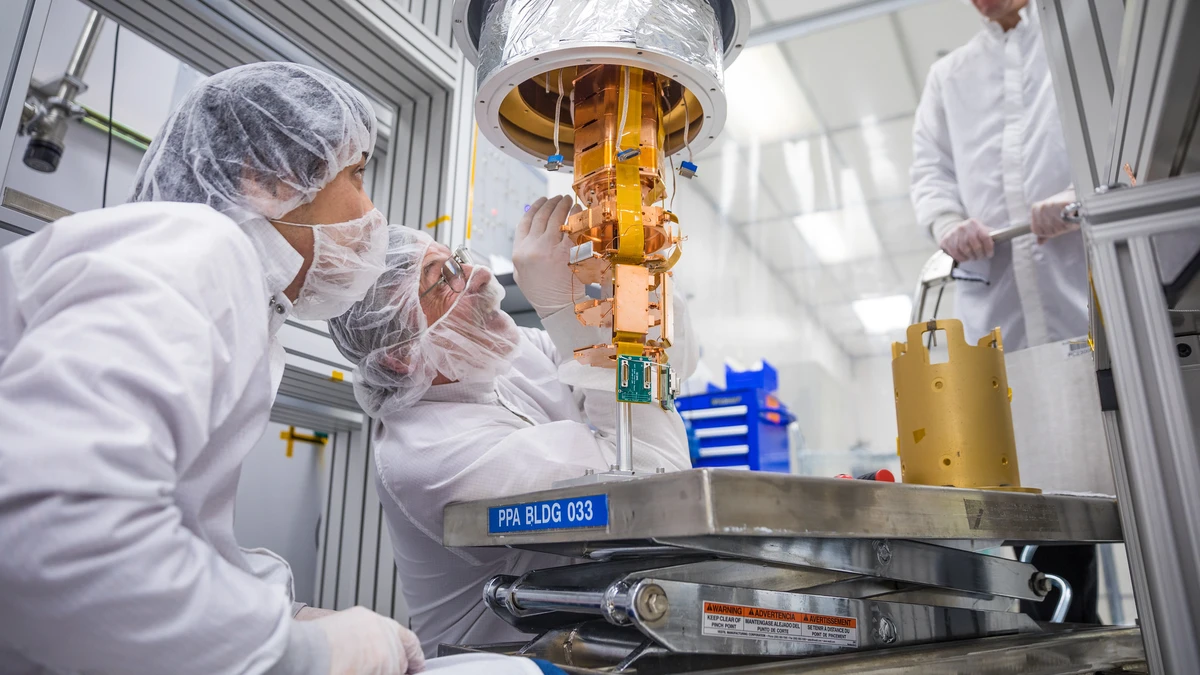
The Imaging Cosmic and Rare Underground Signals (ICARUS) experiment was inaugurated at the Gran Sasso National Laboratory in Italy on March 29. ICARUS required more than two decades of research and development in order to begin operation, and it is the largest liquid argon detector in the world.
ICARUS will study the oscillations of artificial neutrinos sent from CERN, as well as atmospheric neutrinos and cosmic events. In addition, the experiment aims to observe the decay of nucleons (protons and neutrons), a phenomenon that has escaped direct observation by physicists. The experiment will produce high-resolution images in real time.
“ICARUS is an innovative apparatus capable of reconstructing in 3D any particle interactions in its interior,” said Lucia Votano of LNGS, an Italian university. “The operation of such a large and complex apparatus in an underground laboratory constitutes a decisive step forward to the realization of future experiments with a liquid argon volume of many thousand tons, and furthermore, it is proof of the high level of technology used in the Gran Sasso Laboratory.”
The ICARUS experiments is a collaboration between physicists in Italy, Poland, the US and Russia.