ADVERTISEMENT

The Next Generation in Cryogenics and Superconductivity

This feature introduces outstanding young professionals (under 40 years of age) who are doing interesting things in cryogenics and superconductivity and who show promise of making a difference in their fields. Debuted in the 2006 issue, the feature has presented many young persons whom we are proud to see have indeed lived...

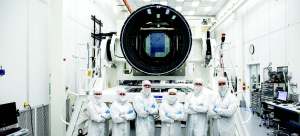
Great Opportunity: RFI for Black Hole Cooling System

CSA April Newsletter SponsorHigh-performance, highly reliable, long-lasting storage tanks for transporting hydrogen & helium molecules around the globe.​https://www.gardnercryo.com [Contact Jamie Luedtke for Newsletter Sponsorship] Home About Membership Login Calendar Cold Facts Buyer’s Guide News Publications Cryo Careers Resources Donate Join now Log in Cryogenic Society of America, Inc. Twitter Facebook...

Cryogenic Processors to Open Kentucky-Based Freeze-Dry and Packaging Site

Cryogenic freezing specialist Cryogenic Processors will open a new cryogenic freezing and freeze-drying facility in Paducah, Kentucky, at the end of 2024. The plant will feature three isolated pelletising rooms, each equipped with advanced blending systems and a standard conical pelletiser with an increased capacity of 1000kg per hour. Once pelletized,...

Physicists Created an Exotic Superconductor Controlled by Magnetism

Superconductivity continues to revolutionize technology in so many ways. While some technological advances rely on finding ways to encourage zero-resistance currents at warmer temperatures, engineers are also considering better ways of fine-controlling the super-efficient flow of electrons. Unfortunately, many processes that would work just fine for run-of-the-mill electronics, such as the application...

MIT’s Superconducting Magnets are Ready for Fusion

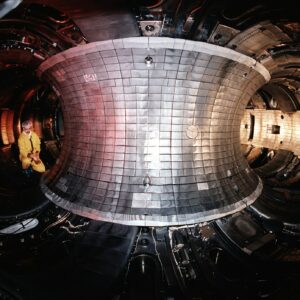
Harnessing nuclear fusion, the process by which lighter atoms combine into heavier ones, has been a dream of researchers for generations: in theory, it could produce electricity without emitting greenhouse gases and, unlike nuclear fission, generate very little radioactive waste. But making fusion work requires compressing hydrogen plasma fuel at...

Enhancing Fusion Reactor Control Through Combined Plasma Management Techniques

The team’s latest simulations, discussed in their recent publication in Nuclear Fusion, mark the first instance where ECCD and RMP have been used together experimentally. “We are exploring new frontiers with this approach, enhancing our control over plasma behavior,” commented Qiming Hu, a PPPL staff research physicist and the paper’s...

ADVERTISEMENT

Stability

Stability refers to the ability of a device employing superconductors to remain in its superconducting state after part of the superconductor transitions back to its normal conducting state due to a disturbance. While the concept can apply to many superconducting devices—transmission lines, generators, motors, etc.—it is most commonly considered in...

Cable-in-Conduit Conductors

Cable-in-Conduit Conductors (CICC) are a common form of superconducting cable used in large-scale applications. There are several varieties of CICCs, but they all consist of many small, stabilized superconducting wires contained within a conduit through which a coolant (typically supercritical He II) flows. Figure 1 shows the cross section of...

Bayonet Coupling

A bayonet coupling is a demountable joint that allows for quick and easy connection and disconnection of cryogenic components, including transfer lines, cryostats, liquefiers and refrigerators. Bayonets provide a number of advantages, chief among them the ability to connect and disconnect the bayonets while components they connect are still at...

Air Separation and Liquefaction

by Nils Tellier, PE, President, EPSIM Corporation (CSA CSM) nils@epsim.us All illustrations courtesy EPSIM Corporation Background History of Air Separation and Liquefaction This section builds on a rich history of methods to develop deep refrigeration and cryogenic liquefaction during the 19th Century. You are encouraged to read Cryo Central’s History...

Bose-Einstein Condensate

A Bose-Einstein condensate, first proposed in 1925 by Albert Einstein based on work done by Satyendra Nath Bose (the same Bose from whom the term boson is derived), is a super-cold state of matter in which almost all of the individual atoms have “condensed” down to the lowest possible quantum...

Cold Technology for Pest Control

While it does not reach temperatures cold enough to be called cryogenic, carbon dioxide snow is at the heart of a new way of dealing with unwanted pests. It utilizes a quick freezing process that takes advantage of the properties of carbon dioxide snow and has a number of benefits...

Cryogenic Finishing

The following 3 articles discuss the uses and procedures of various type of cryogenic finishing. 1) By Robin A. Rhodes, Cryogenic Institute of New England, Inc. rrhodes@nitrofreeze.com Cryogenic Deflashing is employed to remove undesired residual mold flash that remains on molded parts after they are removed or ejected from the...

Need help comparing chest freezers and upright freezers

Currently we use in our Biobank an upright -80 freezer to store all our samples. We are planning to buy a fully automated bio-repository storage that will do the picking of samples under restricted conditions. But in the meantime I foresee that we have to pick the samples manually. The...

Need recommendations for cryogenic vials

I am looking into standardizing our range of bio storage tubes (cryogenic vials). These will be for both blood and tissue samples and their derivatives. Any recommendations, comments on Micronics, Nalgene, Nunc and or others that are suitable for long term -80 C and -196 C storage, DNA/RNA suitable, would...

We need a custom machine for flash freezing of water

We are an ice making company and have started a new project, which is related to flash freezing of water. It is based on cryogenics technology and we need a custom made machine. I would kindly ask you to pass me a few companies who would be interested in such...

Looking for a pump suitable for cold liquids

I would like to construct a small cooling circuit (appr. 50 x 50 cm) pumping liquid at a temperature down to -120°C from a cold reservoir to the specimen to be cooled. The tubes and connections are not a problem, but does somebody know a pump (suction/compression for circulation) suitable...