ADVERTISEMENT

3D Systems Announces Copper-nickel Alloy for PBF-LB

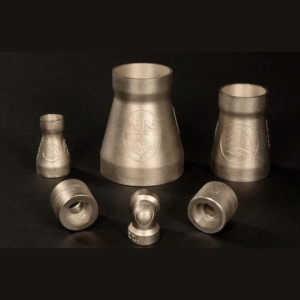
3D Systems has announced CuNi30 – a corrosion-resistant, copper-nickel alloy for use with its DMP Flex 350, metal additive manufacturing machine. The material is a result from the company’s collaboration with HII’s Newport News Shipbuilding division to develop materials and process parameters for the Laser Beam Powder Bed Fusion (PBF-LB) process. “We’re...


Nikkiso to Bring Hydrogen Fueling Stations to California, South Korea, and Germany

Nikkiso Clean Energy & Industrial Gases Group was awarded multiple contracts for over a dozen locations. Nikkiso Clean Energy & Industrial Gases Group (CE&IG), a part of the Japanese company Nikkiso Co., Ltd group of companies, has announced that it was awarded several contracts for providing over a dozen hydrogen fueling...

NASA’s Cold Atom Lab Experiments with Exotic State of Matter

Since the days of NASA’s Apollo program, astronauts have documented (and contended with) how liquids like water behave differently in microgravity than they do on Earth – coalescing into floating spheres instead of bottom-heavy droplets. Now, researchers have demonstrated this effect with a much more exotic material: gas cooled to...

Temperatures Colder Than Space, Achieved on Earth Through X-ray Laser

A half-mile-long tunnel under Menlo Park, Calif., has become colder than most of the universe because of a particle accelerator that slams electrons together here on Earth. Using the X-ray free-electron laser at the Department of Energy’s SLAC National Accelerator Laboratory – part of an upgrade project to the Linac Coherent...

Extreme Cool – Making Liquid Nitrogen in a Deep Underground Clean Lab

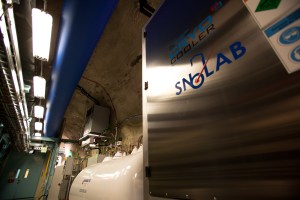
SNOLAB is Canada’s deep underground research laboratory, located two kilometers underground in Vale’s Creighton mine near Sudbury, Ontario, Canada. SNOLAB is a unique facility, providing a low background environment designed for scientific research and operates a 5,000m2 underground campus as a class-2000 clean lab. While the science program is focused...

ADVERTISEMENT

Dewar

A dewar is a type of cryostat named after Sir James Dewar, the researcher who first developed the concept of a vacuum insulated container with silvered walls to reflect thermal radiation. Dewar was the first to liquefy hydrogen, and he created the device to store his discovery. The thermos bottle...

Stirling and Gifford-McMahon Cryocoolers

Stirling and Gifford-McMahon (GM) cryocoolers are two of the most commonly used cryocoolers in cryogenics. Both devices have a significant industrial base and operate at a wide range of temperatures and capacities. The thermodynamic cycles for both of these cryocoolers are quite similar. The Stirling cycle consists of a compressor,...

Liquefied Natural Gas (LNG)

A significant commercial application of cryogenics is the liquefaction, transport and storage of natural gas. Liquefied Natural Gas (LNG) is generally 95 percent methane with a few percent ethane and much lower concentrations of propane and butane. LNG liquefies at 111.6 K. Unlike many applications of cryogenics, the motivation for...

Cryogenic Electronics

Randall Kirschman, consulting physicist, Mountain View, California ExtElect@gmail.com Cryogenic electronics—the operation of electronic devices, circuits, and systems at cryogenic temperatures—has been a valuable technology for decades. Cryogenic electronics (also referred to as low-temperature electronics, or cold electronics) can be based on semiconductive devices, on superconductive devices, or on a combination...

Particle Physics: High Energy Physics

Cryogenics and High-Energy Physics 1. From symmetry magazine: http://www.symmetrymagazine.org/cms/?pid=1000627: Cryogenics is the study of how materials behave at temperatures near absolute zero. In high-energy particle accelerators, such frigid temperatures reduce the electrical resistance of wires in superconducting magnets, increasing the magnet strength and allowing faster particle acceleration. The same holds...

HTS Degaussing Systems

From the Spring 2009 issue of Cold Facts (Volume 25, Number 2): Thanks to a joint project by the US Navy and a number of industry partners, high temperature superconducting (HTS) technology is now at the heart of an advanced degaussing system aboard the USS Higgins at the naval station...

Magnetic Resonance Imaging

From http://www.superconductors.org: An area where superconductors can perform a life-saving function is in the field of biomagnetism. Doctors need a non-invasive means of determining what’s going on inside the human body. By impinging a strong superconductor-derived magnetic field into the body, hydrogen atoms that exist in the body’s water and...