ADVERTISEMENT

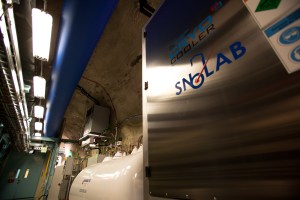
Extreme Cool – Making Liquid Nitrogen in a Deep Underground Clean Lab

SNOLAB is Canada’s deep underground research laboratory, located two kilometers underground in Vale’s Creighton mine near Sudbury, Ontario, Canada. SNOLAB is a unique facility, providing a low background environment designed for scientific research and operates a 5,000m2 underground campus as a class-2000 clean lab. While the science program is focused...

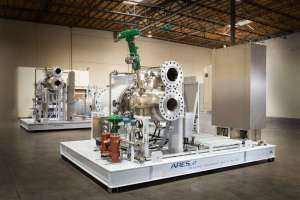
Turboexpanders Are Key Components to the Energy Transition

With the energy sector looking to decarbonize, the transition away from hydrocarbons is underway, with hydrogen taking center stage in many of the industry’s roadmaps. Georgia-based Chart Industries (NYSE: GTLS) has responded to this interest by bolstering its offering of products and technologies that enable the industry to move away...

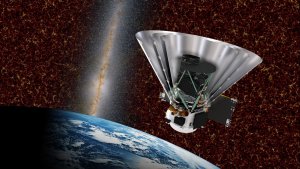
Test Chamber for NASA’s New Cosmic Mapmaker Makes Dramatic Entrance

After three years of design and construction, a monthlong boat ride across the Pacific Ocean, and a lift from a 30-ton crane, the customized test chamber for NASA’s upcoming SPHEREx mission has finally reached its destination at Caltech’s Cahill Center for Astronomy and Astrophysics in Pasadena. Set to launch no...

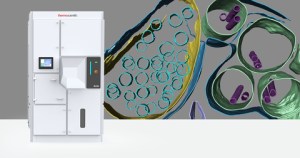
New Microscope Advances Cryo-ET Research

Thermo Fisher Scientific Inc. unveiled the Thermo Scientific Arctis Cryo-Plasma Focused Ion Beam (Cryo-PFIB), a new connected and automated microscope designed to advance the pace of cryo-electron tomography (cryo-ET) research. Cryo-ET makes it possible to study how proteins and other molecules operate together in a cellular context, at resolutions unsurpassed by...

ADVERTISEMENT

Transfer Lines

Transfer lines may in some real sense be thought of as the cryogenic fluid analogy of current leads. While current leads carry electrical power to where it’s required in a cryogenic system, transfer lines do the same with cryogenic fluids. Transfer lines range in complexity from very simple U-tubes containing...

Zero Boiloff

Zero Boil Off cryostats are those that contain liquid cryogens but are designed to eliminate or vastly reduce the boil off of  the liquid. These cryostats combine some of the advantages of Cryogen-Free systems (e.g. ease of use and long operational lifetime) with the advantages associated with a reservoir of liquid...

Cryomodule

Cryomodule is a term that is most commonly used to refer to cryostats that contain superconducting radio frequency (SRF) cavities. Such cavities are used to accelerate charged particle beams and are a major component of modern particle accelerators. Using the term cryomodule to refer to cryostats containing SRF cavities appears...

Air Separation and Liquefaction

by Nils Tellier, PE, President, EPSIM Corporation (CSA CSM) nils@epsim.us All illustrations courtesy EPSIM Corporation Background History of Air Separation and Liquefaction This section builds on a rich history of methods to develop deep refrigeration and cryogenic liquefaction during the 19th Century. You are encouraged to read Cryo Central’s History...

Bose-Einstein Condensate

A Bose-Einstein condensate, first proposed in 1925 by Albert Einstein based on work done by Satyendra Nath Bose (the same Bose from whom the term boson is derived), is a super-cold state of matter in which almost all of the individual atoms have “condensed” down to the lowest possible quantum...

Cold Technology for Pest Control

While it does not reach temperatures cold enough to be called cryogenic, carbon dioxide snow is at the heart of a new way of dealing with unwanted pests. It utilizes a quick freezing process that takes advantage of the properties of carbon dioxide snow and has a number of benefits...

Cryogenic Finishing

The following 3 articles discuss the uses and procedures of various type of cryogenic finishing. 1) By Robin A. Rhodes, Cryogenic Institute of New England, Inc. rrhodes@nitrofreeze.com Cryogenic Deflashing is employed to remove undesired residual mold flash that remains on molded parts after they are removed or ejected from the...

Seeking alloy that keeps elastic property down to 10K

I am looking for a metal (alloy) that supports high temperatures (at least 1600K) and keeps its elastic property at low temperatures down to 10K. Rhenium is a good one because it does not become brittle. But it is quite expensive. Pure tungsten and molybdenum enter in the brittle regime...

Searching for a freezer that does not need electricity

I’m student of University of Barcelona. We do technical cryogenic research and we are searching for a cryogenic portable freezer that does not need electricity. We can’t find any company that offers something like this. The product we are looking for is the typical portable freezer for food or drinks...