ADVERTISEMENT

zeroBOG™ Empowers Sustainable Operations

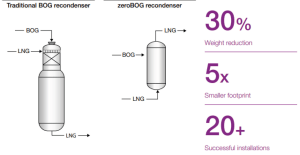
by Lennis Perez and Edward Tay, Sulzer The need for efficient and sustainable management of cryogenic gases extends far beyond traditional LNG applications. Enabling the recovery and reuse of boiloff gases, or BOG, across sectors such as hydrogen, e-methane and ammonia, supports the transition to low-carbon fuels and helps operators...

Liquid Air Comes of Age in Manchester

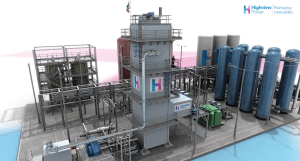
by Mark Vyvyan Robinson, Business Development Director, Highview Power As electricity systems integrate increasing volumes of renewable generation, the requirement for long-duration energy storage has become a defining challenge of the global energy transition. In northwest England, the city of Manchester and the surrounding Greater Manchester region are now home...

NASA Inches Closer to Martian Laser Communication

by Charlie Danaher, Danaher Cryogenics Bridging Interplanetary Distances Having a conversation between someone on Earth and Mars is not as science fiction as it used to be. That is thanks to scientists at NASA’s Jet Propulsion Laboratory (JPL) in Southern California and their successful demonstration of the Deep Space Optical...

Vacuum Chambers Answer Quantum Demands and UHV Transfer Needs

by Mel Janecka, Atlas Technologies Quantum computing companies and research facilities often find aluminum and titanium vacuum chambers to be better equipped to maintain purity and ultrahigh-vacuum (UHV) status. Plus, the chambers are non-magnetic and perform effectively within cryogenic conditions, critical for keeping qubits stable. Qubits, the basic units of...

Kathleen Amm’s Evolution in Cryo

When Kathleen Amm describes how she entered cryogenics, she does not point to a single defining moment. Instead, her path began with movement. In the early 1990s, she followed her thesis advisor Justin Schwartz from the University of Illinois to Tallahassee as the National High Magnetic Field Laboratory was opening....

WOMEN in CRYOGENICS and SUPERCONDUCTIVITY

Alexandria Burger, Bluefors – Manufacturing Engineer Manager Current projects: My current focus is leading a team to improve manufacturing efficiencies for 2026. These efficiency improvements will not only offset the increasing costs of materials but also allow us to reduce lead times. I also contribute to manufacturing documentation, 6S events,...

ADVERTISEMENT

Liquid Hydrogen

Hydrogen becomes a liquid at 20K and 1 bar. Liquid hydrogen (LH2) is an important substance in industry, transportation and research. Industrial uses of hydrogen include applications in the electronics, glass, chemical and metal processing fields. In these applications, the hydrogen is generally used as a room temperature gas but...

Superconducting Radiofrequency Cavities

Superconducting radio frequency (SRF) cavities represent an important application of cryogenics and superconductivity. SRF cavities are a technology for accelerating charged particle beams via the transfer of radiofrequency (RF) energy to the beams via resonant structures. As such, they are frequently found in large particle accelerators used for scientific research....

Thermal Radiation Shields

Actively cooled thermal radiation shields are a common feature of cryostats whose lowest temperature is less than 77K. These shields, which typically operate at temperatures between that of LN2 and 40K, block thermal radiation from higher temperatures from reaching lower temperature cryogenic components or fluids. Since the heat radiated from...

Wind Tunnels

Dr. Robert Kilgore The development of the cryogenic wind tunnel is one of many significant breakthroughs in both cryogenics and wind-tunnel technology made during the past millennium. Interest in the development of high-speed commercial and military aircraft resulted in a review of problems of flow simulation in transonic wind tunnels...

History of Cryogenics

From the Fall 1999 issue of Cold Facts magazine Millennium Breakthroughs A variety of CSA members give different perspectives on the past millennium: What were the most significant breakthroughs in cryogenics during the past millennium? Prof. R.G. Scurlock, Kryos Technology, scurlock@soton.ac.uk (“Breakthrough” = way through obstacles — Oxford English Dictionary)...

Cryobiology

Andreas Sputtek Past President Society for Cryobiology sputtek@uke.uni-hamburg.de or http://www.sputtek.de/. The word cryobiology (from the Greek words “cryo” = cold, “bios” = life, and “logos” = science) literally signifies the science of life at low temperatures. In practice, this field comprises the study of any biological material or system (e.g.,...

Cryogenic Insulation

James E. Fesmire Cryogenics Test Laboratory NASA Kennedy Space Center james.e.fesmire@nasa.gov Introduction In today’s world, the use of cryogenics and low-temperature refrigeration is taking a more and more significant role. From the food industry, transportation, energy, and medical applications to the Space Shuttle, cryogenic liquids must be stored, handled, and...

In search of a calculation for designing a cryostat

I am a final year physics student at the University of Birmingham, and as part of a group I am currently designing a cryostat. One of the calculations I need to make (very soon!) is how much heat will be conducted down the walls. All information I have found so...

Safety of ethylene glycol and pressurized oxygen

We are reviewing the product design of liquid filled differential level gauges and want to insure that they meet the industry requirements. The former license owner had authorized that a fill fluid of ethylene glycol (68%) and distilled water (32%) could be used for oxygen service up to 500 psi....