by Leah Sudhir, Eta Space
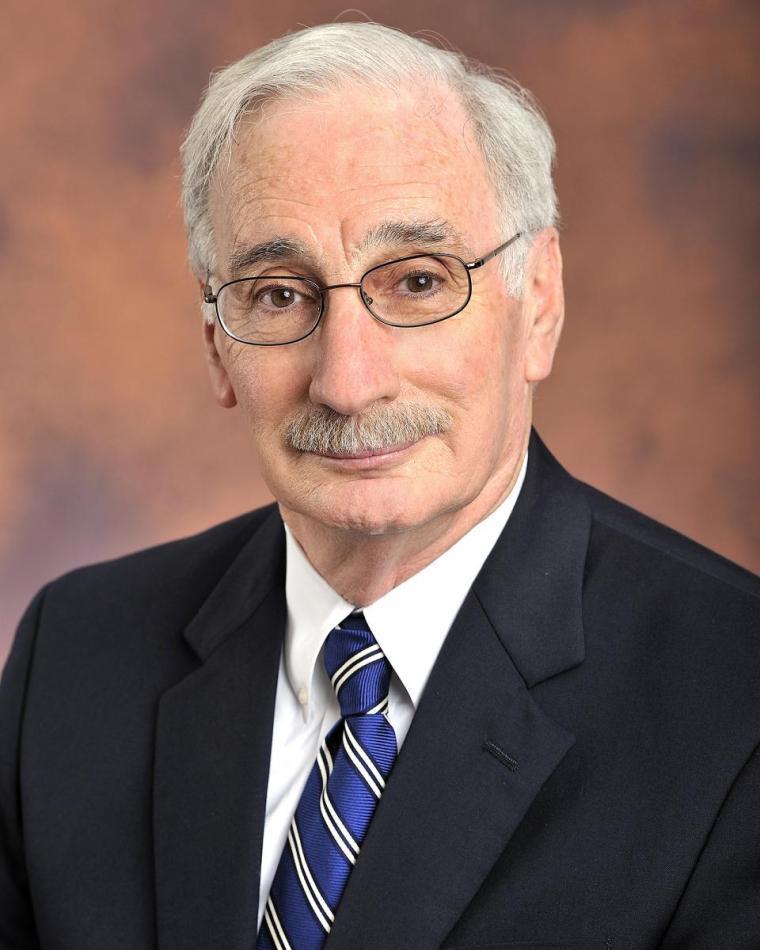
Eta Space is at the forefront of cryogenic fluid management (CFM) technology for the aerospace industry, continuously pushing the boundaries of innovation and expanding its customer base. Founded by Dr. William “Bill” Notardonato, who brings over 30 years of experience from NASA, the company has assembled a team of industry experts dedicated to ensuring sustainable space exploration for the future.
LOXSAT goes through testing, payload nears completion
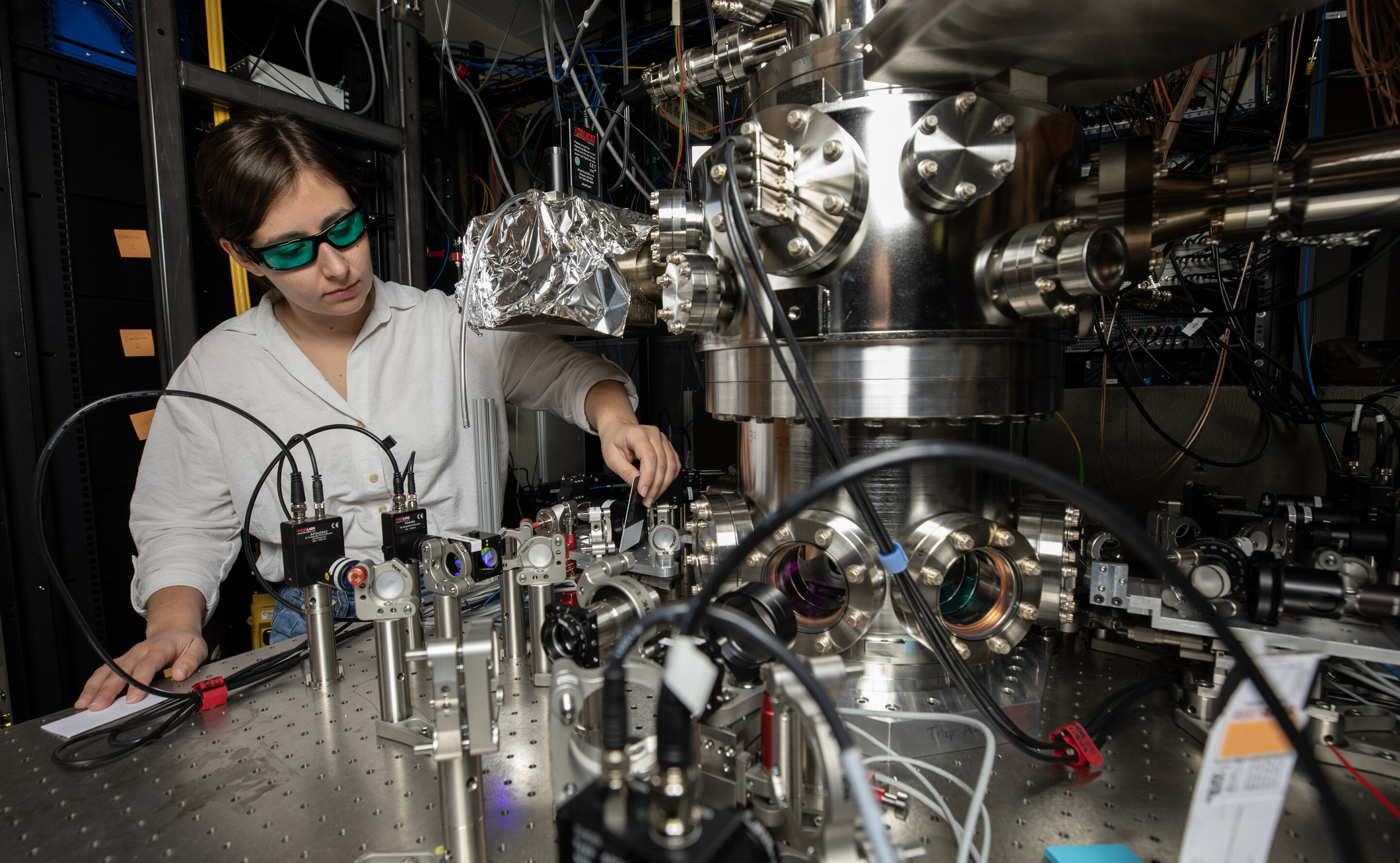
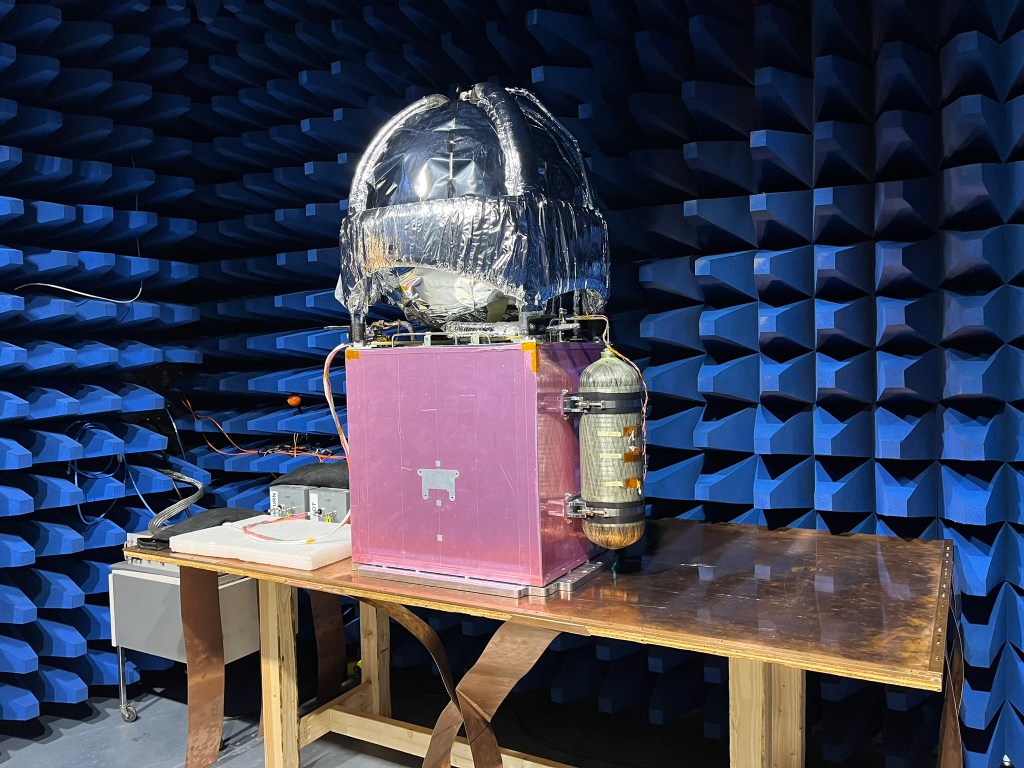
The company is close to the completion of its leading project, LOXSAT, its long-form liquid oxygen satellite. LOXSAT is a NASA-funded CFM demonstration that aims to prove long-term cryogenic storage and transfer in low Earth orbit (LEO). The team at Eta Space has achieved a laundry list of milestones for LOXSAT: in-house manufacturing and qualification of our flight tanks, completion of payload assembly and integration, vibrational testing at Kennedy Space Center’s Vibration Test Lab and EMI testing at Kennedy Space Center’s EMI Lab. The LOXSAT team is now wrapping up the assembly integration and testing with thermal vacuum chamber (TVAC) testing. This test provides a further understanding of exactly how LOXSAT systems will function in space.
Once the payload is completed, it will be shipped to Long Beach, Calif. where it will integrate with Rocket Lab’s Photon Bus and go through its own series of integrated testing before ultimately being sent to the launch complex at the Rocket Lab launch facility in Mahia, New Zealand. LOXSAT is scheduled for launch in early March 2026.
“The breadth of knowledge required to put LOXSAT together more than proves our abilities here at Eta Space and we are very proud of what we have accomplished so far,” said Jeff Bone, LOXSAT Project Manager. “Eta Space as a company has gained critical expertise not only in the cryogenics world, but in the welding and fabrication of space flight-rated tanks, which is a bottleneck in the space industry, and we are continuously looking to improve our processes and technologies.”
The payload’s nine-month mission will provide critical, ground-breaking data that will serve to platform larger, full-scale cryogenic depots to fuel future missions. Specifically, LOXSAT will perform multiple zero-boiloff storage and transfer tests of liquid oxygen, a key component in cryogenic propulsion systems. This vision is currently in the works with Cryo-Dock™, a large-scale propellant depot in LEO that can service any compatible vehicle with a mating umbilical. It will likely store liquid oxygen and liquid methane, a combination highly utilized in most rockets today. The temperature differences between the two are similar enough that the storage of both propellants is proved by the success of LOXSAT since liquid methane is stored at a slightly higher temperature than liquid oxygen. Eta Space is currently looking to fund this project and collaborate with future customers of Cryo-Dock to make this vision happen.
Eta Space introduces new divisions and its products and capabilities
Along with the development of LOXSAT and Cryo-Dock, Eta Space also offers several in-house capabilities: cryogenic propellant tanks, spacecraft electronics including data acquisition and control, cryocooler power electronics, integrated refrigeration and storage (IRAS), liquid hydrogen (LH2) testing for small scale components and systems and hydrogen consulting and design services.
Eta Space has also spread its work into three divisions: Eta Space houses most of the work for LOXSAT, Cryo-Dock and other lunar pursuits. Eta Energy was introduced at the beginning of 2024, focusing on hydrogen energy applications for both transportation and superconductivity. The Energy division’s work involves developing and testing designs for hydrogen aircraft applications aimed at major commercial aircraft suppliers and manufacturing major airline components. Through its work, Eta Energy seeks to facilitate the transition of companies from carbon-intensive fuel sources to more environmentally sustainable alternatives like LH2.
Eta Energy also has its own liquid hydrogen testing facility (LHTF), first announced in December 2022, which is continuously in operation. The facility has successfully conducted tests of LH2 process equipment, composite materials, hydrogen energy storage devices and superconductivity applications for government and industry clients.
A third division, Eta Defense, will be introduced this year as Eta Space works with the Department of Defense (DoD) to apply advanced cryogenic technologies to defense applications on Earth and in space. Stay tuned for further information on these capabilities in a future article.
http://www.etaspace.com