This feature introduces outstanding young professionals (under 40 years of age) who are doing interesting things in cryogenics and superconductivity and who show promise of making a difference in their fields. Debuted in the 2006 issue, the feature has presented many young persons whom we are proud to see have indeed lived up to that promise.
Andrew Ballard, Mechanical Engineer, Bluefors Syracuse
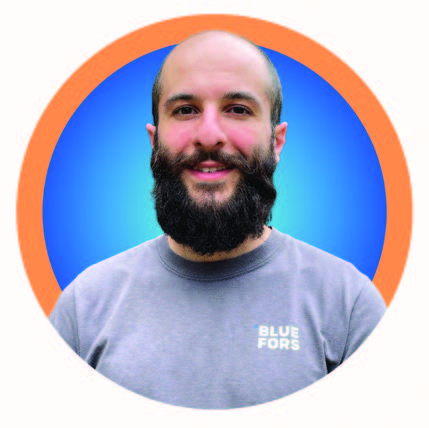
Background – I attended Syracuse University to study physics. After receiving my bachelor’s degree, I stayed on as a graduate student working toward a Ph.D. in physics. During my time as a graduate student, my priorities changed, and I left graduate school with my master’s degree to begin a career in engineering. I was hired by Bluefors, then Cryomech, in 2022. That transition allowed me to take what I learned in research and apply it in a more practical, engineering-driven environment.
Path to cryogenics – During my time as a graduate student in physics, I was doing experimental quantum computing research. This type of research heavily relies on cryogenics, so I quickly became familiar with cryogenic and vacuum equipment. I spent a significant amount of time working directly with these systems, which helped me understand both their capabilities and limitations. That experience made the transition into cryogenic engineering feel natural.
Mentorship – I’ve been very fortunate to work with many amazing people throughout my life. I like to think every person I’ve ever met is a mentor in some sense, as I firmly believe every person has a lesson to teach you if you listen carefully enough. I’d like to give a special thanks to my current team manager, Tim Hanrahan, for really helping me navigate the transition from being a research physicist to a working cryogenic engineer, and for helping guide me to what theoretical tools to focus on to be successful in my role. I would also like to thank Kevin Pease, our R&D machinist here at Bluefors Syracuse, for continually teaching me how to bridge the communication gap between engineers and machinists to make theoretical ideas a reality.
Awards – I received an award for outstanding teaching from the physics department at Syracuse when I was teaching physics classes early on in my graduate studies. Teaching helped me develop a stronger understanding of fundamental concepts and improved my ability to communicate technical ideas clearly.
Contributions – At Bluefors I’ve been contributing to the team making custom cryogenic systems for researchers and industry. I’ve been focusing on improving current products as well as contributing to the design of new products. At heart, I am an experimentalist, so I am always trying new things with our products and experimenting with running our systems in different ways to gain a deeper understanding of how they function. Beyond that, I especially enjoy when someone approaches me to understand how something works. What I love even more than figuring something out myself is sharing that knowledge and helping someone else reach that same level of understanding.
Key developments – In my opinion, some of the most important developments in cryogenics are the discovery of superconductivity, the pulse tube and the dilution refrigerator. The discovery of superconductivity was one of many experimental results that contributed to scientists having to totally flip their understanding of fundamental physics in the early 1900s as they were navigating this non-intuitive field of quantum mechanics. Not only was superconductivity a curiosity, but it has proven to be immensely useful. Whether dispelling magnetic fields, allowing a doctor to take an MRI of a patient, or being a foundational ingredient to many quantum computing modalities, superconductivity shows up time and time again as a key phenomenon. The pulse tube origins can be traced back to a 1964 paper by W.E. Gifford and R.C. Longsworth where it was realized that through proper engineering and delivery of gas into a tube, one can establish a temperature gradient across the tube. That kicked off research that has led to the modern pulse tube refrigerator which is used all over the world. Finally, the dilution refrigerator is highly ranked because it enables access to once unreachable temperatures and is central to much of today’s leading research.
Future advances – In the future, I hope to see advancements in cryogenics that will allow for more seamless integration of pulse tube refrigerators into dilution refrigerators for increased efficiency, reduced vibration and smaller footprints. I believe this will greatly aid the effort to develop a useful quantum computer. If quantum computing reaches the point where it can solve practical applications, it has the potential to revolutionize our world in ways we cannot yet imagine.
Learn more – Readers can find my LinkedIn page here: http://www.linkedin.com/in/andrew-ballard-76874420b
……………………………………
Susiri Costa, Ph.D. Researcher, University of Melbourne

Background – I come from a multidisciplinary academic background. I completed my undergraduate studies in chemical and process engineering and chemistry at the University of Moratuwa and the Institute of Chemistry Ceylon in Sri Lanka, respectively. I hold a master’s degree in financial economics from the University of Colombo. In addition, I am a past finalist of the Chartered Institute of Management Accountants and the Chartered Financial Analyst programs. I am currently completing my Ph.D. at the Department of Infrastructure Engineering at the University of Melbourne, Australia.
Path to cryogenics – My entry into cryogenics was somewhat unexpected in 2022, when my Ph.D. supervisor suggested exploring the hydrogen research domain. What began as an investigation into hydrogen technologies soon expanded into liquid hydrogen and ultimately broader cryogenic engineering and materials research. At the time, we had no dedicated testing infrastructure, cryogenic research team, or local expertise. These limitations made my journey challenging, yet highly rewarding as we gradually built new capabilities for cryogenic infrastructure research in Australia.
Mentorship – I have been fortunate to work with three highly supportive supervisors, Dr. Shanaka Baduge, Associate Professor Gang Li and Professor Priyan Mendis, who always emphasized focusing on fundamental principles and logical decision-making, while embracing both positive and negative results as part of the learning process. I would also like to acknowledge our research team and the Ph.D. candidates who joined after me, as their collaboration has also contributed to my development.
Awards – I received the Best Presenter Award at two consecutive Infrastructure Engineering Graduate Research Conferences in 2023 and 2024 at the University of Melbourne. In addition, our research team secured two Research Infrastructure Investment Fund Collaborative Equipment Grants and an ARENA grant valued at 3.08 million AUD to support our work on large-scale liquid hydrogen storage.
Contributions – Over the past four years, I have worked across multiple areas of cryogenics and liquid hydrogen research. I coordinated and served as a lead designer for the development of a novel 20 K cryogenic tensile testing cryostat, the first system of its kind in Australia. I have also investigated molecular dynamics-driven design of carbon fiber reinforced thermoplastics and conducted experimental characterization of these materials under cryogenic conditions. In addition, I contributed to the ARENA-funded megascale liquid hydrogen storage project, working on boiloff modelling, tank materials and design, insulation systems and magnetic refrigeration concepts. I have also been involved in establishing a new cryogenic research laboratory in Melbourne and in designing new testing equipment.
Key developments – I believe that advancements across materials discovery, fluid dynamics, computational modelling, instrumentation, safety design and system development are all important developments in cryogenics. These innovations are especially critical for applications in energy, space, quantum computing and medical technology. My work is focused on supporting liquid hydrogen applications by developing materials and testing infrastructure that enable reliable system performance.
Future advances – I hope to see cryogenic technologies transition from research laboratories into large-scale engineering applications, particularly in the adoption of liquid hydrogen for aviation and energy export. While the hydrogen economy depends heavily on broader economic and policy factors, I expect more consistent progress in areas such as space exploration and quantum computing, where cryogenics is already essential. I believe we will see significant developments in these areas over the next decade.
Learn more – My LinkedIn profile: http://www.linkedin.com/in/susiri-costa
ARENA project: https://arena.gov.au/projects/mega-scale-liquid-h2-storage-with-super-insulated-full-containment-and-zero-boil-off
……………………………………
Guanglong Cui, Level 3 Mechanical Cryogenic Engineer, Lawrence Berkeley National Laboratory

Background – I received my master’s degree in cryogenic engineering from Zhejiang University in 2019. After graduation, I worked at Zhejiang Chillmaking Company, supporting the research and design of 4 K pneumatic control valves. I then joined the Shenzhen Institute of Advanced Light Source Facilities (IASF), where I spent 4.5 years working on cryogenic distribution systems and superfluid helium components. In November 2025, I began working full-time as a mechanical cryogenic engineer at Lawrence Berkeley National Laboratory (LBL).
Path to cryogenics – During my graduate studies, I enrolled in cryogenics courses including Heat Transfer, Engineering Thermodynamics, Principles of Cryogenics and Fluid Dynamics and Computation. After graduation, I worked extensively on cryogenic components such as cryogenic valves, superfluid helium heat exchangers, check valves and turbo expanders, as well as cryogenic system design involving liquid nitrogen, supercritical helium and superfluid helium. These experiences deepened my fascination with cryogenics and strengthened my determination to continue exploring the field of cryogenic science and technology.
Mentorship – Professor Daming Sun was my mentor during my graduate studies, first introducing me to the world of cryogenics and providing meticulous guidance for my research. During my career at IASF, my mentor was Researcher Xilong Wang, who broadened my perspective and deepened my professional knowledge of cryogenics. Since joining LBL, I have had the privilege of being mentored by Dr. Li Wang, an exceptional expert in cryogenic system design, cryocoolers and cryostats. She has provided valuable guidance and helped me refine my skills. I sincerely acknowledge all my mentors for their support and guidance.
Contributions – My main contributions to the cryogenic field focus on two areas. The first is the development of DN2–DN100 cryogenic valves used at liquid helium temperatures. More specifically, my work included structural design, Joule–Thomson throttling design, thermoacoustic oscillation mitigation, thermodynamic performance analysis, and the design of test systems for flow coefficient measurements. The second area is large-scale cryogenic distribution system design, including overall system design, cryogenic safety analysis, Hampson-type heat exchanger research and development, two-phase flow calculations and helium guard design.
Key developments – The most important development is the rapid expansion of cryogenic systems used in particle accelerators, superconducting magnets and quantum technologies. These applications have enabled broader and deeper advancements in cryogenic technology, as such systems require high reliability, precise thermal management and stable long-term operation. At the same time, advances in cryogenic technology also drive progress in these fields, creating a mutually reinforcing cycle of development. My work has been closely related to these developments, including LINACs and superconducting magnets.
Future advances – In the future, I hope to see advances in the optimization of cryogenic system design, as many applications require highly stable pressure and temperature for reliable operation. I also hope to see significant improvements in the exergy efficiency of cryogenic systems, particularly for large-scale installations, which are currently very energy intensive. Technologies such as cold compressors offer a promising path toward achieving higher efficiency, and I look forward to further innovations in this area over the next 10 years.
Learn more – Readers can find more information about Lawrence Berkeley National Laboratory and regular updates on recent projects at https://www.lbl.gov
……………………………………
Zhiyi Jiang, Cryogenics Operation Group Supervisor, National High Magnetic Field Laboratory
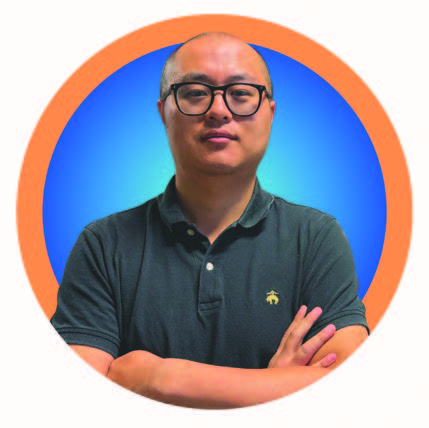
Background – I received my bachelor of science, master’s and Ph.D. degrees from the University of Wisconsin–Madison. I worked in the Cryogenics Engineering Lab at UW–Madison from 2013 to 2024, where I developed both theoretical knowledge and practical skills in cryogenics. I currently work at the National High Magnetic Field Laboratory, where I focus on large-scale cryogenic operations.
Path to cryogenics – My interest in cryogenics began when I attended a Thermodynamics course taught by Professor Franklin Miller in 2013 at UW–Madison. He introduced me to the Cryogenics Engineering Lab, which became the starting point of my career in this field. That early exposure gave me both curiosity and direction, and it led me to pursue hands-on work in cryogenic systems.
Mentorship – During my time at the Cryogenics Engineering Lab, Professor John Pfotenhauer and Professor Franklin Miller served as my mentors. Through weekly meetings and hands-on training, they taught me valuable knowledge in cryogenics, heat transfer and vacuum technologies. Before joining the lab, I did not even know how to properly apply Teflon tape. Under their guidance, I learned practical skills such as leak testing, vacuum pump maintenance and building cryogenic equipment. These experiences helped me gain confidence in troubleshooting and system design.
Awards – My work has been recognized through several publications, including “Results of a Nitrogen-Based Pulsating Heat Pipe with Varied Configurations,” “Results of a Nitrogen Pulsating Heat Pipe with Subsections in a Series Configuration,” and “Design of the Glass Pulse-Tube Cryocooler.”
Contributions – I successfully built a glass pulse tube cryocooler for educational purposes and developed multiple configurations of nitrogen pulsating heat pipes. In my current role at the National MagLab, I am responsible for operating, maintaining and troubleshooting the cryogenic plant that supplies approximately 22,000 liters of liquid helium to research groups. I also work to maintain a helium recovery rate above 90 percent and support the operation of high field magnets, including the 45 T and 36 T hybrid systems.
Key developments – I believe one of the most important developments in cryogenics is the advancement of cryocooler technology. Modern pulse tube cryocoolers have made systems such as dilution refrigerators more accessible, which is critical for quantum computing. Similarly, advances in Gifford-McMahon cryocoolers have allowed MRI systems to move toward cryogen-free operation. However, future technologies such as large-scale quantum computing and nuclear fusion will require cooling capacities beyond what current cryocoolers can provide, highlighting the need for continued development in large-scale cryogenic systems.
Future advances – I hope to see advance-ments in cryogenic heat transfer technologies, particularly heat pipes or similar systems that can transport large heat loads over long distances efficiently. These technologies could enable more flexible cryogenic infrastructure and allow centralized refrigeration systems to support large facilities. I believe further research and development in this area will be essential for future progress.
Learn more – You can find my LinkedIn at http://www.linkedin.com/in/zhiyi-jiang-52200285 and my profile at the National MagLab at https://nationalmaglab.org/staff/?name=ZhiyiJiang
……………………………………
John Ketcham, Sales Director, Scientific Instruments Inc.
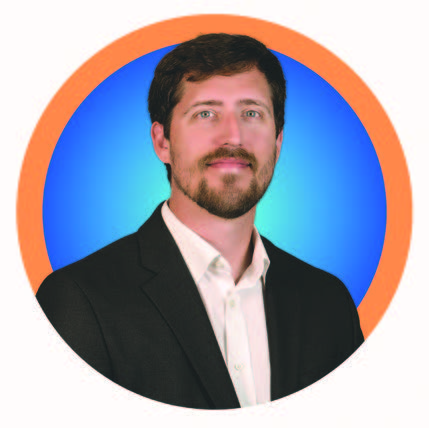
Background – I graduated from Syracuse University with a bachelor’s degree in mechanical engineering. I began my career in cryogenics as a mechanical and manufacturing engineer at Cryomech, Inc., working across the product line of cryocoolers, compressors and after-cryocooler systems. I quickly realized I was not suited for sitting behind a desk or spending all my time on the manufacturing floor, and I transitioned into a sales engineer role. In that position, I helped laboratories integrate helium recovery systems to conserve this finite resource in many NMR and physics labs around the world. That role is also where I discovered my love for travel, installing systems across the globe as far away as New Zealand. Being involved in all aspects, from defining system requirements with users to installing equipment and providing ongoing support, gave me global exposure to the industry and its wide range of applications.
After about nine years, I transitioned to Montana Instruments as a sales engineer focusing on lab-scale cryostat integration. A few years later, I joined Scientific Instruments, where I quickly moved from a global business development role to sales director. Having worked hands-on across so many areas of the industry allows me to better support the community with cryogenic thermometry and instrumentation.
Path to cryogenics – Ever since I was a child I remember being fascinated with space, but at that time I did not recognize the importance of cryogenics involved. In my senior year of university, which was heavily focused on heat and mass transfer, I applied for internships in the Syracuse area. I had no idea that my hometown was home to Cryomech. I applied for the position with a 3D CAD model of my guitar, hoping to work on drafting and design. That experience opened my eyes to a whole new world of cryogenics and ultimately shaped my career path.
Mentorship – I find myself very fortunate to be mentored by the late Peter Gifford. From the beginning of my time at Cryomech, Peter would take me into his office every morning to talk about everything from helium management in cryocoolers to the inner workings of the human psyche. The energy he brought to his company was unlike anything I had seen before. Anyone who knew him remembers his personality and passion. Beyond cryogenics, he taught me how to stand up for myself, what it means to be a leader and how to support my team. I attribute much of my passion for this industry to him.
Contributions – As a sales and application engineer working with helium management systems, I installed many helium recovery systems at universities around the world, achieving efficiencies of up to 95 percent. During those early years, when the industry was still transitioning from liquid cryogens to dry systems, these solutions helped laboratories sustain their research despite helium supply challenges. Today, I continue to support cryogenic companies that were founded out of those same research laboratories by partnering with them to provide high-quality cryogenic thermometry solutions.
Key developments – I believe the breakthroughs in efficiencies of cryocoolers have been some of the most important developments in cryogenics. Without the commercialization of pulse tube and Gifford-McMahon cryocoolers, many users would still rely heavily on liquid cryogens. In addition, advances in dilution refrigeration have been critical in enabling technologies such as quantum computing. My work aligns with these developments by ensuring accurate cryogenic thermometry is available to support increasingly advanced systems.
Future advances – I hope to see faster cooldown times for cryostats so laboratories can spend more time focusing on their research and less time waiting for systems to reach their desired temperature. The industry has already made progress toward creating more user-friendly cryogenic environments, and I am excited to see how these systems continue to evolve in the coming years.
Learn more – You can connect with me on LinkedIn at http://www.linkedin.com/in/john-ketcham-72665690 or visit my company’s website at https://www.sicryo.com
……………………………………
Jim Lohan, Senior Engineering Manager, Cryogenics and Control Systems, VEIR, Inc.
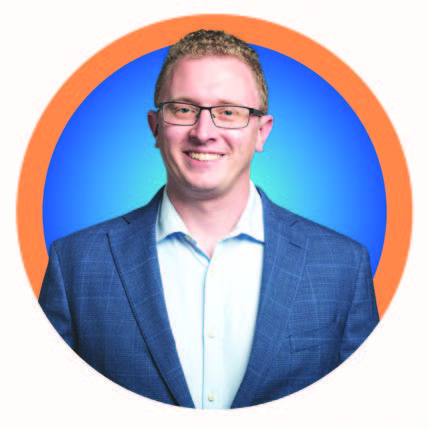
Background – I hold a bachelor’s degree in chemical engineering from Lehigh University, Bethlehem, Penn. I began my career with Linde Gas through their Career Development Program, where I rotated through roles in application technologies, project management and hydrogen fueling infrastructure. This program provided hands-on exposure to a wide range of industrial gas and cryogenic applications. After completing the program, I moved into project management where I led the delivery and installation of industrial gas systems across multiple industries. These early experiences exposed me to both the engineering and operational challenges involved in deploying cryogenic systems in real industrial environments.
Path to cryogenics – My work at Linde focused on liquid bulk gas systems, which rely heavily on cryogenic liquids for storage and distribution. Through that work I became fascinated with the unique engineering challenges associated with cryogenic systems, particularly the intersection of thermodynamics, mechanical design and real-world operations. That early exposure ultimately led me to focus my career on cryogenic engineering.
Mentorship – Chris Ryan, my manager during my hydrogen fueling work at Linde, has been an important mentor throughout my career. Chris has a rare ability to combine strong engineering judgment with sound business thinking. He was always someone I could bring complex engineering problems to and receive thoughtful guidance. Even today, five years after leaving Linde and Messer, I still reach out to him for advice.
Awards – During my time at Linde and Messer, I received several internal Excellence in Engineering and Project Execution awards recognizing successful project delivery and technical innovation. While I have not yet received industry awards specifically within cryogenics, becoming more engaged in the broader cryogenic community is a goal of mine. On a personal level, I am proud to have earned the rank of Eagle Scout with the Boy Scouts of America, an achievement that continues to influence my approach to leadership and responsibility.
Contributions – Throughout my career I have worked on more than 100 industrial gas and cryogenic installations, supporting applications ranging from food freezing and environmental treatment systems to hydrogen fueling infrastructure. These projects have provided valuable insight into how cryogenic technologies can be deployed across a wide range of industries. I also founded a small cryogenic consulting and equipment company, JPCryo, through which I developed several products intended to improve the installation and reliability of cryogenic systems. These include a modular cryogenic bulk tank foundation system that allows tanks to be installed in less than 24 hours, as well as an improved keep-cold device for vacuum jacketed piping systems.
In my current role at VEIR, I lead the development of cryogenic systems supporting superconducting power transmission technology. These systems include high pressure liquid nitrogen distribution systems capable of supporting transmission distances of up to 20 miles, as well as high availability cryogenic systems designed to cool large arrays of superconducting cables for next-generation data center infrastructure. These systems operate at heat loads that can exceed 500 kW at 67 K, pushing the boundaries of industrial cryogenic system design.
Key developments – Some of the most important developments in cryogenics are occurring within the energy transition, particularly in superconducting power transmission and fusion technologies. One challenge facing these technologies is the lack of mature cryogenic infrastructure in the 50 to 500 kW refrigeration range. Most existing cryogenic systems are either very small laboratory-scale systems or extremely large industrial systems such as air separation plants. However, many emerging technologies require reliable refrigeration systems operating between these scales. Much of my work today focuses on developing cryogenic infrastructure in this intermediate range, which I believe will be essential to enabling many next-generation energy technologies.
Future advances – Two areas of advancement would significantly benefit the cryogenic industry. First is the modernization of automation and controls. Many bulk cryogenic systems still rely on control architectures that have changed little since the 1980s. More advanced control strategies could improve efficiency, reliability and system visibility. Second is the development of modular cryogenic refrigeration systems in the 50 to 500 kW range that are designed for rapid deployment and lower total cost of ownership. As construction costs continue to rise, factory-built modular systems may provide a more scalable path for deploying cryogenic infrastructure. I believe meaningful progress in both areas could occur within the next five to ten years.
Learn more – LinkedIn: http://www.linkedin.com/in/jameslohan, JPCryo Website: https://www.jpcryo.com
……………………………………
Francisco Moguel, Cryogenics Controls and Instrumentation Engineer, SLAC National Accelerator Laboratory
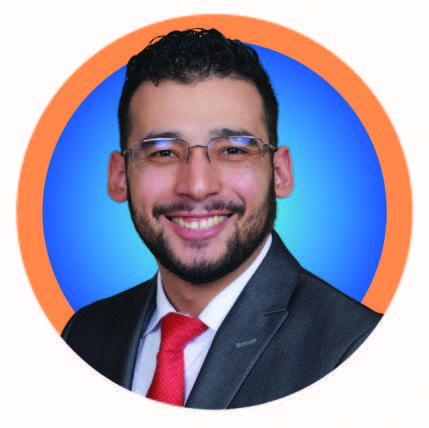
Background – I earned my bachelor of science in mechatronics engineering with a minor in computer engineering from California State University, Chico. During the summer of 2022, I completed an internship with Barry-Wehmiller Design Group, and in January 2024, I began my first engineering role at SLAC National Accelerator Laboratory as part of the AD-Cryogenics Group.
Path to cryogenics – Coming out of college, I was seeking a role that combined mechanical, electrical and control systems, the core of mechatronics engineering. I came across a controls position with the Cryogenics Group at SLAC and decided to apply. What surprised me most was how deep and specialized the field of cryogenics really is. I had a foundational understanding of thermodynamics, but I hadn’t realized there was an entire discipline devoted to it.
Mentorship – My mentor is Swapnil Shrishrimal, who also serves as my manager and the person who brought me onto the team. He has been mentoring me on an important US Department of Energy LCLS-II HE project, where we are architecting the cryogenic control system for two 18 kW at 4.5 K refrigeration systems supporting a superconducting linear accelerator with 60 cryomodules. Working under him has been a breath of fresh air. He has a rare ability to understand systems from electrical, process and mechanical perspectives all at once. His combination of high expectations and genuine care for his team has challenged me and accelerated my growth early in my career.
Awards – I received a SLAC Spot Award for taking initiative in troubleshooting specialized 2 K cold compressor electronics.
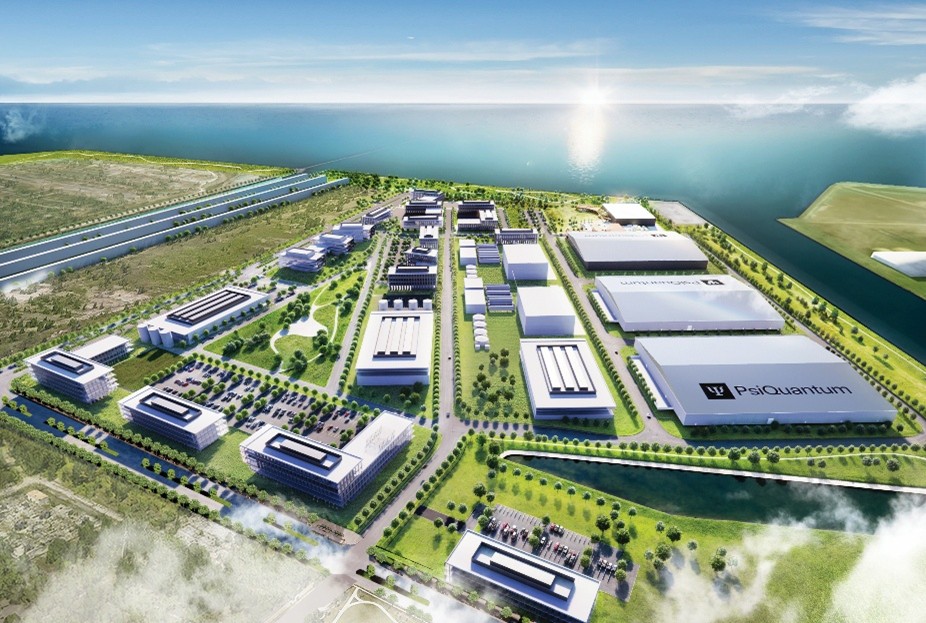
Contributions – One of my major contributions has been programming the PLC that controls the cryogenic valve box and cryostat for the SLAC–PsiQuantum collaboration, a collaborative project at the intersection of cryogenics and quantum computing. This involved implementing precise control logic for temperature, pressure and flow regulation to ensure stable cryogenic conditions required for quantum experiments.
I’ve also been deeply involved in developing the LCLS-II HE PLC code and EPICS (Experimental Physics Industrial Control System) interfaces. My work included designing and testing control sequences, supporting system simulations and helping bridge communication between the PLC layer and the higher-level EPICS framework. Through this, I gained hands-on experience in large-scale distributed control architectures and learned how even small control optimizations can significantly affect system stability and performance.
Key developments – I believe quantum computing will drive some of the most important developments in cryogenics. As quantum hardware continues to advance and scale, the demand for more efficient, reliable and precisely controlled cryogenic systems will only grow. I’m particularly excited about innovations in cryogenic controls, as I see control systems playing a major role in shaping the next generation of high performance cryogenic infrastructure.
Future advances – I have two things I’d like to see, and they’re not really related. The first is better integration between cryogenic systems and quantum hardware as that space grows. The second is something closer to my day-to-day work, more modern control architectures with AI and machine learning integration in cryogenics. I think we could see meaningful progress on both within the next five to ten years.
Learn more – You can find me on LinkedIn at http://www.linkedin.com/in/fjmognun
……………………………………
Emmanuel Izuchukwu Nkwocha, Cryogenic Controls Systems Engineer, SLAC National Accelerator Laboratory

Background – I hold a bachelor’s degree in electrical and electronics engineering and a master’s degree in mechatronics engineering. Professionally, I have over eight years of experience as a controls and instrumentation engineer across multiple industries, including manufacturing and oil and gas. My work has primarily focused on industrial automation, process control systems, instrumentation integration and system optimization. This background in industrial control systems prepared me well for the transition into large-scale scientific infrastructure.
Path to cryogenics – My entry into the cryogenics field began when I joined SLAC National Accelerator Laboratory. My work focuses on control system upgrades and automation improvements for the laboratory’s cryogenic infrastructure. One of the major initiatives I am involved in is the Linac Coherent Light Source II High Energy Upgrade project, which aims to double the X-ray laser’s energy and significantly enhance the facility’s ability to probe matter at atomic resolution. My role includes supporting cryogenic plant controls upgrades that will enable the operation of two cryogenic plants to serve the superconducting accelerator. In addition, I contribute to the development of the Cryomodule Maintenance Facility, which is designed to test and maintain cryomodules at SLAC.
Mentorship – At SLAC, my manager and Cryogenic Controls Group Lead, Swapnil Shrishrimal, has been an important mentor in my professional development within the cryogenics field. Through his guidance, I gained valuable insight into the operational principles and process dynamics of large-scale cryogenic systems. His mentorship has helped me deepen my understanding of cryogenic instrumentation, process control strategies and the operational reliability required for superconducting accelerator facilities. This guidance was instrumental in helping me adapt my industrial automation background to the specialized demands of cryogenic engineering.
Contributions – I have contributed to the advancement of the cryogenic field by bridging the gap between theoretical research and industrial application. My published work highlights innovations in thermal stability controls for superconducting systems, including my role as co-author of the paper “LCLS-II Cavity Heater Controls: Design, Operation and Accuracy.” My research experience also includes work on cyber-physical industrial systems, including the publication “Cyber-Physical Framework for Smart Paint Manufacturing: Hybrid Integration of PLC and Recipe Management Simulation.” I am currently focused on the control system architecture for the Cryomodule Maintenance Facility, a project dedicated to the rigorous testing and validation of cryomodules.
Key developments – One of the most important developments in cryogenics today is the increasing reliance on large-scale cryogenic systems to support superconducting technologies used in particle accelerators, quantum research and advanced materials science. Facilities such as the Linac Coherent Light Source require extremely stable cryogenic environments to maintain superconducting cavities at operational temperatures. My work focuses on strengthening the automation and control systems that ensure these environments remain stable and reliable.
Future advances – In the coming years, I anticipate a paradigm shift in which cryogenic infrastructure evolves from a supporting utility into an intelligent and adaptive system supporting emerging technologies such as quantum computing and next-generation accelerators. The integration of artificial intelligence and machine learning into cryogenic operations will play an important role in this transformation. AI-driven predictive maintenance and advanced data analytics could allow operators to detect anomalies early, optimize system performance and improve the reliability of complex cryogenic plants. I expect these intelligent cryogenic control architectures to become increasingly common over the next five to ten years.
Learn more – http://www.linkedin.com/in/emmanuelizunkwocha
……………………………………
Joshua Reightler, Research and Development Engineer, Sumitomo (SHI) Cryogenics of America, Inc.
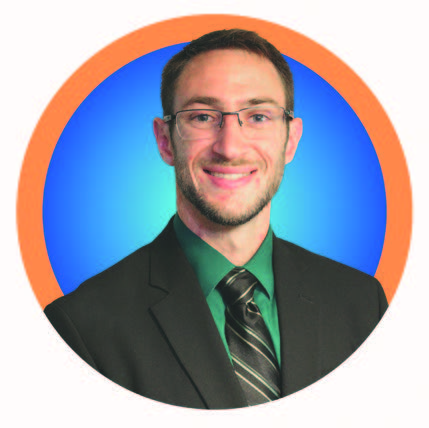
Background – I received a bachelor of science in mechanical engineering from Wilkes University, Wilkes-Barre, Penn. in 2017. Throughout my undergraduate studies, I primarily interned in manufacturing settings and, following receipt of my degree, I originally began working in industry as a process engineer for Tredegar Corporation. I then transitioned into a design and development role with Wavefront Research, Inc., working to develop bespoke infrared imaging systems. After four to five years, I accepted a research and development position with Sumitomo (SHI) Cryogenics of America, Inc., which I continue to work in today.
Path to cryogenics – I was first exposed to cryogenics through my work with Wavefront Research, where our systems integrated compact Stirling cycle cryocoolers to cool optical assemblies. Developing cryostats and the precise mechanical systems within them allowed me to gain an appreciation for the design complexities associated with operating at cryogenic temperatures. That experience captured my interest and led me to pursue further work in the field of cryogenics.
Mentorship – Although I do not have one specific mentor that I can point to, I consider myself fortunate to have been part of several strong engineering teams throughout my career. I have been surrounded by talented engineers who have taken an active role in sharing their knowledge and supporting my professional growth. That collective mentorship has played a significant role in my development.
Contributions – During my time at Wavefront Research, I played an integral role in the design and production of compact cryostats that support technological research for various United States government entities. More recently, my work with Sumitomo Cryogenics has placed me in a position to lead the design of the highest capacity commercially available 20 K and 77 K Gifford-McMahon cycle cryocoolers on the market, the CH-160D3LT and CH-160D3. In addition to contributing to product development within the broader cryogenics community, I have also been engaged in research efforts supporting professional publications. I have published work investigating the use of neon as an alternative refrigerant within compressor systems designed for helium at the International Cryocoolers Conference, and I intend to publish further technical developments on high capacity cryocoolers in upcoming conferences.
Key developments – In many cases, I see developments in cryogenics as enabling progress in other technological fields. While increasing cooling capacity is important, efficiency, cost and system size remain significant barriers to broader adoption. I believe that the most important developments are those that help reduce these barriers, making cryogenic technologies more accessible and practical for widespread use. My work is aligned with this goal, particularly in improving system efficiency and performance.
Future advances – I hope to see continued advancements in cryogenic technologies related to liquid hydrogen production, storage and transportation. These areas are critical to overcoming current limitations in hydrogen fuel adoption. There are many ongoing efforts across the industry, and I view the next decade as a key period for meaningful progress in this space.
Learn more – Information on the products I have worked on can be found at https://shicryogenics.com. I also have published work in the proceedings of the International Cryocoolers Conference, with additional publications planned for upcoming conferences.