ADVERTISEMENT

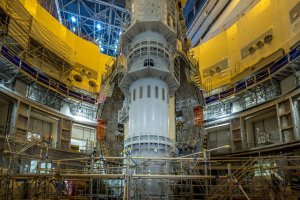
The National Radio Astronomy Observatory (NRAO) and Associated Universities, Inc. (AUI) are launching a two-year initiative to design a next-generation radio telescope with capabilities far beyond existing observatories. Building on the success of the NSF’s Karl G. Jansky Very Large Array (VLA), the proposed array—called the next-generation Very Large Array (ngVLA)—will feature over 200 antennas spanning the US desert southwest and northern Mexico. This facility aims to advance our understanding of planets, galaxies, black holes, and fundamental physics. Credit: Bill Saxton, NRAO/AUI/NSF

NSF National Radio Astronomy Observatory and RIX Industries Join Forces to Revolutionize Cryogenic Cooling for the ngVLA Project

by RIX Industries Communications Team In a groundbreaking collaboration that could change the landscape of both scientific discovery and cryogenic technology, the U.S. National Science Foundation’s National Radio Astronomy Observatory (NSF NRAO) has teamed up with RIX Industries to develop cutting-edge cryogenic cooling solutions for the Next Generation Very Large...
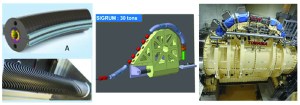
A high precision accelerator cryomodule produced by Meyer Tool for use in a particle accelerator at Brookhaven National Lab. MTM’s fabrication expertise is trusted by national labs and quantum technology firms worldwide. Credit: Meyer Tool & Manufacturing, Inc.

Meyer Tool Builds the Impossible, Empowering Illinois Manufacturing

by Christian Cunningham, Meyer Tool & Manufacturing Inc. Meyer Tool & Manufacturing, Inc., a long-standing leader in cryogenic, pressure and vacuum technologies, has reached a major milestone in its growth journey. The Illinois Department of Commerce and Economic Opportunity (DCEO) recently approved the company for participation in the Manufacturing Illinois...
Figure 1: An artist's rendering of the COSI satellite. Credit: Northrop Grumman Systems Corporation

Goddard Goings

An insight into past, present and future cryogenic missions where the Cryogenics and Fluids Branch at NASA Goddard Space Flight Center had or has a significant role. by Mark Kimball, Ph.D., Cryogenics and Fluids Branch, NASA Goddard Space Flight Center Readers of this column may recall last year’s recounting of...
A line-up of product family members, showing the different chassis sizes, as well as illustrating the modular integration of multiple cooling stages for ultralow temperature applications. Credit: Danaher Cryogenics

Danaher’s Acquisition of ADR Cryostat Line Pioneers the Future of Cryogenic Technology

by Charlie Danaher, Danaher Cryogenics, President In December, Danaher Cryogenics marked a significant milestone by completing the acquisition of the adiabatic demagnetization refrigerator (ADR) Cryostat product line from FormFactor. Originally developed by FormFactor’s subsidiary, High Precision Devices (HPD), the ADR product line has garnered a strong reputation among researchers and...
These images show the various stages of the assembly of the flat bottom tank LNG. Credit: Cryospain

Cryospain’s Flat-Bottom Tank Project in Morocco is a Step Forward for LNG

by Cryospain Communications Team As the global energy sector shifts toward more sustainable sources, liquefied natural gas (LNG) has emerged as a key transitional fuel. Its cleaner-burning profile, abundant supply and versatility position it as a bridge between fossil fuels and renewables. In this evolving landscape, Cryospain, a leader in...

ADVERTISEMENT

Adiabatic Demagnetization Refrigeration

Reaching temperatures below 1K requires different techniques than the various helium gas cycles found in large scale refrigeration plants and small cryocoolers. One of these techniques is Adiabatic Demagnetization Refrigeration (ADR). This technique takes advantage of the fact that the entropy of paramagnetic materials in a magnetic field is lower than...

Cryogen-Free

A cryogen is any fluid that operates at cryogenic temperatures (below roughly 150K – 120K). Using this definition, helium gas at 40K is a cryogen. Another more restrictive definition is to use cryogen to refer specifically to liquids at cryogenic temperatures. This is generally how it is used in the...

Cryostats and Cryocoolers

A cryostat is any device designed to maintain things (including fluids) at cryogenic temperatures. In general usage, cryostats tend to be passive devices rather than providing active cooling. In this usage, cryostats keep things cold by thermally isolating them from room temperature. This generally is accomplished by a combination of...

Magnetic Levitation

From http://www.superconductors.org. Magnetic-levitation is an application where superconductors perform extremely well. Transport vehicles such as trains can be made to “float” on strong superconducting magnets, virtually eliminating friction between the train and its tracks. Not only would conventional electromagnets waste much of the electrical energy as heat, they would have...

Superconductivity

From Superpower website. History of Superconductivity Superconductivity was discovered in 1911 by the Dutch physicist, Heike Kammerlingh Onnes when he was able to liquefy helium by cooling it to 4 Kelvin, or -452°F. This enabled him to cool other materials close to absolute zero and investigate their electrical properties. He...

Medical Applications of Cryogenics

Neutron Therapy Cryogenics is at the heart of nuclear accelerators. Accelerators such as Fermilab’s Tevatron make neutron therapy for cancer possible. From Fermilab Today 4/20/09: Fermilab currently offers neutron therapy. But staff at Fermilab designed and built the proton accelerator used by the nation’s first hospital-based treatment center to use...

Nuclear Physics

Al Zeller National Superconducting Cyclotron Lab (NSCL) at Michigan State University zeller@nscl.msu.edu Cryogenics has a long history in nuclear physics. The technology has its origins in the use of cold traps for maintaining a vacuum, which is required to prevent beam loss and for generating high voltages used in acceleration....

An Issue of Pressure and Flow Rate in a Supply Tank

Please help solve this problem: A supply tank requires a vaporizer to generate sufficient pressure to pump stored fluid up into a vehicle or tank. The available head is limited as the tank level falls and it is important to minimize the system pressure drop to maintain the desired flow...

Using MLI on VJ Line Joints or Cryo Storage Tanks

When installing Multi Layer Insulation (MLI) blankets on VJ line joints or cryo storage tanks should they be wrapped and tied down tight or loose? These are usually pre-cut to size. Also should they have an access hole at the point of where the molecular sieve is installed to help...