ADVERTISEMENT

Webb Telescope’s Coldest Instrument Reaches Operating Temperature

NASA’s James Webb Space Telescope will see the first galaxies to form after the big bang, but to do that its instruments first need to get cold – really cold. On April 7, Webb’s Mid-Infrared Instrument (MIRI) – a joint development by NASA and ESA (European Space Agency) – reached its...
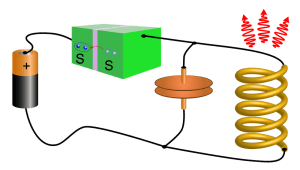

Multiphoton Generator on a Chip

Producing entangled photons whose properties are interdependent is key to several quantum communication technologies. Most techniques for generating these photons make them exclusively in pairs, and those that can produce more than two photons are difficult to implement. But researchers have now made a chip-sized device that can generate bunches...

Magnesium Diboride: A New Superconductor?

In an article recently published in the Journal of Applied Physics, researchers investigated the influence of strain and pressure on the superconductivity and electron-phonon coupling in magnesium diboride (MgB2). They also discussed the corresponding theoretical approaches and the future of nanostructure design. Background The discovery of MgB2 as a high-temperature superconductor with a...

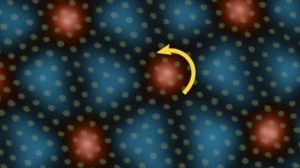
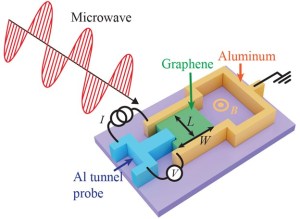
Engineering the Quantum States in Solid Materials Using Light

A POSTECH research team led by Professors Gil-Ho Lee and Gil Young Cho (Department of Physics) has developed a platform that can control the properties of solid materials with light and measure them. Recognized for developing a platform to control and measure the properties of materials in various ways with light,...

ADVERTISEMENT

Dewar

A dewar is a type of cryostat named after Sir James Dewar, the researcher who first developed the concept of a vacuum insulated container with silvered walls to reflect thermal radiation. Dewar was the first to liquefy hydrogen, and he created the device to store his discovery. The thermos bottle...

Stirling and Gifford-McMahon Cryocoolers

Stirling and Gifford-McMahon (GM) cryocoolers are two of the most commonly used cryocoolers in cryogenics. Both devices have a significant industrial base and operate at a wide range of temperatures and capacities. The thermodynamic cycles for both of these cryocoolers are quite similar. The Stirling cycle consists of a compressor,...

Liquefied Natural Gas (LNG)

A significant commercial application of cryogenics is the liquefaction, transport and storage of natural gas. Liquefied Natural Gas (LNG) is generally 95 percent methane with a few percent ethane and much lower concentrations of propane and butane. LNG liquefies at 111.6 K. Unlike many applications of cryogenics, the motivation for...

Food Processing

Cryogenics and Food The industrial gas industry provides a host of products and services related to food. The various gases have useful and sometimes fascinating applications in food industry. “The food industry is not a homogenous industry. The needs of customers processing hamburger vs. poultry vs. strawberries vs. seafood, for...

Primary Standards

Elie K. Track Hypres, Inc. elie@hypres.com http://www.hypres.com/ Primary standards involve the exact definition and realization of units of measurement for various quantities, time, length, mass, voltage, resistance, current, etc. International agreements based on the latest scientific knowledge define those units, and their realizations vary depending on the unit itself. For...

Shrink Fitting

Robin A. Rhodes Cryogenic Institute of New England, Inc. rrhodes@nitrofreeze.com Shrink fitting, (or “compression fitting” as it is sometimes called), is a method used to insert a pin or bushing into a housing or other assembly requiring an extremely tight tolerance fit. It can be used as an alternative to...

Telecommunications

From the Winter 2004 issue of Cold Facts magazine The recent M-Calc IV — 4th Industry Assessment workshop discussing military and commercial applications for low-cost cryocoolers, held in November in San Diego, highlighted progress being made in cryogenics as applied in telecommunications. The reliability and long lifetime of projects now...

Thermal conductivity of niobium, tantalum, lead, tin

I am interested in the thermal conductivity and other properties of low temperature superconductors. Specifically I am interested in materials like Niobium, Tantalum, Lead and Tin. Would you know of a publication that dealt with thermal properties in general and also gave specific data on these materials?