 Qian Bao, 37
What is your educational and professional background?
I completed my undergraduate studies in Mechanical Engineering at Shanghai Jiaotong University, China. Following that, I earned my Master’s degree from Tohoku University in Japan, where my research focused on computational fluid dynamics simulations involving two-phase flow. Specifically, I worked on modeling microchannel nitrogen heat sinks using the Volume-of-Fluid (VOF) method. I joined SHI (Sumitomo Heavy Industries) in 2013 as a research and development engineer, where I worked primarily on cryocooler development.
How did you get into cryogenics?
My interest in cryogenics began during my university studies, inspired by supervisors with extensive research experience in low-temperature heat transfer. After graduation, I joined SHI cryogenics group—one of the world’s leading cryocooler manufacturers.
Do you or did you have a mentor? Tell us about your experience with him/her.
My first professional mentor was Dr. Mingyao Xu at SHI Cryogenics Group. Dr. Xu, a renowned expert in GM and pulse tube cryocoolers, guided me through the successful development of the world’s smallest 2 K GM cryocooler between 2014 and 2017. Beyond his profound technical knowledge, Dr. Xu greatly influenced my approach to research and development by demonstrating the importance of grit, perseverance and meticulous attention to details.
What is your present company/position?
Sumitomo Cryogenics of America, Inc, R&D Engineer.
What are some of your contributions to the cryogenic field?
As mentioned above, I worked with Dr. Mingyao Xu to develop the world’s smallest 2 K GM cryocooler between 2014 and 2017. Achieving a remarkable cooling capacity of 20 mW at 2.1–2.2 K, this compact cooler played a crucial role in advanced research at Japan’s National Institute of Information and Communications (NICT), where it cooled superconducting single-photon detectors (SSPD). Additionally, we designed a groundbreaking 630W single-stage GM cryocooler during 2017-2020 —the largest of its kind at the time—to enable on-site liquid nitrogen production, significantly benefiting customers in regions like Africa with limited access to conventional supply chains.
What do you believe the most important developments in cryogenics are? Have you tailored your work to try to address them?
I believe quantum computing represents one of the most significant developments shaping our future, and cryogenics plays a foundational role in enabling this transformative technology. Recognizing this potential, I’ve tailored my recent work toward developing high-efficiency pulse tube cryocoolers—one of the critical cooling solutions integrated into dilution refrigerators.
What advances do you hope to see in the future? How long do you think it will take to achieve these advances?
I believe one of the biggest challenges in cryogenics today is the industry’s heavy reliance on experiments, which are often time-consuming, costly and resource-intensive. Recognizing this, I’ve dedicated much of my professional focus to bridging the gap between numerical simulations and mechanical design. I think within five to ten years, the computation power and technology will allow us to move towards a more model-based design approach.
Where can readers find out more about your projects?
You can find more information about my work on LinkedIn at http://www.linkedin.com/in/qian-bao, my company’s website at http://www.shicryogenics.com, my publications on Google Scholar at https://scholar.google.com/citations?user=QianBao, and my occasional CFD side projects on GitHub at https://github.com/houkensjtu.
……………………………………
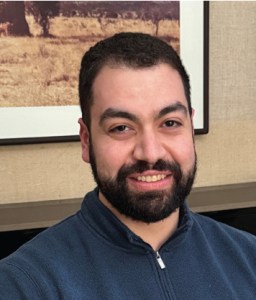 Anthony Damigella, 30
What is your educational and professional background?
I received my BS in mechanical engineering with a concentration in manufacturing engineering from Boston University in 2017. I’ve been employed as a mechanical engineer in the cryogenic industry since 2017.
How did you get into cryogenics?
My first full-time job out of college was with Vacuum Barrier Corporation, an industry leader with nearly 70 years of experience in cryogenic technology.
Do you or did you have a mentor? Tell us about your experience with him/her.
Erik Showers, Product Development Manager at Vacuum Barrier Corporation, has been one of my biggest influences in cryogenics. Despite learning all the engineering concepts needed in college to be successful as a mechanical engineer, putting them into practice in the cryogenic industry required a lot of on-the-go training and Erik was instrumental in guiding me through this process early in my career. Erik has been invaluable in advancing our company’s line of standard and aseptic dosing equipment over the past 20+ years and has been an incredible resource and mentor throughout all my projects.
What is your present company/position?
I’ve been employed at Vacuum Barrier Corporation since 2017, initially as a mechanical engineer. My work has focused mainly on research and development for cryogenic piping and LN2 dosing equipment. I was promoted in January 2025 to Engineering Production Supervisor, which expanded my responsibilities to oversee CAD documentation for production jobs as well as existing and future products. This new role also requires designing and performing analysis on new piping systems and has a greater focus on interactions with VBC sales staff, sales representatives and end customers.
What awards/honors have you received?
I’ve attained my EIT designation from NCEES and received certifications for Cryogenic Safety and ISO 9001:2015 QMS Internal Auditing.
What are some of your contributions to the cryogenic field?
Vacuum Barrier Corporation constantly aims to provide high-quality products and continually improve our offerings of liquid nitrogen piping and dosing equipment. Much of my work the last few years has focused on designing our next generation of liquid nitrogen dosing equipment, the Nitrodose® G3, which features enhanced controls and dosing capabilities. On the piping side, I have done a lot of design and testing for our upcoming ES Semiflex family of vacuum-insulated liquid nitrogen transfer lines.
What do you believe the most important developments in cryogenics are? Have you tailored your work to try to address them?
The applications in which cryogenics can be used are ever-expanding. It is critical to stay up to date with the different industries so that our equipment meets the unique needs of our various customer bases. We are constantly trying to improve our offerings to make them better, faster and more reliable, all while keeping safety in mind to ensure that our customers and their consumers all get the best products and experiences possible.
What advances do you hope to see in the future? How long do you think it will take to achieve these advances?
OEMs are constantly driving us to innovate dosing equipment that can run at faster speeds while improving both accuracy and precision. The smallest time reduction per bottle dosed with LN2 can result in massive cost savings for companies, and a more consistent dose weight can result in better quality products for end consumers. We strive to meet our most demanding customer applications with our advanced non-aseptic liquid nitrogen dosing system, the Nitrodose® G3 Servodoser®.
Where can readers find out more about your projects?
You can find out more about us at http://www.vacuumbarrier.com or follow Vacuum Barrier Corporation on LinkedIn for regular updates on our company.
……………………………………
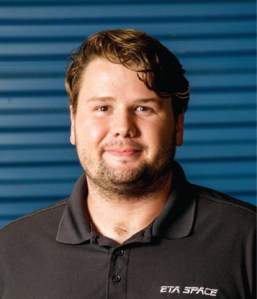 Daniel Hollibaugh, 26
What is your educational and professional background?
I have a bachelor’s degree in mechanical engineering from the University of Central Florida and am currently enrolled in the mechanical engineering master’s program there, focusing on thermofluids. I have been with Eta Space for almost four years, working in a variety of roles centered on heat transfer and cryogenics.
How did you get into cryogenics?
My introduction to cryogenics came through an internship at Eta Space in the summer of 2021. As an intern, I was tasked with creating CAD models of existing cryogenic systems, which sparked my interest in cryogenic hardware and component testing. Since joining Eta Space, I have enjoyed becoming more involved in the cryogenic community and connecting with the people driving innovation in the field.
Do you or did you have a mentor? Tell us about your experience with him/her.
Bill Notardonato has been my mentor throughout my career in cryogenics, providing me with invaluable knowledge and guidance. As the CEO and founder of Eta Space, Bill possesses a wealth of both practical and conceptual expertise. I am grateful for the many opportunities he has given me to learn and grow, as well as for his patience in answering my endless questions. I would also like to acknowledge Tom Tomsik, chief engineer of Eta Space, who has set a high standard of excellence and continues to be an invaluable resource to me and our team.
What is your present company/position?
I am currently a thermofluid analyst and LOXSAT co-investigator at Eta Space.
What awards/honors have you received?
I have not received any awards specific to the field of cryogenics.
What are some of your contributions to the cryogenic field?
During my time at Eta Space, I have had the opportunity to work on multiple innovative projects, including serving as the lead test engineer for our Electrochemical Hydrogen Refrigerator (ECHR) testing. ECHR was a collaboration between Eta Space and NASA Kennedy Space Center’s Cryogenic Test Lab, where we successfully demonstrated the ability to reach temperatures in the
20 K range using a cryocooler driven by an
electrochemical compressor.
However, my most significant contributions have come from my involvement in the LOXSAT mission, which aims to demonstrate the long-term storage of liquid oxygen in low Earth orbit. Since the project’s inception, I have played a key role in the system’s design, analysis and testing, helping to advance cryogenic storage capabilities for future space applications.
What do you believe are the most important developments in cryogenics? Have you tailored your work to try to address them?
The evolution of cryogenic system integration with space vehicles is of particular interest to me. Cryogenics have been an essential part of the space industry since the launch of Sputnik 1 in 1957, and their role continues to expand. Beyond propulsion, cryogenic systems are crucial for cooling sensors and detectors, such as those found on the James Webb Space Telescope. Looking ahead, cryogenic technologies will enable in-space propellant production, storage and transfer, allowing spacecraft to travel farther and operate longer. Much of my work at Eta Space is focused on advancing space cryogenic systems to support these objectives.
What advances do you hope to see in the future? How long do you think it will take to achieve these advances?
I believe hydrogen is a vastly underutilized resource with significant potential for safe and efficient applications. The ECHR system demonstrated hydrogen’s viability as a refrigerant, yet its use has been limited due to concerns over flammability. Fortunately, hydrogen is gaining traction as a fuel beyond rockets, and I hope to see a future where large trucks, trains, boats and aircraft widely adopt hydrogen powertrains.
Where can readers find out more about your projects?
I actively post about my professional and volunteer work on LinkedIn: http://www.linkedin.com/in/daniel-hollibaugh.
……………………………………
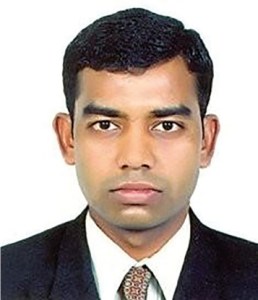 Uday Kumar, 39
What is your educational and professional background?
I completed my bachelor’s degree in mechanical engineering from the Institute of Technology and Management, Gurgaon, India. I began my career at the Institute for Plasma Research, Gandhinagar, and have been working with ITER-India on the ITER project since 2010. I am also pursuing my post-graduation in the Department of Metallurgical and Materials Engineering at IIT Madras.
How did you get into cryogenics?
During my undergraduate studies, I developed a strong interest in thermal science and worked on a project for ISHRAE. I became particularly curious about the technology used to achieve low temperatures and its applications in superconductivity. After completing my bachelor’s degree, I joined the Cryogenics Division at ITER-India, Institute for Plasma Research, where I began working on the design and development of cryolines for the ITER cryogenics system.
Do you or did you have a mentor? Tell us about your experience with him/her.
I’ve been incredibly fortunate to be surrounded by several great mentors throughout my academic and professional journey. I attribute my professional growth and scientific contributions to these advisors.
I had the great honor of working under the guidance of Prof. Yogesh C. Saxena on various deliverables related to the ITER cryogenic system. He possesses extensive practical and conceptual knowledge and is generous in sharing it, especially with early-career scientists. His mentorship played a significant role in my development, introducing me to technical challenges in cryogenics and encouraging me to explore further.
Through his guidance, I have gained invaluable insights into the design and material aspects of efficient cryogenic systems. I am deeply grateful to all my mentors for their support.
What is your present company/position?
Since starting my career, I have been working at ITER-India (Institute for Plasma Research, Gandhinagar) for the ITER cryogenics system.
What are some of your contributions to the cryogenic field?
A few of my early contributions to the cryogenic field include developing a methodology for the characterization of multilayer insulation to ensure its quality and performance. I have had the opportunity to work on various technological aspects to improve the efficiency and reliability of cryoline systems, particularly in controlling heat-in-leak at cryogenic temperatures.
What do you believe are the most important developments in cryogenics? Have you tailored your work to try to address them?
I believe it’s crucial to have a cryogenic system that can reliably and efficiently cool superconductors used in particle accelerators and nuclear fusion-grade Tokamak machines. Helium is a precious resource that is often lost after use. The increasing demand for low-temperature applications, coupled with the global scarcity of helium, presents a formidable challenge to the cryogenics community.
Active and passive cooling techniques are being developed to eliminate boiloff losses, significantly improving the efficiency of cryogenic systems. Zero-boiloff storage, achieved through these techniques, has the potential to transform the economic viability of liquid helium and liquid hydrogen storage infrastructure.
What advances do you hope to see in the future? How long do you think it will take to achieve these advances?
I aspire to see advancements in cryogenics and superconductors that enable the production of carbon-free, cost-effective and reliable power through nuclear fusion-based systems. Innovations in cryogenics for MRI technology could open new possibilities for accessible medical treatments, life extension and improved healthcare, ultimately enhancing human longevity and quality of life.
Where can readers find out more about your projects?
Readers can learn more about the ITER project at https://www.iter.org/, https://www.iterindia.in/, and https://ipr.res.in/.
……………………………………
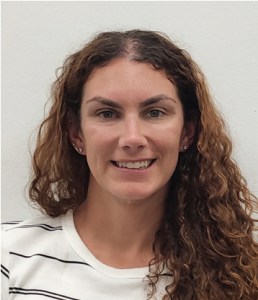 Hailee Morgan, 36
What is your educational and professional background?
I earned a Bachelor’s of Engineering in Mechatronics from Middle Tennessee State University. I spent six years as a design engineer in new product development for hydraulic valves at Sun Hydraulics. After that, I transitioned into cryogenics, spending the past two years as a design engineer for cryogenic valves and accessories at CPC-Cryolab, part of OPWCES, a Dover Company.
How did you get into cryogenics?
Like some, I fell into it. Out of school I was looking for Mechatronic-specific roles, and Sun Hydraulics was specifically hiring mechatronics engineers to integrate electronics into valves. After I left Sun Hydraulics, I sought alternate opportunities in valve design and discovered that CPC-Cryolab was looking for a design engineer with a background in valve design.
Do you or did you have a mentor? Tell us about your experience with him/her.
I have three mentors who have shaped who I am and whom I look up to with great respect. First is Stan Levandowski, who I mentioned in a published article in 2024. Stan, a true pioneer in cryogenics with over 50 years of experience, was pivotal in my understanding of what it takes to succeed in the ultracold cryogenics world (LH2, LHe) by helping me appreciate the past. Second is Dan Cole, a close mentor I work with daily. He is incredibly kind, thoughtful, and generous. He has helped me become a better engineer by teaching me to take a moment to look, listen and understand before making any preconceived notions, keeping me grounded in the present.
Lastly, is Ryan Felsenthal, who has been a huge proponent of my career growth. He helps give me a voice when others may not and constantly pushes the limits, something I love to do. He keeps me excited about the future and what’s to come.
What is your present company/position?
CPC-Cryolab, part of OPWCES, a Dover company / Design Engineer.
What awards/honors have you received?
None in the cryogenics world yet, but I received several at my previous company. I was awarded a patent for an energy-harvesting valve (ENERGEN), which was also a runner-up in the 2023 IDEA Awards for Electronic Components. It was an honor to be selected as the lead design engineer on this project and to work with a team that pushed the limits of technology in that space.
What are some of your contributions to the cryogenic field?
While my contributions differ from most, since I focus more on design and sustaining engineering than research projects, I have several unique designs in the works. These include liquid hydrogen safety relief valves and custom customer-requested extended stem liquid helium valves for ultralow heat leak applications. My recent contributions focus on ensuring the highest quality in engineered cryogenic valves and accessories while making sure they are robust and designed to the highest safety standards.
What do you believe the most important developments in cryogenics are? Have you tailored your work to try to address them?
Safety is critical in cryogenics. As hydrogen gains global attention as a viable alternative energy source, getting the infrastructure right from the beginning is crucial to its adoption and public perception. I contribute by designing and building the latest generation of products based on historic designs and to the highest level of code. Engaging with customers and listening to their feedback helps me consider future design iterations that improve performance while maintaining safety and usability.
What advances do you hope to see in the future? How long do you think it will take to achieve these advances?
Cryogenics plays a major role in the next evolution of the energy sector. We are in a pivotal position to reshape the future over the next 10, 20 and 50 years. Different regions of the world will transition, adapt, and adopt at different rates, making it difficult to predict exact timelines. Political and economic factors will also play a significant role in shaping progress.
Where can readers find out more about your projects?
You can find more about OPWCES and CPC-Cryolab at http://www.linkedin.com/company/opwces/ or http://www.linkedin.com/company/cpc-cryolab. If you are interested in my background, follow me at http://www.linkedin.com/in/haileedmorgan33/. You can also learn more about me in the March 2024 issue of Cold Facts.
……………………………………
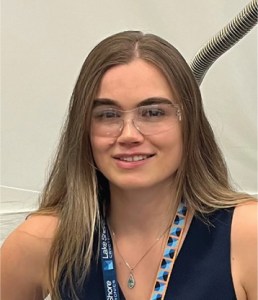 Maggie O’Donnell, 23
What is your educational and professional background?
I graduated from the University of Wisconsin-Madison with a BS in Mechanical Engineering in the spring of 2023. During my last year, I researched topology-optimized heat exchangers manufactured with DMLS 3D printing. I interned at Lake Shore Cryotronics in the summer of 2022 between my junior and senior years. After graduating in June 2023, I began working full-time at Lake Shore in Woburn, MA, focusing on the Environment by Janis product line.
How did you get into cryogenics?
I decided to pursue engineering as a career in middle school, but it wasn’t until my junior year of college, when I took thermodynamics, that I found my niche. The concepts I learned in that class helped me understand the world and modern inventions. After completing the course, I sought out companies with thermodynamic-based applications and found Lake Shore. During my internship, I gained hands-on experience with complex system designs, fabrication, testing, and driving a product to market. Returning to campus in the fall, I started my heat transfer class with Professor Franklin Miller, who provided me with complex cryogenic heat transfer problems and additional education on cryogenic topics. This experience solidified my desire to focus my career on cryogenics.
Do you or did you have a mentor? Tell us about your experience with him/her.
I have had the privilege of multiple mentors who have advanced my knowledge of cryogenics. Professor John Pfotenhauer at UW-Madison agreed to teach me in a one-on-one independent study course in cryogenics during my last semester as a student and his last semester as a full-time professor. We discussed topics ranging from the history of cryogenics, detailed explanations of cryogens, different liquefaction cycles, how cryocoolers operated, and how cryogenics is advancing in the modern world.
His willingness to teach me gave me a significant head start in my career. Another mentor, Scot Snyder, the director of engineering for cryostat and probe stations at Lake Shore, has helped me grow my skills and knowledge by assigning increasingly difficult projects and providing the resources and support I need to excel.
What is your present company/position?
I am currently a Development Engineer Mechanical II at Lake Shore Cryotronics.
What awards/honors have you received?
I received the “Next Big Thing” award at Lake Shore as the young employee most likely to develop the next big product.
What are some of your contributions to the cryogenic field?
I have worked on simplifying and improving designs and manufacturing processes for cryostats as part of a standardization effort, resulting in shorter lead times and lower costs, making scientific discoveries more feasible. I also lead designs on custom dewars, cryostats, probe stations, and superconducting magnet systems, providing tailored solutions to meet researchers’ specific needs. The fast-paced work allows me to influence many industries that rely on cryogenics to succeed such as materials science research, aerospace, and energy.
What do you believe the most important developments in cryogenics are? Have you tailored your work to try to address them?
With liquid helium becoming increasingly difficult to source, cryocooler-based systems are essential for the industry’s progress. I have focused on developing systems traditionally cooled with liquid helium to be cooled with a cryocooler, enabling measurements in vacuum, exchange gas, and liquid down to 1.5 K without liquid helium. Additionally, I am working on new systems for material testing at liquid hydrogen temperatures, driven by increased research in aerospace and energy industries.
What advances do you hope to see in the future? How long do you think it will take to achieve these advances?
Cryogenics can be dangerous and complex. Automation in cryogenic systems makes the field more accessible and safer, allowing for remote control in environments where human presence is not possible. I believe that automated systems controlled remotely will become the new standard in cryogenic research within the next five years, requiring less training and incorporating safeguards to reduce risk.
Where can readers find out more about your projects? Are there websites or social media handles that actively promote your field, company, research, etc? Do you actively post yourself, and if so, where should people follow you?
Readers can find out more about my projects on Lake Shore’s website at http://www.lakeshore.com, specifically on the Environment by Janis page. You can also follow new technology and advancements that I make on Lake Shore’s, Janis’s, and my LinkedIn pages:
Lake Shore Cryotronics: http://www.linkedin.com/company/lake-shore-cryotronics
Janis Research: http://www.linkedin.com/company/janis-research
Margaret O’Donnell – Development Engineer Mechanical II: http://www.linkedin.com/in/margaret-odonnell-5678
……………………………………
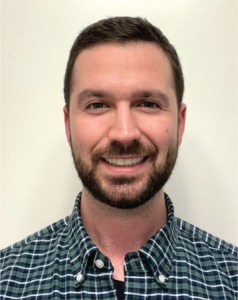 Michael Sedaille, 31
What is your educational and professional background?
For the past three years, I’ve held the role of Principal Cryogenic Engineer at Hypres, where I design, assemble and test cryo-vacuum systems for digital superconducting and other cryo-electronics. Prior to Hypres, I worked at Advanced Research Systems (ARS) as the lead engineer, supporting the design and manufacture of open- and closed-cycle cryocoolers and cryostats. I obtained an M.S. in Mechanical Engineering from Lehigh University, where I focused on tribology under the direction of Dr. Brandon Krick. I also received a bachelor’s degree in mathematics and physics from Drew University.
How did you get into cryogenics?
While working in the Tribology Lab at Lehigh, a visiting ARS engineer suggested I apply for a local position with them. Learning the ins and outs of ARS cryocoolers and the laboratory cryostats that use them was a fun and gratifying experience—akin to discovering a new and unfamiliar area of science. My interest in the field continued to grow, and my efforts were rewarded when I spent nearly three years as lead engineer.
Do you or did you have a mentor? Tell us about your experience with him/her.
As Principal Cryogenic Engineer at Hypres, I have had the privilege of being mentored by our CTO, Elie Track, an industry veteran and IEEE Fellow. Elie’s vast experience with cryogenic systems and strategic vision as a technical leader at Hypres have been invaluable to my professional development. Through regular guidance, Elie has helped me navigate complex challenges and refine my problem-solving skills. His mentorship has broadened my technical knowledge and shaped my leadership approach, showing me the importance of fostering collaboration within the team.
I would be remiss not to also mention those at ARS who guided me in my early career, including Shenghong Yao, Tim Schilling, Len Wagner, Lou Santodonato and others. Their influence helped lay the foundation for my expertise in cryogenic engineering.
What is your present company/position?
Principal Cryogenic Engineer at Hypres Inc.
What awards/honors have you received?
No major awards in cryogenics.
What are some of your contributions to the cryogenic field?
I feel that my greatest contributions have come from combining my varied backgrounds in fundamental physics, practical engineering and tangible manufacturing to ensure that every project is approached from a broad field of view. I’ve been lucky enough to apply this experience to various “cool” projects over the years, including the Hypres ADR, superconducting magnet probe stations and low-drift, low-vibration cryostats for quantum computing.
What do you believe are the most important developments in cryogenics? Have you tailored your work to try to address them?
To grow the field of cryogenics and the technologies that rely on it, the most important developments involve usability and the reduction of SWaP (size, weight and power). Historically, cryogenic systems have been rather unwieldy, requiring significant training to use and install. Widespread adoption requires that cryogenic systems become more human-scaled and plug-and-play. Users prefer systems that resemble the computers, devices, or equipment they encounter in everyday life.
Closed-cycle cryocoolers have made major leaps in creating cryogenic systems that fulfill this need, and further improvements are on the horizon. All of the work I’ve done in my professional life has been toward the goal of creating user-friendly cryogenic systems, and I look forward to continuing to do so.
What advances do you hope to see in the future? How long do you think it will take to achieve these advances?
I am biased, but I believe the world of superconducting digital logic is ripe with potential for creating truly life-changing advancements in technology. The current investment in semiconductor computing has been experiencing diminishing returns for years. Redirecting just a small fraction of that investment toward superconducting computing could lead to huge leaps forward in areas where semiconductors will struggle. It’s my hope that the next decade will bring more investment in and prioritization of this technology.
Where can readers find out more about your projects?
Be sure to check out my LinkedIn (linkedin.com/in/michael-sedaille) and Hypres.com.
……………………………………
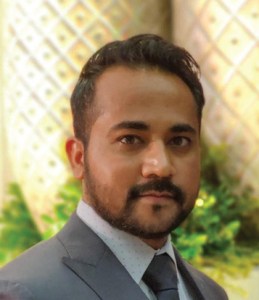 Chintan M. Sheth, 36
What is your educational and professional background?
My journey to becoming a mechanical engineer began at Nassau Community College, where I completed foundational courses before transferring to Hofstra University to earn my Bachelor’s degree. Afterward, I worked as a research and design engineer at an elevator firm for several years while simultaneously completing my Master’s in Engineering Management from Ohio University. Approximately four years ago, I joined Brookhaven National Laboratory as a cryogenic mechanical engineer, where I have had the opportunity to further develop my expertise and contribute to innovative projects in the field.
How did you get into cryogenics?
In my previous role as a sales application engineer, I gained valuable experience in designing cooling and freezing systems that utilized refrigerants such as freon and nitrogen. These systems operated at higher temperatures and did not extend into the cryogenic range. Upon joining Brookhaven, I took the initiative to enroll in a cryogenics course offered by the U.S. Particle Accelerator School (USPAS). This foundational course equipped me with the essential knowledge to design cryogenic piping and components effectively, bridging the gap between my prior experience and the advanced requirements of the cryogenic field.
Do you or did you have a mentor? Tell us about your experience with him/her.
Over the past four years at BNL, I have had the privilege of working closely with Roberto Than, whom I consider to be a mentor. As a senior cryogenics engineer and a recognized expert across the DOE national labs, Roberto plays a vital role within the Cryogenics Department in C-AD and is a key cryogenics engineer and project manager for the upcoming EIC project. Despite his demanding schedule, he has always taken the time to explain cryogenic design principles, offering valuable guidance to me and fellow engineers whenever we had questions. Additionally, Roberto conducts weekly lessons to teach us the functionality of the Central Plant, ensuring that future engineers and technicians are well-prepared to operate the plant successfully.
What is your present company/position?
I have been recently promoted to serve as the Level 3 Control Account Manager (CAM), a project management role for a large portion of the EIC project cryogenic scope. I am also a mechanical design engineer in the Collider Accelerator Division Cryo Group, servicing the RHIC central helium plant and connected systems.
What awards/honors have you received?
Last year, under significant time pressure, I led the effort to reroute cooling lines for the sPHENIX detector, ensuring continuity of operations. Through careful planning and coordination, and applying the knowledge of cryosystem design, I’ve accumulated over the past three years, my team completed the work. In recognition of my efforts, I was honored with a BNL “Spotlight Award.”
What are some of your contributions to the cryogenic field?
I have made several contributions to the liquid helium cooling operations at the RHIC collider facility and attached experiments. For the sPHENIX project, I conducted stress and relief analysis for piping, valve box design and various engineering calculations to support the PDR and FRD of critical components.
EIC SRF cryomodules will undergo full power capacity testing at BNL before installation in the EIC tunnel, making the upgrade of the cryogenic infrastructure at the SRF test facility a key priority. I have played a pivotal role in the procurement process for a new helium dewar and subcooler, including the development of the SOW and specifications. Additionally, I led the efforts to compile the overall P&ID for the entire SRF test facility building, encompassing both existing and new cryogenic components.
For the Electron-Ion Collider (EIC) project, I am actively involved in developing the scope, schedule and cost estimates for the overall 4 K helium distribution system. I am also leading the efforts to develop the master P&ID, which will integrate 2 K and 4 K helium distribution systems.
What do you believe are the most important developments in cryogenics? Have you tailored your work to try to address them?
Advances in cryogenic sealing materials and technologies – such as pure indium wire seals and reusable low-profile cryogenic wire seals – have made it easier to contain cryogenic fluids with greater safety and minimal leakage. We are also trying to reduce warm helium leakage throughout the distribution system by minimizing Swagelok-type connections and replacing them with welded or phastite connections.
What advances do you hope to see in the future? How long do you think it will take to achieve these advances?
I am excited to see the next generation of MRI machines utilizing cuprates, a type of high-temperature superconductor. Traditional MRI scanners rely on superconducting magnets made from materials like niobium-titanium (NbTi), which require the use of liquid helium for cooling. In contrast, high-temperature cuprate superconductors, such as Yttrium Barium Copper Oxide (YBCO), can achieve superconductivity at higher temperatures, potentially allowing for the use of liquid nitrogen or even simpler, more cost-effective cooling methods.
Where can readers find out more about your projects?
For updates on the Electron-Ion Collider (EIC) project and related cryogenics developments, visit Brookhaven National Laboratory’s website or follow updates on the EIC project at eic.bnl.gov.
……………………………………
 Zachary A. Zgardzinski, 29
What is your educational and professional background?
I graduated from Alfred University’s Inamori School of Engineering in 2017 with a bachelor’s degree in mechanical engineering. I worked as an M.E. for an Architectural/HVAC company right out of college, designing clean rooms and large heating and cooling systems. In 2021 I wanted to explore other more technical opportunities and that is when I applied for a position at Cryomech (now Bluefors).
How did you get into cryogenics?
In 2021, a colleague and friend, Jacob Tatlock, who was working at Cryomech at the time, encouraged me to apply for an open position and kindly recommended me to the head of engineering.
Do you or did you have a mentor? Tell us about your experience with him/her.
I consider many of my coworkers and supervisors to be mentors in different ways. I am fortunate to work with a team of highly skilled and experienced individuals, and I’ve learned a great deal from collaborating with them on various projects. In particular, Tim Hanrahan, Brent Zerkle and Kayleigh Byrns have each played meaningful roles in my growth and development during my time at Bluefors.
What is your present company/position?
I am a Mechanical Engineer in the Specialty Applications Group at Bluefors Cryocooler Technologies’ Syracuse, NY facility (formerly known as Cryomech).
What awards/honors have you received?
I have not received any awards or honors yet in the cryogenic field, but I hope to one day make a large enough impact on the industry to be recognized for my innovation.
What are some of your contributions to the cryogenic field?
As part of the Specialty Applications team at Bluefors, my contributions to the cryogenic field involve designing and building custom products tailored to customers’ unique requirements. A large amount of my work focuses on the development of
1 K cryocooler and cryostat systems used for low-temperature physics, superconducting magnets and quantum circuits. I have also worked on a large argon reliquefying and filtering recirculation system for neutrino detection experiments.
What do you believe the most important developments in cryogenics are? Have you tailored your work to try to address them?
One of the most important developments in cryogenics is helium recovery and helium reliquefiers. Helium is critical for low-temperature cryogenic systems, but it is expensive, limited and easily lost, making efficient use essential. Advancing technologies that minimize helium loss is key to reducing costs and supporting the sustainability of the field.
The rapid growth of quantum computing in recent years has significantly influenced the cryogenic industry. As the race to build a reliable, fault-tolerant quantum computer accelerates, researchers are striving to scale up qubit counts, which demands greater heat lift and larger, more capable cryogenic systems. Bluefors is currently a leading producer of high-capacity cryogenic systems, and I have been fortunate to play an ongoing role in that development.
What advances do you hope to see in the future? How long do you think it will take to achieve these advances?
In the future, I hope to see significant advances in cryocooler system efficiency, including higher heat lift with lower power consumption and more compact designs. These improvements would support the growing demands of industries like quantum computing and reduce operational costs. While incremental gains are already being made, I’m hopeful that with continued innovation and investment in cryogenic technology, we’ll start to see major improvements in system efficiency within the next 5–10 years.
Where can readers find out more about your projects?
You can find our product information at Bluefors.com or you can also follow Bluefors on LinkedIn for more regular updates about recent projects.