ADVERTISEMENT

Remembering our Friend, Ray Radebaugh (1939-2026)

The cryogenics community lost one of its most influential figures with the passing of Ray Radebaugh in February 2026. Over a career spanning more than five decades, Radebaugh helped shape modern cryogenic engineering through pioneering research, devoted mentorship and an unwavering willingness to share knowledge. His work on cryocoolers, dilution...
Cryogenics in Motion: Spaceline Delivers Advanced Nitrogen Trailer for NASA Armstrong

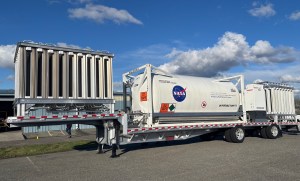
Spaceline Technologies, a fluid system engineering and manufacturing company, has completed a cryogenic nitrogen transport and supply trailer for NASA Armstrong Flight Research Center. This trailer is a mobile and standalone solution to provide pressure regulated nitrogen gas and liquid with flowrate and temperature control. Control of the trailer can...

Cryogenics and the Road to Superconducting Propulsion: Part I for Aircrafts

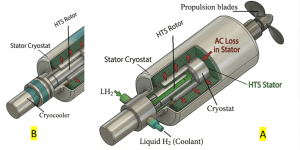
by Quan-Sheng Shu, cryospc.com and Jonathan Demko, Le Tourneau University Superconducting (SC) motors are pivotal for future transportation, offering power densities exceeding 20 kW/kg. Cooling philosophies diverge by architecture: partially superconducting aircraft designs (like NASA’s HEMM) utilize integrated mechanical cryocoolers for the rotor, whereas fully superconducting aircraft favor liquid hydrogen...

Pelican Wire Designs for Cryogenic and Extreme Energy Systems

As renewable energy, electrification and advanced research technologies continue to expand, the demands placed on wire and cable systems are evolving just as rapidly. Higher power densities, tighter system integration and increasingly extreme operating environments are pushing manufacturers beyond traditional commodity wire solutions. Caleb Lemmons, Business Development Manager at Pelican...

Meet the 2026 Young Professionals

This feature introduces outstanding young professionals (under 40 years of age) who are doing interesting things in cryogenics and superconductivity and who show promise of making a difference in their fields. Debuted in the 2006 issue, the feature has presented many young persons whom we are proud to see have...

Extraterrestrial Specifications for Cryogenic Fluid Production

by Wesley Johnson, NASA Glenn Research Center Here on our home planet, where we have been liquefying various “permanent gasses” since 1877 [1], most of us take it for granted that when we go out to buy a cryogenic liquid (or even a pure gas) we don’t have to write...

ADVERTISEMENT

Dewar

A dewar is a type of cryostat named after Sir James Dewar, the researcher who first developed the concept of a vacuum insulated container with silvered walls to reflect thermal radiation. Dewar was the first to liquefy hydrogen, and he created the device to store his discovery. The thermos bottle...

Stirling and Gifford-McMahon Cryocoolers

Stirling and Gifford-McMahon (GM) cryocoolers are two of the most commonly used cryocoolers in cryogenics. Both devices have a significant industrial base and operate at a wide range of temperatures and capacities. The thermodynamic cycles for both of these cryocoolers are quite similar. The Stirling cycle consists of a compressor,...

Liquefied Natural Gas (LNG)

A significant commercial application of cryogenics is the liquefaction, transport and storage of natural gas. Liquefied Natural Gas (LNG) is generally 95 percent methane with a few percent ethane and much lower concentrations of propane and butane. LNG liquefies at 111.6 K. Unlike many applications of cryogenics, the motivation for...

Magnets

From “Superconductivity: Present and Future Applications” by the Coalition for the Commercial Application of Superconductors. Particle physics uses accelerators to recreate the conditions of the early universe in an attempt to piece together the complex puzzle of how we got to where we are today. These huge machines are used...

Energy Storage

From “Superconductivity: Present and Future Applications” by the Coalition for the Commercial Application of Superconductors. With power lines increasingly congested and prone to instability, strategic injection of brief bursts of real power can play a crucial role in maintaining grid reliability. Small-scale Superconducting Magnetic Energy Storage (SMES) systems, based on...

Astronomy

ASTRONOMY IN SPACE by Peter V. Mason, retired,  Jet Propulsion Laboratory, and Visiting Associate, California Institute of Technology. Pmason@alumni.caltech.edu In thinking about the reasons to perform astronomy in space, we first consider the effect of the earth’s atmosphere.  On a scale of decreasing energy, gamma rays, cosmic rays, X-rays and...

Cryocoolers

What is a Cryocooler? A mechanism that can extract heat from an object (cooler) and by doing so draw its temperature down below approximately 150 Kelvin (cryo). — (Courtesy Dr. Willy Gully) What is the difference between a Cryocooler and a Cryostat? A cryostat is any device designed to maintain...