ADVERTISEMENT

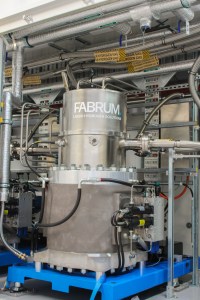
A high precision accelerator cryomodule produced by Meyer Tool for use in a particle accelerator at Brookhaven National Lab. MTM’s fabrication expertise is trusted by national labs and quantum technology firms worldwide. Credit: Meyer Tool & Manufacturing, Inc.

Meyer Tool Builds the Impossible, Empowering Illinois Manufacturing

by Christian Cunningham, Meyer Tool & Manufacturing Inc. Meyer Tool & Manufacturing, Inc., a long-standing leader in cryogenic, pressure and vacuum technologies, has reached a major milestone in its growth journey. The Illinois Department of Commerce and Economic Opportunity (DCEO) recently approved the company for participation in the Manufacturing Illinois...
Figure 1: An artist's rendering of the COSI satellite. Credit: Northrop Grumman Systems Corporation

Goddard Goings

An insight into past, present and future cryogenic missions where the Cryogenics and Fluids Branch at NASA Goddard Space Flight Center had or has a significant role. by Mark Kimball, Ph.D., Cryogenics and Fluids Branch, NASA Goddard Space Flight Center Readers of this column may recall last year’s recounting of...
A line-up of product family members, showing the different chassis sizes, as well as illustrating the modular integration of multiple cooling stages for ultralow temperature applications. Credit: Danaher Cryogenics

Danaher’s Acquisition of ADR Cryostat Line Pioneers the Future of Cryogenic Technology

by Charlie Danaher, Danaher Cryogenics, President In December, Danaher Cryogenics marked a significant milestone by completing the acquisition of the adiabatic demagnetization refrigerator (ADR) Cryostat product line from FormFactor. Originally developed by FormFactor’s subsidiary, High Precision Devices (HPD), the ADR product line has garnered a strong reputation among researchers and...
These images show the various stages of the assembly of the flat bottom tank LNG. Credit: Cryospain

Cryospain’s Flat-Bottom Tank Project in Morocco is a Step Forward for LNG

by Cryospain Communications Team As the global energy sector shifts toward more sustainable sources, liquefied natural gas (LNG) has emerged as a key transitional fuel. Its cleaner-burning profile, abundant supply and versatility position it as a bridge between fossil fuels and renewables. In this evolving landscape, Cryospain, a leader in...
Schematic Diagram of the Research. Credit: Jiayi Chen, Dandan Guan and Jin-Feng Jia from Shanghai Jiao Tong University.

Magnetic Chains on Superconductors: New Heterostructure Design Advances Quantum Technology

Magnetic-superconducting hybrid systems are essential for realizing topological superconductivity—a quantum state capable of hosting elusive Majorana modes with promising applications in fault-tolerant quantum computing. Despite their potential, engineering stable and controllable interfaces between magnetic and superconducting materials remains a significant challenge, often hindered by lattice mismatches, interfacial complexities, and disorder....

ADVERTISEMENT

Liquid Hydrogen

Hydrogen becomes a liquid at 20K and 1 bar. Liquid hydrogen (LH2) is an important substance in industry, transportation and research. Industrial uses of hydrogen include applications in the electronics, glass, chemical and metal processing fields. In these applications, the hydrogen is generally used as a room temperature gas but...

Superconducting Radiofrequency Cavities

Superconducting radio frequency (SRF) cavities represent an important application of cryogenics and superconductivity. SRF cavities are a technology for accelerating charged particle beams via the transfer of radiofrequency (RF) energy to the beams via resonant structures. As such, they are frequently found in large particle accelerators used for scientific research....

Thermal Radiation Shields

Actively cooled thermal radiation shields are a common feature of cryostats whose lowest temperature is less than 77K. These shields, which typically operate at temperatures between that of LN2 and 40K, block thermal radiation from higher temperatures from reaching lower temperature cryogenic components or fluids. Since the heat radiated from...

Air Separation and Liquefaction

by Nils Tellier, PE, President, EPSIM Corporation (CSA CSM) nils@epsim.us All illustrations courtesy EPSIM Corporation Background History of Air Separation and Liquefaction This section builds on a rich history of methods to develop deep refrigeration and cryogenic liquefaction during the 19th Century. You are encouraged to read Cryo Central’s History...

Bose-Einstein Condensate

A Bose-Einstein condensate, first proposed in 1925 by Albert Einstein based on work done by Satyendra Nath Bose (the same Bose from whom the term boson is derived), is a super-cold state of matter in which almost all of the individual atoms have “condensed” down to the lowest possible quantum...

Cold Technology for Pest Control

While it does not reach temperatures cold enough to be called cryogenic, carbon dioxide snow is at the heart of a new way of dealing with unwanted pests. It utilizes a quick freezing process that takes advantage of the properties of carbon dioxide snow and has a number of benefits...

Cryogenic Finishing

The following 3 articles discuss the uses and procedures of various type of cryogenic finishing. 1) By Robin A. Rhodes, Cryogenic Institute of New England, Inc. rrhodes@nitrofreeze.com Cryogenic Deflashing is employed to remove undesired residual mold flash that remains on molded parts after they are removed or ejected from the...