ADVERTISEMENT

MIT’s Superconducting Magnets are Ready for Fusion

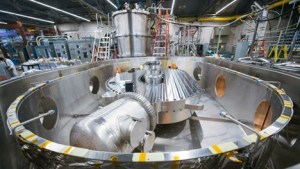
Harnessing nuclear fusion, the process by which lighter atoms combine into heavier ones, has been a dream of researchers for generations: in theory, it could produce electricity without emitting greenhouse gases and, unlike nuclear fission, generate very little radioactive waste. But making fusion work requires compressing hydrogen plasma fuel at...
Shuttle, Family Inspire NASA’s Cryogenic Technology Manager

Jeremy Kenny squinted his eyes as he looked toward the brilliant light. Then came the deafening sound waves that vibrated his body. This was the moment he’d dreamed about since childhood. It was Nov. 16, 2009, at NASA’s Kennedy Space Center in Florida, and Kenny and his wife were watching space...

Bluefors Launches Helium Recovery Solution for Single Unit NMR Systems

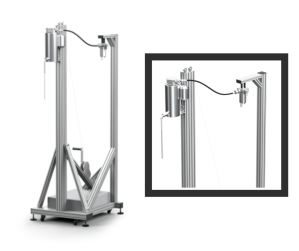
Bluefors has introduced its latest advancement: the Cryomech HeRL02-RM. This cutting-edge helium reliquefier, specifically engineered for helium recovery from individual nuclear magnetic resonance (NMR) units, marks a significant stride in helium conservation and management. The Cryomech HeRL02-RM establishes a closed-loop, zero-boiloff system for NMR magnets, ensuring optimal helium utilization. Boiled-off helium...

The LSST Camera Set to Unveil the Cosmos

The completion of the Legacy Survey of Space and Time (LSST) Camera, after two decades of collaborative work involving scientists and engineers at the Department of Energy’s SLAC National Accelerator Laboratory and international partners, signifies a significant milestone in the construction of the Vera C. Rubin Observatory in Chile. The...

China Completes Ovarian Tissue Cryopreservation

China has successfully completed ovarian tissue cryopreservation and transplantation to help women who lost ovarian function because of tumor treatments and hematopoietic stem cell transplantation, also known as bone marrow transplant, preserve their fertility. “Twenty-six women in China have successfully gotten their ovarian endocrine function back through OTC and OTT...

Hubble Spots the Spider Galaxy

CSA April Newsletter SponsorHigh-performance, highly reliable, long-lasting storage tanks for transporting hydrogen & helium molecules around the globe.​https://www.gardnercryo.com [Contact Jamie Luedtke for Newsletter Sponsorship] Home About Membership Login Calendar Cold Facts Buyer’s Guide News Publications Cryo Careers Resources Donate Join now Log in Cryogenic Society of America, Inc. Twitter Facebook...

ADVERTISEMENT

Adiabatic Demagnetization Refrigeration

Reaching temperatures below 1K requires different techniques than the various helium gas cycles found in large scale refrigeration plants and small cryocoolers. One of these techniques is Adiabatic Demagnetization Refrigeration (ADR). This technique takes advantage of the fact that the entropy of paramagnetic materials in a magnetic field is lower than...

Cryogen-Free

A cryogen is any fluid that operates at cryogenic temperatures (below roughly 150K – 120K). Using this definition, helium gas at 40K is a cryogen. Another more restrictive definition is to use cryogen to refer specifically to liquids at cryogenic temperatures. This is generally how it is used in the...

Cryostats and Cryocoolers

A cryostat is any device designed to maintain things (including fluids) at cryogenic temperatures. In general usage, cryostats tend to be passive devices rather than providing active cooling. In this usage, cryostats keep things cold by thermally isolating them from room temperature. This generally is accomplished by a combination of...

Air Separation and Liquefaction

by Nils Tellier, PE, President, EPSIM Corporation (CSA CSM) nils@epsim.us All illustrations courtesy EPSIM Corporation Background History of Air Separation and Liquefaction This section builds on a rich history of methods to develop deep refrigeration and cryogenic liquefaction during the 19th Century. You are encouraged to read Cryo Central’s History...

Bose-Einstein Condensate

A Bose-Einstein condensate, first proposed in 1925 by Albert Einstein based on work done by Satyendra Nath Bose (the same Bose from whom the term boson is derived), is a super-cold state of matter in which almost all of the individual atoms have “condensed” down to the lowest possible quantum...

Cold Technology for Pest Control

While it does not reach temperatures cold enough to be called cryogenic, carbon dioxide snow is at the heart of a new way of dealing with unwanted pests. It utilizes a quick freezing process that takes advantage of the properties of carbon dioxide snow and has a number of benefits...

Cryogenic Finishing

The following 3 articles discuss the uses and procedures of various type of cryogenic finishing. 1) By Robin A. Rhodes, Cryogenic Institute of New England, Inc. rrhodes@nitrofreeze.com Cryogenic Deflashing is employed to remove undesired residual mold flash that remains on molded parts after they are removed or ejected from the...

Need help comparing chest freezers and upright freezers

Currently we use in our Biobank an upright -80 freezer to store all our samples. We are planning to buy a fully automated bio-repository storage that will do the picking of samples under restricted conditions. But in the meantime I foresee that we have to pick the samples manually. The...

Need recommendations for cryogenic vials

I am looking into standardizing our range of bio storage tubes (cryogenic vials). These will be for both blood and tissue samples and their derivatives. Any recommendations, comments on Micronics, Nalgene, Nunc and or others that are suitable for long term -80 C and -196 C storage, DNA/RNA suitable, would...

We need a custom machine for flash freezing of water

We are an ice making company and have started a new project, which is related to flash freezing of water. It is based on cryogenics technology and we need a custom made machine. I would kindly ask you to pass me a few companies who would be interested in such...

Looking for a pump suitable for cold liquids

I would like to construct a small cooling circuit (appr. 50 x 50 cm) pumping liquid at a temperature down to -120°C from a cold reservoir to the specimen to be cooled. The tubes and connections are not a problem, but does somebody know a pump (suction/compression for circulation) suitable...