ADVERTISEMENT

Giant Quantum Tornado Behaves Like a Black Hole in Miniature

A novel experimental platform known as a giant quantum vortex mimics certain behaviors of black holes, giving scientists an opportunity to observe the physics of these astrophysical structures up close. The vortex appears in superfluid helium cooled to near-absolute zero temperatures, and according to the team that made it, studies...

Cryogenic Processors to Open Kentucky-Based Freeze-Dry and Packaging Site

Cryogenic freezing specialist Cryogenic Processors will open a new cryogenic freezing and freeze-drying facility in Paducah, Kentucky, at the end of 2024. The plant will feature three isolated pelletising rooms, each equipped with advanced blending systems and a standard conical pelletiser with an increased capacity of 1000kg per hour. Once pelletized,...

Physicists Created an Exotic Superconductor Controlled by Magnetism

Superconductivity continues to revolutionize technology in so many ways. While some technological advances rely on finding ways to encourage zero-resistance currents at warmer temperatures, engineers are also considering better ways of fine-controlling the super-efficient flow of electrons. Unfortunately, many processes that would work just fine for run-of-the-mill electronics, such as the application...

MIT’s Superconducting Magnets are Ready for Fusion

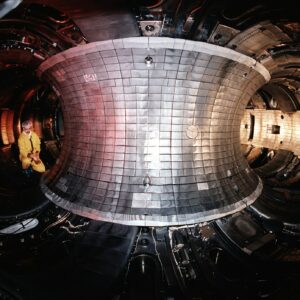
Harnessing nuclear fusion, the process by which lighter atoms combine into heavier ones, has been a dream of researchers for generations: in theory, it could produce electricity without emitting greenhouse gases and, unlike nuclear fission, generate very little radioactive waste. But making fusion work requires compressing hydrogen plasma fuel at...

Shuttle, Family Inspire NASA’s Cryogenic Technology Manager

Jeremy Kenny squinted his eyes as he looked toward the brilliant light. Then came the deafening sound waves that vibrated his body. This was the moment he’d dreamed about since childhood. It was Nov. 16, 2009, at NASA’s Kennedy Space Center in Florida, and Kenny and his wife were watching space...

Bluefors Launches Helium Recovery Solution for Single Unit NMR Systems

Bluefors has introduced its latest advancement: the Cryomech HeRL02-RM. This cutting-edge helium reliquefier, specifically engineered for helium recovery from individual nuclear magnetic resonance (NMR) units, marks a significant stride in helium conservation and management. The Cryomech HeRL02-RM establishes a closed-loop, zero-boiloff system for NMR magnets, ensuring optimal helium utilization. Boiled-off helium...

ADVERTISEMENT

Dewar

A dewar is a type of cryostat named after Sir James Dewar, the researcher who first developed the concept of a vacuum insulated container with silvered walls to reflect thermal radiation. Dewar was the first to liquefy hydrogen, and he created the device to store his discovery. The thermos bottle...

Stirling and Gifford-McMahon Cryocoolers

Stirling and Gifford-McMahon (GM) cryocoolers are two of the most commonly used cryocoolers in cryogenics. Both devices have a significant industrial base and operate at a wide range of temperatures and capacities. The thermodynamic cycles for both of these cryocoolers are quite similar. The Stirling cycle consists of a compressor,...

Liquefied Natural Gas (LNG)

A significant commercial application of cryogenics is the liquefaction, transport and storage of natural gas. Liquefied Natural Gas (LNG) is generally 95 percent methane with a few percent ethane and much lower concentrations of propane and butane. LNG liquefies at 111.6 K. Unlike many applications of cryogenics, the motivation for...

Cryogenic Electronics

Randall Kirschman, consulting physicist, Mountain View, California ExtElect@gmail.com Cryogenic electronics—the operation of electronic devices, circuits, and systems at cryogenic temperatures—has been a valuable technology for decades. Cryogenic electronics (also referred to as low-temperature electronics, or cold electronics) can be based on semiconductive devices, on superconductive devices, or on a combination...

Particle Physics: High Energy Physics

Cryogenics and High-Energy Physics 1. From symmetry magazine: http://www.symmetrymagazine.org/cms/?pid=1000627: Cryogenics is the study of how materials behave at temperatures near absolute zero. In high-energy particle accelerators, such frigid temperatures reduce the electrical resistance of wires in superconducting magnets, increasing the magnet strength and allowing faster particle acceleration. The same holds...

HTS Degaussing Systems

From the Spring 2009 issue of Cold Facts (Volume 25, Number 2): Thanks to a joint project by the US Navy and a number of industry partners, high temperature superconducting (HTS) technology is now at the heart of an advanced degaussing system aboard the USS Higgins at the naval station...

Magnetic Resonance Imaging

From http://www.superconductors.org: An area where superconductors can perform a life-saving function is in the field of biomagnetism. Doctors need a non-invasive means of determining what’s going on inside the human body. By impinging a strong superconductor-derived magnetic field into the body, hydrogen atoms that exist in the body’s water and...

What is the temperature range of cryogenics?

Could you please tell me what is the temperature range of cryogenics? In other words, is -100°F considered cryogenic, or does it start lower? Could I expect to see some extended life in D2 stamping dies? What would the recipe be to achieve the desired results using cryogenics?