ADVERTISEMENT

QED-C® Announces Four Projects Designed to Advance Cryogenics for Quantum Information Science and Technology

The Quantum Economic Development Consortium (QED-C), managed by SRI International, in strategic partnership with the U.S. Department of Commerce’s National Institute of Standards and Technology (NIST), today announced a $2.3 million research program to advance cryogenic technologies that will enable innovation in quantum information science and technology (QIST). The program aims to...

Realizing the STEP Fusion Dream

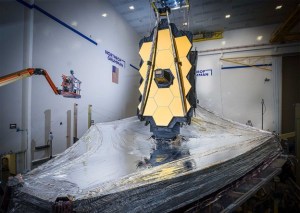
Deliver a UK prototype fusion energy plant, targeting 2040, and thereafter a sustainable, long-term pathway to the commercial viability of nuclear fusion. That’s the ambitious objective – and even more ambitious timeline – confronting the scientists, engineers and project managers currently sweating the details for the conceptual design of the...

Graphene Quantum Magic Delivers a New Class of Superconducting Material

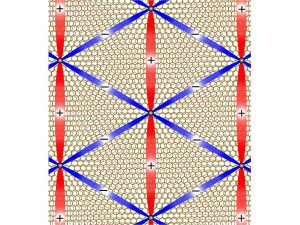
Superconductors are materials that conduct electrical current with almost no electrical resistance at all. This property makes them particularly appealing for a variety of applications, including loss-less power cables, electric motors and generators, and powerful electromagnets that can be utilized for MRI imaging and magnetic levitating trains. Nagoya University researchers...

ADVERTISEMENT

Dewar

A dewar is a type of cryostat named after Sir James Dewar, the researcher who first developed the concept of a vacuum insulated container with silvered walls to reflect thermal radiation. Dewar was the first to liquefy hydrogen, and he created the device to store his discovery. The thermos bottle...

Stirling and Gifford-McMahon Cryocoolers

Stirling and Gifford-McMahon (GM) cryocoolers are two of the most commonly used cryocoolers in cryogenics. Both devices have a significant industrial base and operate at a wide range of temperatures and capacities. The thermodynamic cycles for both of these cryocoolers are quite similar. The Stirling cycle consists of a compressor,...

Liquefied Natural Gas (LNG)

A significant commercial application of cryogenics is the liquefaction, transport and storage of natural gas. Liquefied Natural Gas (LNG) is generally 95 percent methane with a few percent ethane and much lower concentrations of propane and butane. LNG liquefies at 111.6 K. Unlike many applications of cryogenics, the motivation for...

Cryogenic Electronics

Randall Kirschman, consulting physicist, Mountain View, California ExtElect@gmail.com Cryogenic electronics—the operation of electronic devices, circuits, and systems at cryogenic temperatures—has been a valuable technology for decades. Cryogenic electronics (also referred to as low-temperature electronics, or cold electronics) can be based on semiconductive devices, on superconductive devices, or on a combination...

Particle Physics: High Energy Physics

Cryogenics and High-Energy Physics 1. From symmetry magazine: http://www.symmetrymagazine.org/cms/?pid=1000627: Cryogenics is the study of how materials behave at temperatures near absolute zero. In high-energy particle accelerators, such frigid temperatures reduce the electrical resistance of wires in superconducting magnets, increasing the magnet strength and allowing faster particle acceleration. The same holds...

HTS Degaussing Systems

From the Spring 2009 issue of Cold Facts (Volume 25, Number 2): Thanks to a joint project by the US Navy and a number of industry partners, high temperature superconducting (HTS) technology is now at the heart of an advanced degaussing system aboard the USS Higgins at the naval station...

Magnetic Resonance Imaging

From http://www.superconductors.org: An area where superconductors can perform a life-saving function is in the field of biomagnetism. Doctors need a non-invasive means of determining what’s going on inside the human body. By impinging a strong superconductor-derived magnetic field into the body, hydrogen atoms that exist in the body’s water and...

Cryogenic thermophysical property data

I am in search of information regarding cryogenic thermophysical property data, specifically, Thermal Conductivity, Thermal Expansion, Stiffness and Modulus, in the 20K range. My list of materials include: Ti-6AL-4V (ELI), Al 6061-T651, and Invar (36%, plus any other composition which might have data available). Other materials which would be helpful...