ADVERTISEMENT

zeroBOG™ Empowers Sustainable Operations

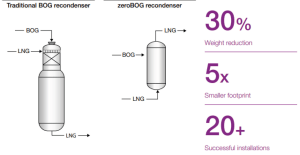
by Lennis Perez and Edward Tay, Sulzer The need for efficient and sustainable management of cryogenic gases extends far beyond traditional LNG applications. Enabling the recovery and reuse of boiloff gases, or BOG, across sectors such as hydrogen, e-methane and ammonia, supports the transition to low-carbon fuels and helps operators...

Liquid Air Comes of Age in Manchester

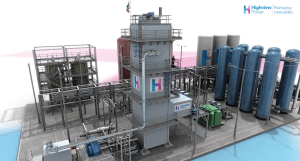
by Mark Vyvyan Robinson, Business Development Director, Highview Power As electricity systems integrate increasing volumes of renewable generation, the requirement for long-duration energy storage has become a defining challenge of the global energy transition. In northwest England, the city of Manchester and the surrounding Greater Manchester region are now home...

NASA Inches Closer to Martian Laser Communication

by Charlie Danaher, Danaher Cryogenics Bridging Interplanetary Distances Having a conversation between someone on Earth and Mars is not as science fiction as it used to be. That is thanks to scientists at NASA’s Jet Propulsion Laboratory (JPL) in Southern California and their successful demonstration of the Deep Space Optical...

Vacuum Chambers Answer Quantum Demands and UHV Transfer Needs

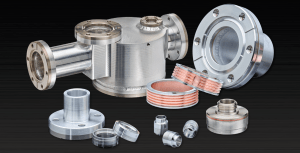
by Mel Janecka, Atlas Technologies Quantum computing companies and research facilities often find aluminum and titanium vacuum chambers to be better equipped to maintain purity and ultrahigh-vacuum (UHV) status. Plus, the chambers are non-magnetic and perform effectively within cryogenic conditions, critical for keeping qubits stable. Qubits, the basic units of...

Kathleen Amm’s Evolution in Cryo

When Kathleen Amm describes how she entered cryogenics, she does not point to a single defining moment. Instead, her path began with movement. In the early 1990s, she followed her thesis advisor Justin Schwartz from the University of Illinois to Tallahassee as the National High Magnetic Field Laboratory was opening....

WOMEN in CRYOGENICS and SUPERCONDUCTIVITY

Alexandria Burger, Bluefors – Manufacturing Engineer Manager Current projects: My current focus is leading a team to improve manufacturing efficiencies for 2026. These efficiency improvements will not only offset the increasing costs of materials but also allow us to reduce lead times. I also contribute to manufacturing documentation, 6S events,...

ADVERTISEMENT

Joule-Thomson Effect

The Joule-Thomson (JT) effect is a thermodynamic process that occurs when a fluid expands from high pressure to low pressure at constant enthalpy (an isenthalpic process). Such a process can be approximated in the real world by expanding a fluid from high pressure to low pressure across a valve. Under...

Current Leads

One of the challenges of using superconducting magnets is the connection of the magnet to a room temperature power supply. This is accomplished via current leads. The trick is that current leads should ideally have a low heat leak, since they connect room temperature to cryogenic temperature, while at the...

Multilayer Insulation

Multilayer insulation (also referred to as superinsulation) is a key component in the reduction of heat leak to cryogenic systems due to thermal radiation. MLI consists of a series of uncooled reflective surfaces placed in the vacuum space between two surfaces, one warmer than the other. Generally speaking, for ideal...

Magnetic Levitation

From http://www.superconductors.org. Magnetic-levitation is an application where superconductors perform extremely well. Transport vehicles such as trains can be made to “float” on strong superconducting magnets, virtually eliminating friction between the train and its tracks. Not only would conventional electromagnets waste much of the electrical energy as heat, they would have...

Superconductivity

From Superpower website. History of Superconductivity Superconductivity was discovered in 1911 by the Dutch physicist, Heike Kammerlingh Onnes when he was able to liquefy helium by cooling it to 4 Kelvin, or -452°F. This enabled him to cool other materials close to absolute zero and investigate their electrical properties. He...

Medical Applications of Cryogenics

Neutron Therapy Cryogenics is at the heart of nuclear accelerators. Accelerators such as Fermilab’s Tevatron make neutron therapy for cancer possible. From Fermilab Today 4/20/09: Fermilab currently offers neutron therapy. But staff at Fermilab designed and built the proton accelerator used by the nation’s first hospital-based treatment center to use...

Nuclear Physics

Al Zeller National Superconducting Cyclotron Lab (NSCL) at Michigan State University zeller@nscl.msu.edu Cryogenics has a long history in nuclear physics. The technology has its origins in the use of cold traps for maintaining a vacuum, which is required to prevent beam loss and for generating high voltages used in acceleration....

Approximating pressure changes over time in cryogenic cylinders

I am an Air Resources Engineer with the California Air Resources Board (CARB). My senior management has asked me to investigate approximating pressure changes over time in cryogenic cylinders that contain LNG. So far, I have taken a stab at the problem, seeking to take a back-of-the-envelope approach (as directed...