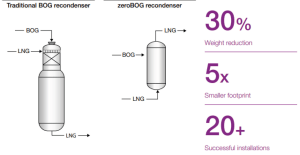
by Lennis Perez and Edward Tay, Sulzer The need for efficient and sustainable management of cryogenic gases extends far beyond traditional LNG applications. Enabling the recovery and reuse of boiloff gases, or BOG, across sectors such as hydrogen, e-methane and ammonia, supports the transition to low-carbon fuels and helps operators...
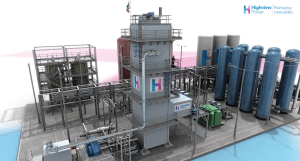
by Mark Vyvyan Robinson, Business Development Director, Highview Power As electricity systems integrate increasing volumes of renewable generation, the requirement for long-duration energy storage has become a defining challenge of the global energy transition. In northwest England, the city of Manchester and the surrounding Greater Manchester region are now home...
by Charlie Danaher, Danaher Cryogenics Bridging Interplanetary Distances Having a conversation between someone on Earth and Mars is not as science fiction as it used to be. That is thanks to scientists at NASA’s Jet Propulsion Laboratory (JPL) in Southern California and their successful demonstration of the Deep Space Optical...
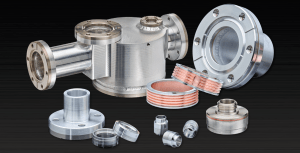
by Mel Janecka, Atlas Technologies Quantum computing companies and research facilities often find aluminum and titanium vacuum chambers to be better equipped to maintain purity and ultrahigh-vacuum (UHV) status. Plus, the chambers are non-magnetic and perform effectively within cryogenic conditions, critical for keeping qubits stable. Qubits, the basic units of...
When Kathleen Amm describes how she entered cryogenics, she does not point to a single defining moment. Instead, her path began with movement. In the early 1990s, she followed her thesis advisor Justin Schwartz from the University of Illinois to Tallahassee as the National High Magnetic Field Laboratory was opening....
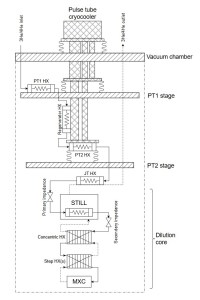
Dilution refrigerators are a common technique for reaching temperatures below 1K, particularly where continuous cooling at these temperatures is required. Helium exists in two stable isotopes: 4He and 3He. Naturally occurring 3He is extremely rare, constituting less than 1 part per million of helium gas. However, 3He can be manufactured,...
Oxygen Deficiency Hazards (ODH) are a significant safety issue in cryogenic facilities. ODH occurs when inert gases such as nitrogen, helium or argon displace room air and thus lower the percentage of oxygen in the space below that required for human life. OSHA defines an area as oxygen deficient if...
The Kelvin temperature scale is the principal temperature scale used in cryogenics and science. The kelvin is also one of the seven base units in the Système International d’Unités (SI) and is the unit of thermodynamic temperature. Thermodynamic temperature is a fundamental physical quantity (like mass, length or electrical current)...
Cryogenics and Food The industrial gas industry provides a host of products and services related to food. The various gases have useful and sometimes fascinating applications in food industry. “The food industry is not a homogenous industry. The needs of customers processing hamburger vs. poultry vs. strawberries vs. seafood, for...
Elie K. Track Hypres, Inc. elie@hypres.comhttp://www.hypres.com/ Primary standards involve the exact definition and realization of units of measurement for various quantities, time, length, mass, voltage, resistance, current, etc. International agreements based on the latest scientific knowledge define those units, and their realizations vary depending on the unit itself. For...
Robin A. Rhodes Cryogenic Institute of New England, Inc. rrhodes@nitrofreeze.com Shrink fitting, (or “compression fitting” as it is sometimes called), is a method used to insert a pin or bushing into a housing or other assembly requiring an extremely tight tolerance fit. It can be used as an alternative to...
From the Winter 2004 issue of Cold Facts magazine The recent M-Calc IV — 4th Industry Assessment workshop discussing military and commercial applications for low-cost cryocoolers, held in November in San Diego, highlighted progress being made in cryogenics as applied in telecommunications. The reliability and long lifetime of projects now...
I have a cryostat with closed cycle cryocooler attached. The case is aluminum with a G-10 spacer between the case and a stainless steel bellows that supports the cryocooler.
I’m designing a Liquid Oxygen Bath to place composite coupons in the bath and soak 96 samples for intervals of 8 hours, 24 hours, 7 days, 21 days, 42 days, 62 days and 90 days.
Regarding the method known as the Adiabatic Demagnetization of Paramagnetic Salts: What metallic salts are normally used to produce the ultra-low temperatures used for near-absolute-zero cryogenic research? Which salts are the most efficient? Which make the best cooling agents? And which are used most commonly by physicists? I am looking...