ADVERTISEMENT

Cryogenics in Motion: Spaceline Delivers Advanced Nitrogen Trailer for NASA Armstrong

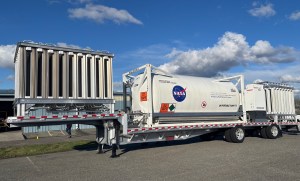
Spaceline Technologies, a fluid system engineering and manufacturing company, has completed a cryogenic nitrogen transport and supply trailer for NASA Armstrong Flight Research Center. This trailer is a mobile and standalone solution to provide pressure regulated nitrogen gas and liquid with flowrate and temperature control. Control of the trailer can...
Cryogenics and the Road to Superconducting Propulsion: Part I for Aircrafts

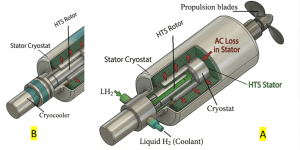
by Quan-Sheng Shu, cryospc.com and Jonathan Demko, Le Tourneau University Superconducting (SC) motors are pivotal for future transportation, offering power densities exceeding 20 kW/kg. Cooling philosophies diverge by architecture: partially superconducting aircraft designs (like NASA’s HEMM) utilize integrated mechanical cryocoolers for the rotor, whereas fully superconducting aircraft favor liquid hydrogen...

Pelican Wire Designs for Cryogenic and Extreme Energy Systems

As renewable energy, electrification and advanced research technologies continue to expand, the demands placed on wire and cable systems are evolving just as rapidly. Higher power densities, tighter system integration and increasingly extreme operating environments are pushing manufacturers beyond traditional commodity wire solutions. Caleb Lemmons, Business Development Manager at Pelican...

Meet the 2026 Young Professionals

This feature introduces outstanding young professionals (under 40 years of age) who are doing interesting things in cryogenics and superconductivity and who show promise of making a difference in their fields. Debuted in the 2006 issue, the feature has presented many young persons whom we are proud to see have...

Extraterrestrial Specifications for Cryogenic Fluid Production

by Wesley Johnson, NASA Glenn Research Center Here on our home planet, where we have been liquefying various “permanent gasses” since 1877 [1], most of us take it for granted that when we go out to buy a cryogenic liquid (or even a pure gas) we don’t have to write...

Cold Power: How Cryogenics Will Make Chicago the Taiwan of Quantum Computing

by Joe Procunier, LJC Design & Engineering Chicago is set to redefine the future of quantum computing, just as Taiwan reshaped the global semiconductor industry. In 1987, Morris Chang famously started TSMC (Taiwan Semiconductor Manufacturing Company) after working as a pivotal figure at Texas Instruments.[1] The Taiwanese government encouraged him...

ADVERTISEMENT

Mixed Refrigerant Cycles

Most cryogenic refrigeration systems, both large scale systems and cryocoolers, use helium as a working fluid. There are a number of advantages to helium, not the least of which is that helium remains a fluid down to the lowest achievable temperatures. In order to freeze helium, pressures of over 20...

Fountain Pumps and He II Phase Separators

Helium II (He II), the second liquid phase of the 4He isotope described in this column in Cold Facts Spring 2010 (http://2csa.us/he2), can be modeled as consisting of two interpenetrating fluids. One, the superfluid component, has zero viscosity and entropy and the other, the normal fluid component, has nonzero viscosity...

Turboexpanders

A vital technology in the refrigerators and liquefiers described in Cold Facts Volume 31 Number 3 is that of turboexpanders. These devices are rotating machines in which the process fluid (e.g., helium) does work against the turboexpander while moving from high pressure to a lower pressure and thus is cooled....

Air Separation and Liquefaction

by Nils Tellier, PE, President, EPSIM Corporation (CSA CSM) nils@epsim.us All illustrations courtesy EPSIM Corporation Background History of Air Separation and Liquefaction This section builds on a rich history of methods to develop deep refrigeration and cryogenic liquefaction during the 19th Century. You are encouraged to read Cryo Central’s History...

Bose-Einstein Condensate

A Bose-Einstein condensate, first proposed in 1925 by Albert Einstein based on work done by Satyendra Nath Bose (the same Bose from whom the term boson is derived), is a super-cold state of matter in which almost all of the individual atoms have “condensed” down to the lowest possible quantum...

Cold Technology for Pest Control

While it does not reach temperatures cold enough to be called cryogenic, carbon dioxide snow is at the heart of a new way of dealing with unwanted pests. It utilizes a quick freezing process that takes advantage of the properties of carbon dioxide snow and has a number of benefits...

Cryogenic Finishing

The following 3 articles discuss the uses and procedures of various type of cryogenic finishing. 1) By Robin A. Rhodes, Cryogenic Institute of New England, Inc. rrhodes@nitrofreeze.com Cryogenic Deflashing is employed to remove undesired residual mold flash that remains on molded parts after they are removed or ejected from the...